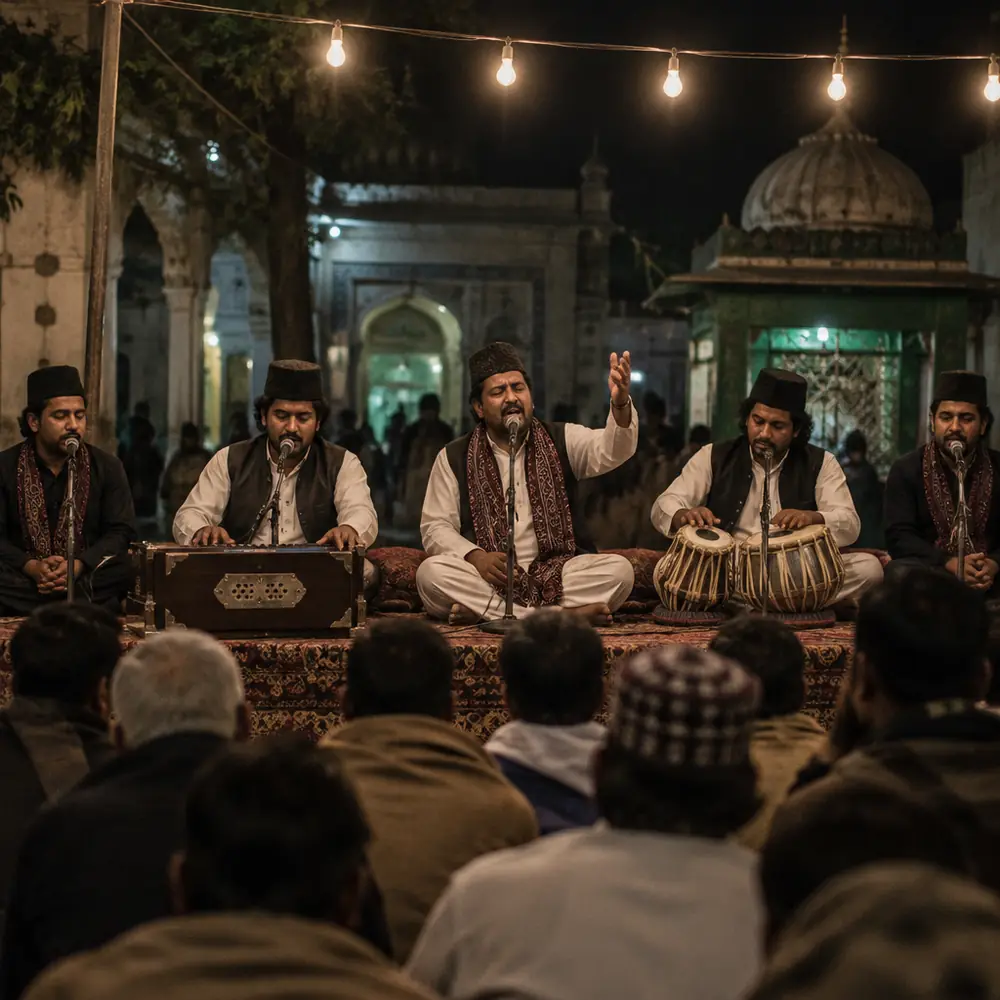
Most people who fly into Pakistan for the mountains end up talking about something else when they get home: one evening in a shrine courtyard, sitting on cold marble with a few hundred strangers, listening to qawwali until well past midnight. It costs nothing, it happens most weeks of the year, and almost no foreign visitor plans for it.
What qawwali actually is
Qawwali is sung poetry. It grew out of the Sufi tradition, the mystical strand of Islam that has been part of life in South Asia for centuries, and it is performed as an act of devotion rather than entertainment. The words are usually in Urdu, Punjabi, Sindhi or Persian, and often they are not new: the same verses by Bulleh Shah, Shah Hussain, Sachal Sarmast or Amir Khusrau have been sung in these courtyards for hundreds of years.
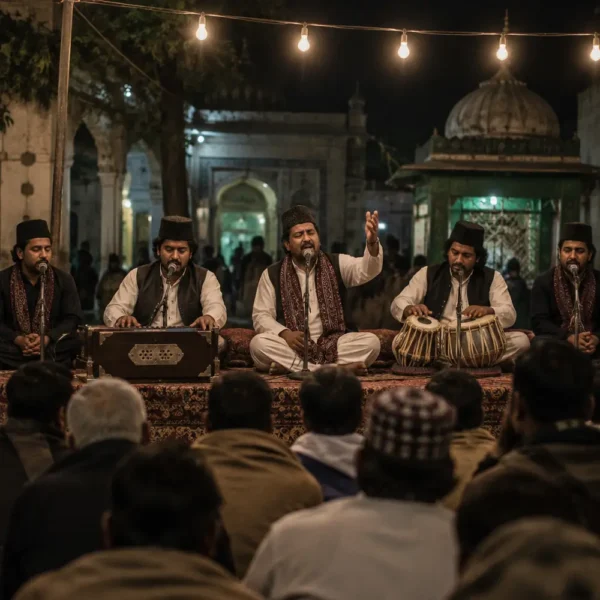
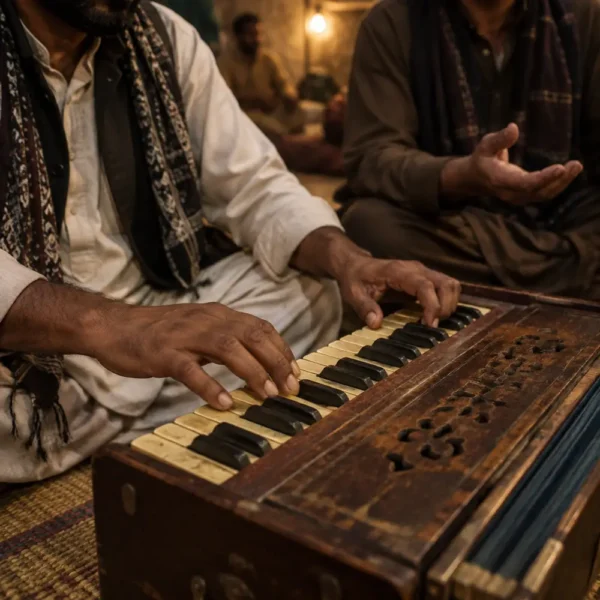
A party of musicians sits on the floor or on a low platform. Usually there is a lead singer with one or two answering voices, a harmonium player, a tabla player, and a row of men keeping time with their hands. There is no stage and no ticket desk: the audience sits around them in a loose ring. Words you will hear and use:
- Mehfil (meh-fil) the gathering itself, an evening of listening.
- Qawwal the singers; a party is called a qawwal group.
- Darbar the shrine compound, the courtyard where it happens.
- Urs (oors) the death anniversary of a saint, celebrated as a wedding rather than a mourning, and the biggest nights for music.
How a mehfil runs, hour by hour
Nothing starts on time. If you are told the music begins at seven, the platform will still be empty at half past: people are arriving, greeting each other, spreading mats, sending a boy out for tea. Use that half hour to take your shoes off, find a place, and watch the room fill. Nobody will mind a foreigner sitting at the back, and the back is where you should start.
The first piece is slow and low. The harmonium carries the melody, the tabla is barely audible, and the lead voice stays close to the words. Stay with it, even though it lasts twenty minutes and you cannot follow the language. A qawwali is constructed to climb: each piece repeats a line, adds a handclap, lifts the tempo, and waits for the room to answer. By the third or fourth piece the audience is keeping time, and by the last one people are on their feet, some swaying, some with hands raised, some walking up to the singers to press a folded note into a palm.
There is no printed programme and no fixed end: a weekly mehfil often runs a little over two hours, an urs night until two or three in the morning. You are free to leave whenever you like, and nobody will notice, because people are constantly getting up to pray or greet a cousin.
Where you can hear qawwali in Pakistan
Qawwali is not a tourist show staged for foreigners, so the venues are working shrines, which means the weekly pattern matters more than any listing.
Lahore is the easiest place to start. At Data Darbar, the shrine of Ali Hujwiri in the old city, the courtyard fills on Thursday evenings after the sunset prayer and the music usually runs two hours or more. Shah Jamal, a smaller shrine in the west of the city, is known for a heavier, drum-led night with a big local following. Both are free to enter and a ten-minute ride from the Walled City, so either pairs easily with a day of Mughal architecture.
Sindh is where qawwali and its cousin, the dhamaal drum circle, reach their loudest. Sehwan Sharif, the shrine of Lal Shahbaz Qalandar, holds the largest urs in the country, and the nights around it are extraordinary: drums, dancing, and a courtyard that never empties. The urs follows the lunar calendar and shifts about eleven days earlier each year, so check the dates locally.
Multan is the other classical stop. The city is dense with shrines, and the urs of Shah Rukn-e-Alam brings qawwali parties from across the country. Pakpattan, south-west of Lahore, holds the shrine of Baba Farid and a quieter, more local weekly mehfil. In Karachi, the shrine of Abdullah Shah Ghazi on the coast road has Thursday evening music that is easy to reach from any hotel in the city. In Islamabad and Rawalpindi, Golra Sharif is the name people give you when you ask where to hear qawwali near the capital.
Two practical notes. Non-Muslims are welcome at all of these places, but a shrine is a place of worship first and a music venue second: the music stops for prayer and resumes afterwards. And most large shrines set aside a screened section for women, which is not always obvious from outside, so ask at the gate. If you would rather have the whole evening arranged around you, including a guide who can translate the poetry between pieces, that is what our Sufi and darbar tours are built for.
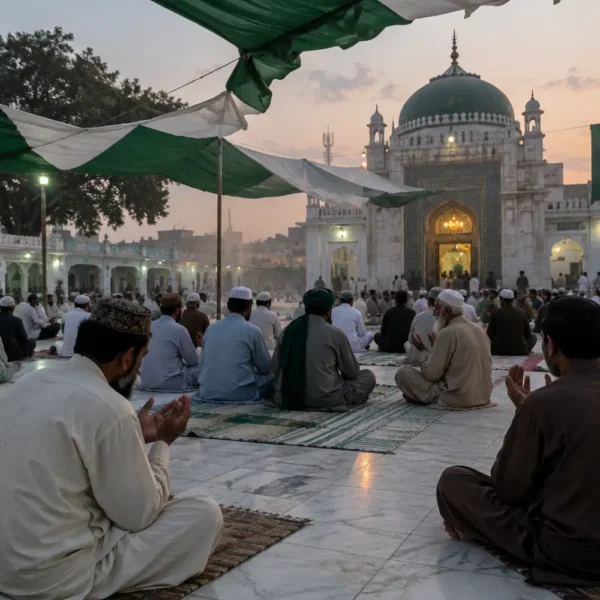
Sitting in the audience: clothes, shoes and manners
The rules are simple and mostly about not disturbing anyone who came to pray.
- Dress loosely and cover up. Shoulders and knees covered is the minimum for everyone; a shawl or dupatta helps a great deal for women, and a light scarf is worth carrying even in summer. Loose trousers matter more than you think, because you will be sitting cross-legged on a hard floor for hours.
- Shoes come off at the edge of the carpet. Marble in January is genuinely cold, so bring socks.
- Walk behind people praying, never in front of them, and do not step over anyone seated.
- Do not touch the tomb railing, hang anything on it, or sit with your feet pointing towards the grave. Watch what the people around you do and copy it.
- Photographs: the courtyard and the musicians are usually fine. Ask before photographing a face, and put the phone away during prayer. A raised phone in someone’s line of sight during the quiet part of a piece will earn you a look.
- Money handed to a singer is a normal gesture of appreciation, not a fee. Nobody will ask you for a ticket, and nobody will ask you for cash on the way out either.
If you want the wider picture of how to behave in shrines, bazaars and homes, our guide to travel etiquette in Pakistan covers the rest, and the piece on what to expect when you are a guest here explains the tea-and-insistence culture you will meet on the way in.
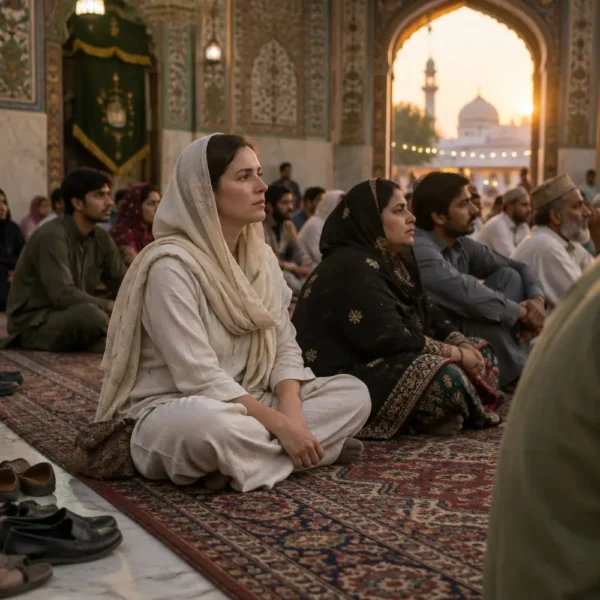
Timing: Thursday nights and urs season
If you only have one evening to spend on this, make it a Thursday. From Lahore to Karachi, Thursday after sunset is the reliable weekly slot, because it sits at the end of the working week and before Friday prayers. Saturday night is the alternative in Lahore, where Shah Jamal runs its drum-led session.
The bigger nights are urs nights, which follow the lunar calendar and therefore move every year. They bring the best musicians, the largest crowds and the hardest logistics: hotels fill in towns like Sehwan, roads close around processions, and a courtyard that is calm in March can be shoulder to shoulder. Plan an urs around the festival rather than treating it as a normal evening out, and give yourself a day either side.
The seasons change the experience more than you would expect. In June the marble stays warm and the mehfil spills into the street; in December the same courtyard is cold enough that people bring blankets and the music ends earlier. Ramadan shifts everything: the nights run late, but the music often follows the iftar meal rather than the evening prayer.
Seeing a mehfil with us
We build shrine evenings into our Lahore, Multan and Sindh routes rather than selling them as a separate show: a guide who knows which courtyard is playing that week, seats at the edge of the carpet, a translation of the poetry between pieces, and a car outside at midnight when the drums stop. If you would like an evening added to a longer itinerary, look at our cultural and heritage tours, browse the city tours we run, or see the full list of tour packages. You can also write to us directly and we will tell you what is on the week you arrive.
One last thing worth saying to anyone nervous about the language barrier: you do not need a single word of Urdu to enjoy this. Our twelve phrases for visitors will get you through the greetings, and after that the music does the work. If you would like an evening arranged around your dates, send us your travel dates and we will suggest the right city and the right night.
Frequently asked questions about qawwali
Is it appropriate for non-Muslims to attend a qawwali?
Yes. Foreign visitors are welcome at the shrines listed here, and the music is performed for everyone present. Dress modestly, remove your shoes, keep quiet during prayer and you will be treated as a guest.
Do I need a ticket to hear qawwali in Pakistan?
No. These are working shrines, and there is no ticket desk or entry fee for the music. Some people hand a note to a singer they enjoyed, which is a normal gesture of appreciation rather than a charge.
Can women attend a mehfil?
Yes. Many shrines set aside an area or a screened section for women, and families sit together at the edges of the courtyard. Ask at the entrance where the women’s area is, since it is not always signposted.
How long does a qawwali evening last?
A weekly mehfil in a city shrine usually runs a little over two hours, starting late. An urs night can go on until two or three in the morning, and you are free to leave whenever you want.
What should I wear to a shrine mehfil?
Loose clothes that cover shoulders and knees, comfortable trousers for sitting on the floor, socks for cold marble, and a scarf or shawl if you are a woman. Avoid anything that needs adjusting every few minutes.
Is photography allowed during qawwali?
Photographs of the courtyard and the musicians are usually fine. Ask before photographing faces, put the phone away during prayer, and never stand in the middle of the courtyard to film with a raised phone.