Most people arrive at a northern Pakistan tour itinerary with a list of places and a number: ten days, seven valleys, four passes. We work the other way round. A route for a group is not a line between attractions; it is a set of places you sleep, a set of mornings that have to work, and a few long drives that cannot be avoided. Get the sleeping places right and the trip holds together even when the road does not. What follows is the working method behind the ten-day routes we run on the Karakoram Highway, usually shortened to KKH, which links Islamabad with Gilgit and the valleys beyond.
Why We Plan Bases, Not Stops
A stop is somewhere you get out, look, photograph and leave. A base is somewhere you sleep two nights, unpack, wash clothes and walk out in the morning without carrying your bag. Northern Pakistan rewards the second and punishes the first. Distances on the map are short and driving times are long: the road follows a river gorge, repairs close one lane for an hour at a time, and a jeep track beyond the asphalt can take ninety minutes to cover fifteen kilometres.
So the first decision is not which valleys to include but how many beds the group occupies. On a ten-day plan we hold to three or four bases, which means six or seven nights somewhere the group can call home. Six bases in ten days is a different trip, and we say so at the quotation stage rather than on day four.
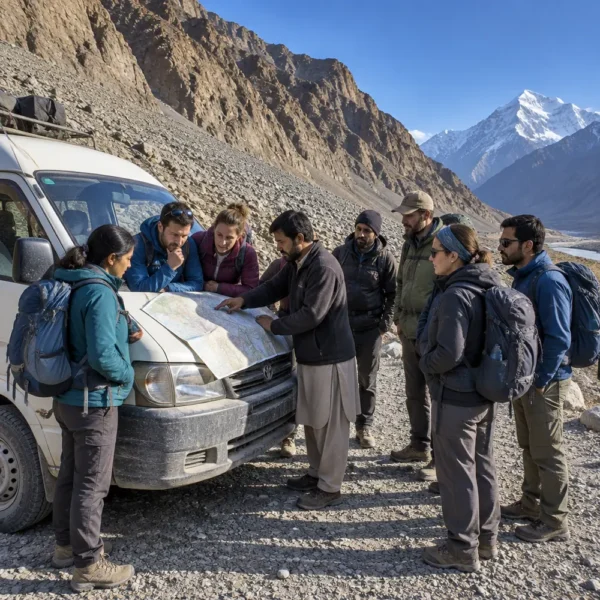
A base also decides what a day off looks like. You can offer a short walk, a bazaar, a fort, a slow lunch and an afternoon of nothing, and each member chooses differently. Groups of eight to twelve contain at least three different appetites for effort. Bases absorb that. Stops expose it.
Every base change costs a morning: bags out by eight, loading, the drive, arrival, rooms, lunch. Three changes in ten days costs three mornings, nearly a third of the trip’s useful daylight. Our northern mountain tours page lists the routes we run and their bases.
How Many Nights a Place Has to Earn
Every place has to earn its nights. One night is a transit night: you arrive after dark, eat, sleep and leave. Two nights is a working visit, with one full day in the place, enough for a fort, a bazaar and a viewpoint without hurrying. Three nights is a stay: a full day, a second day for a walk or a jeep run or a rest, and an evening where nobody checks the time.
Our default rule is that a place either earns two nights or it does not appear; single nights are reserved for the road towns at each end. This removes several famous names from most ten-day plans, deliberately. A place you see for three hours in the middle of a driving day is a photograph, not a memory, and it costs the group a night somewhere better.
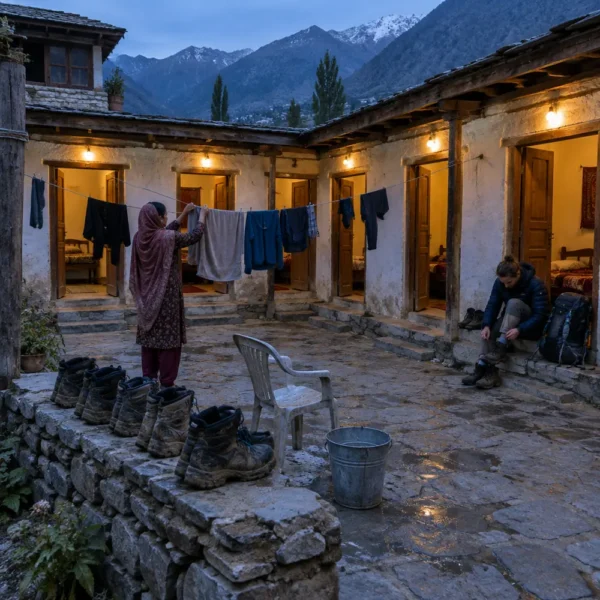
Altitude is the other half of the calculation. Sleeping height matters more than daytime height, and a group that gains a thousand metres of it in one hop spends the next day dull-headed. Where a route has to climb, we spread the gain over two nights. That is not a medical protocol; it is how we keep the second half of a trip as good as the first.
Money enters here too. Nights are the largest line in a group quotation after transport. As a sense of scale rather than a quotation, a simple guesthouse room in a northern town might sit at a few thousand rupees a night, somewhere in the twenties or thirties of dollars at recent exchange rates, while a city hotel in Islamabad is a multiple of that. We quote in rupees and state the rate we used, because an old dollar figure is worse than none.
Bed capacity is checked before anything else, so we keep a second option for each base. The destinations section covers the valleys we use most, including those that only work with two nights, such as Khaplu, where the old town and the palace need a full day.
Where the Walking Day Sits, and Why
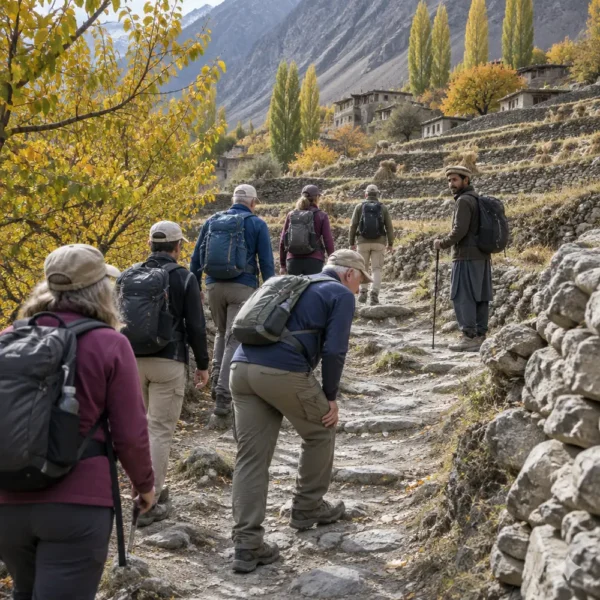
Almost every ten-day route we build has one walking day, and its position is fixed by two rules. It goes after the group has slept at height for at least two nights, and it goes before the longest drive rather than after it. Walking on the third morning, when legs have adjusted and nobody has yet been broken by a nine-hour road day, produces a group still interested in the far end of the trip.
The walking day is also the trip’s pressure valve: nobody has to be anywhere at a particular hour, a member can sit it out in the guesthouse garden without holding anyone up, and the guide learns who is strong, who is nervous and who needs a shorter line up the hill. A route that only works if everyone is equally fit will fail on someone.
Length matters more than height. A four to six hour walk on a village trail, with a stop for tea and a slow descent, does the job. A summit push does not, and we do not put one in a ten-day group plan. A proper trek is a different itinerary with different nights attached.
The walking day needs a bad-weather answer. Trails in the northern valleys can be wet, and a wet trail with a group is a slow trail, so every walking day carries an alternative: a village circuit, a shorter out-and-back, or a drive to a nearer viewpoint. No day depends on one path being open.
The Long Drives Nobody Warns You About
Every ten-day route contains two drives that look ordinary on paper and are not. The first is the run north from Islamabad, printed as twelve to fourteen hours and usually broken, because a group reaching a mountain guesthouse at midnight has lost its first morning. The second is whichever valley hop the map shows as a short line and the road delivers as a full day.
We plan long drives in daylight only, with a stated departure hour and a known lunch stop. A drive that starts at six and ends at four leaves an evening; started at nine it leaves nothing. Groups forgive distance, not arriving in the dark with bags to carry.
Three habits keep road days bearable. The vehicle carries water for the whole day, not for the next town. Everyone knows the two places the road might close and roughly how long a repair takes, so a stopped hour is expected rather than a crisis. And no road day ends with an activity attached; the fort goes to the next morning. We publish the shape of those days before anyone books on the guided Karakoram Highway tour, and every route on our tours list is built the same way.
Who Drives, Who Books the Jeeps, Who Decides at 6am
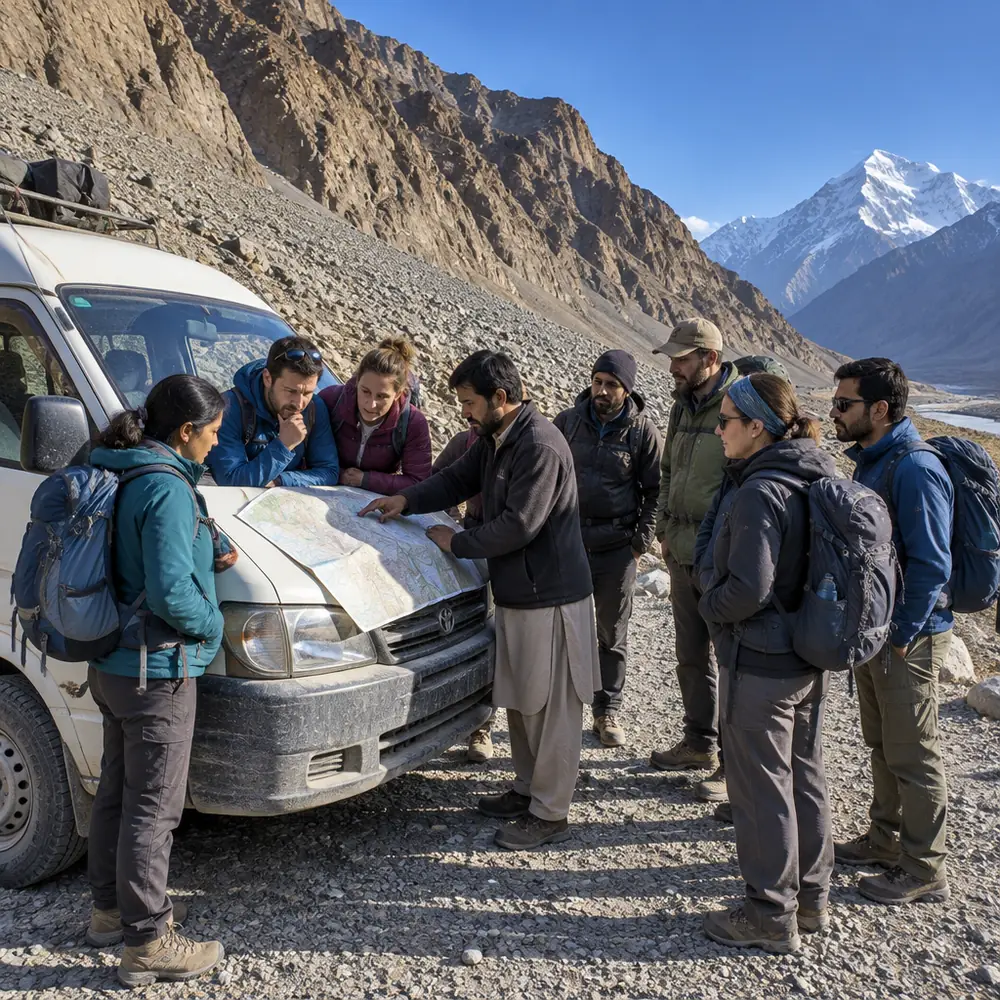
A group route fails for organisational reasons far more often than scenic ones, so every ten-day plan names three people and their limits. The driver owns the vehicle, the road and the clock, and may refuse a departure he thinks unsafe. The guide owns the day: what happens, in what order, what gets dropped. The office owns bookings, jeeps, permits and money, and answers the phone at the hours the road runs.
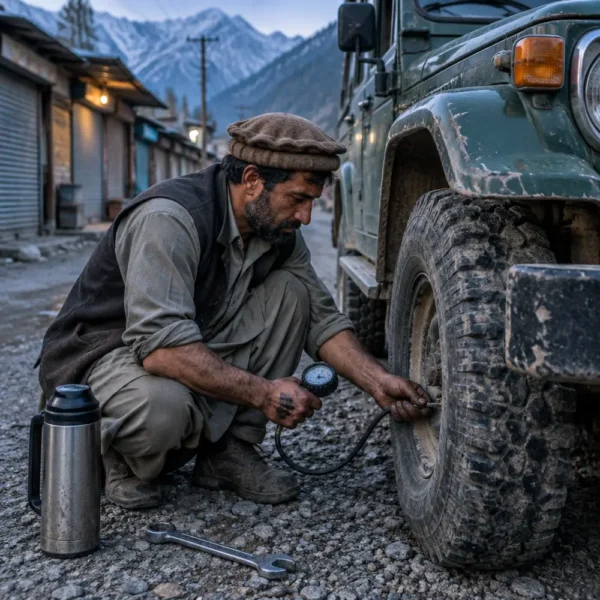
The 6am decision separates a workable route from a hopeful one. Jeep tracks, side valleys and high passes are approved that morning by driver and guide together, using what the road and the weather are doing at that hour. A jeep booked three weeks ahead is a name and a price; it becomes a vehicle when someone has looked at the sky. We say this at the briefing, not at the trailhead.
Jeep operators are booked by the base, not the day: the same driver on the same track for three days is worth more than three cheapest quotes, and gives an honest answer at six in the morning.
What a Group Actually Notices by Day Ten
By the tenth morning nobody counts valleys. They talk about the guesthouse owner who remembered how they take their tea, the afternoon nobody scheduled, the driver who stopped unasked at the good view, and the day the plan changed and the guide made the new plan look deliberate. They notice what is missing: the 5am bag call after a late arrival, the four-hour drive to a viewpoint in cloud, the argument about money in a bazaar.
So the document matters less than the rules under it. Bases earn their nights, the walking day sits where legs can use it, long drives stay in daylight, and one person may change the plan on the morning it needs changing. A lakes stop or a fort detour slots into that structure and cannot be bolted onto a list of stops.
Planning a group departure for next season? Send the month, the number of people and how much walking the least fit member is happy with. We come back with bases, nights and the two long drives written out, plus a rupee figure with the exchange rate stated. Start at the contact page; to see what a group trip costs first, our travel costs guide sets out the lines we quote against.
Frequently asked questions
How many people are in a typical group departure?
Eight to twelve, the range a minibus and a guesthouse handle without strain. Smaller groups cost more per person, because the vehicle and guide are the same.
Do I need to be fit for a ten-day northern Pakistan tour itinerary?
No, but the least fit member sets the walking. One four to six hour village walk is the usual maximum, and anyone can sit it out at the base without holding the group up.
Is a jeep needed, or can the whole route be done by road?
Most of it is minibus on asphalt. Two or three side valleys need a jeep, hired locally by the base and decided the same morning.
How far ahead should a group book?
Three to four months for spring and autumn departures, longer for peak October, because beds in the small bases are limited.