

Skardu
Skardu is the wide, cold, high valley in the east of Gilgit-Baltistan where the Indus slows down and the Karakoram steps back to let you look at it. It is the capital of Baltistan, the base for K2 expeditions, and the one place in northern Pakistan where you can drive to a fort, a cold desert, a glacial lake and a 4,100 metre plateau inside four days.
Most itineraries give it two nights on the way to somewhere else. That is barely enough to see Shangrila. This guide covers what a Skardu tour actually includes, how many days you need, how the road and the flights behave, what the places are really like, and the practical points nobody mentions before you book: altitude, jeep costs, the Deosai window and how far everything is from everything else.
Skardu tour packages: how to book this valley
Skardu sells three ways with us. A seat on one of our public departures, where we set the date and you join the group. A private group on your own dates, with your own vehicle and hotel standard, quoted on how many of you are travelling. Or, if you are coming from outside Pakistan, a package quoted in US dollars from our Explore Pakistan collection. The road, the hotels and the guides are the same in all three. What changes is who sets the date and who you share the vehicle with.
Skardu Himalaya package
Lahore departure, night drive up the motorway, a night in Chilas, then Shangrila, Khaplu valley, a full day on Deosai by jeep, Shigar valley and the cold desert, and the return road. The trip most people mean when they ask for Skardu.
See the day by day planDeosai, Hunza and Skardu
Skardu first, then the Indus road to Gilgit and up into Hunza for Karimabad, Altit and Baltit. The best value version for a first trip north, because it covers the two valleys people argue about.
See the loopDiscover Pakistan group tour
North and south in one movement: Lahore, Islamabad, the Karakoram, Skardu and back down, with the culture of the plains built in. For travellers who are flying this far and want one booking.
See the full tourOn prices. A Skardu trip is quoted on your dates, your party size, the vehicle and the hotel standard, because two people in a Prado and twenty on coaster buses are not the same product. Send us your dates and how many are travelling and you get a line by line quote, in rupees for domestic travellers and US dollars for international ones. Nothing on this page is a fixed per-person rate.
Where Skardu is, and why it matters
Skardu sits in the northeast of Gilgit-Baltistan, about 2,228 metres above sea level, on a broad floor of the Indus valley where the river leaves the mountains and slows into braided channels. The Karakoram runs along one side, the Himalaya along the other, and the place has been the capital of Baltistan since long before either name appeared on a map.
Its real importance to a traveller is geographic. Every expedition to K2, Broad Peak and the Gasherbrum group passes through Skardu. The last road point before the Baltoro glacier is Askole, and everything that goes up there is bought, hired or carried from this valley. That is why the town has a better bazaar than its size deserves, an airport, and hotels that can dry a down suit overnight.
It is also, quietly, one of the most photogenic places in Pakistan: apricot orchards, cold desert dunes, turquoise lakes sitting under bare rock, and forts that were built by a dynasty most visitors have never heard of. The Balti people speak Balti, a Tibetan language, and their food, music and architecture feel closer to Ladakh than to the Punjab, which surprises people who came north expecting one culture.
The places we take you in Skardu
These are the stops that make a Skardu itinerary. Distances are short in kilometres and long in minutes, because the valley roads are narrow and slow. Everything below is inside the district or within a half day of it.
Shangrila and the Kachura lakes
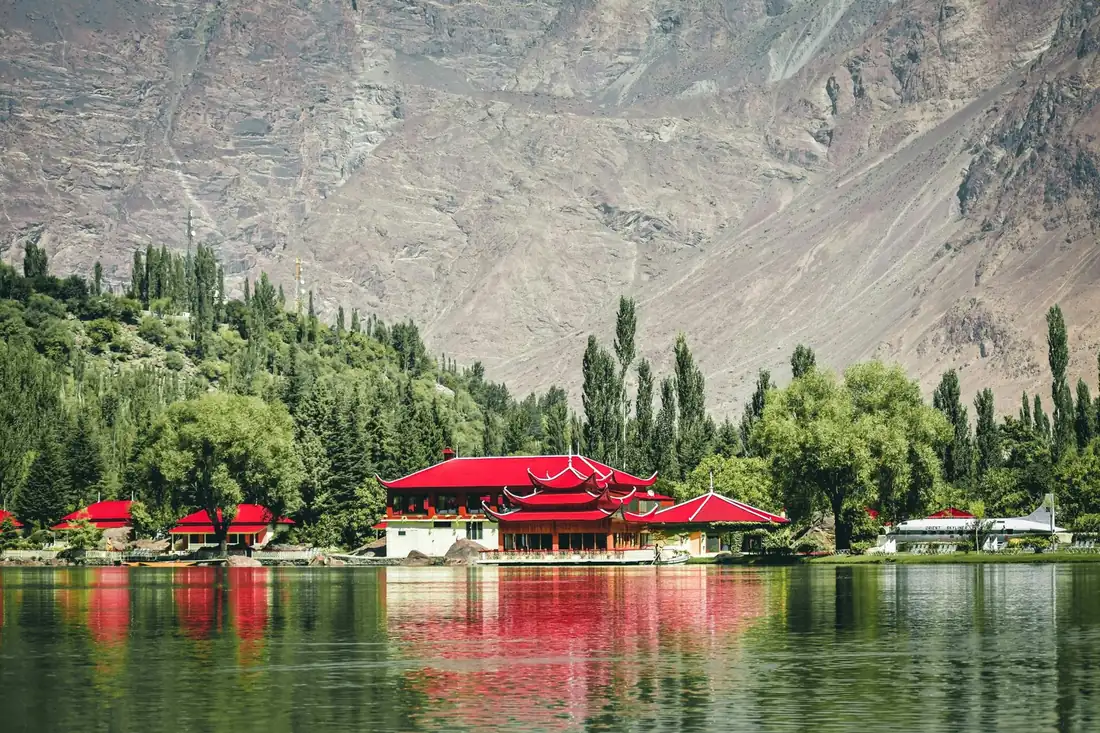
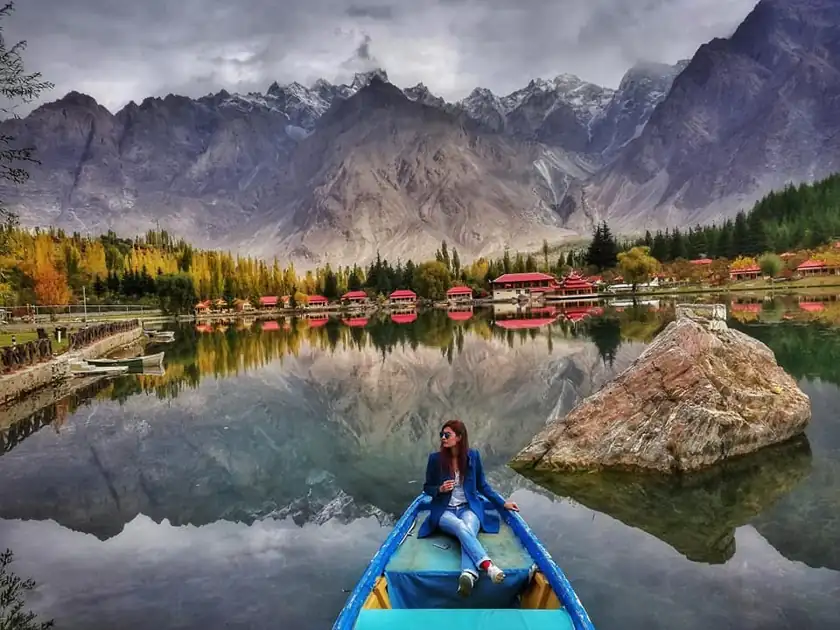
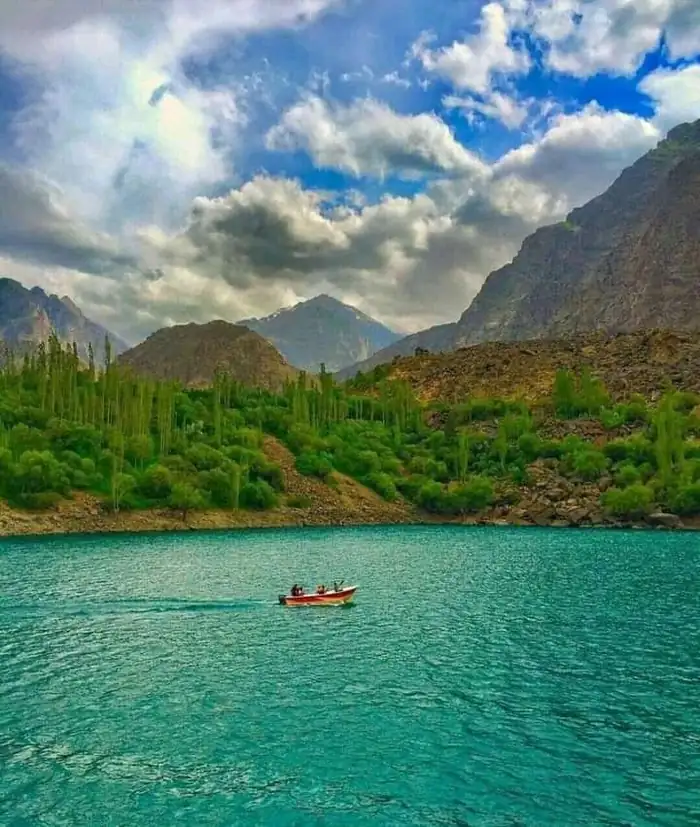
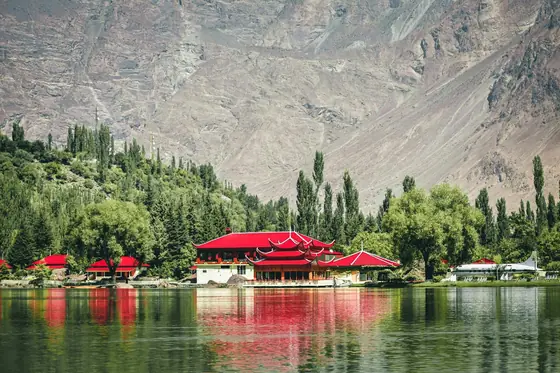
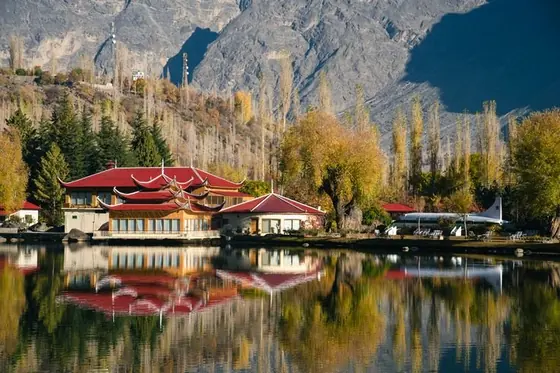
Lower Kachura, the lake the resort is built around, is the picture everyone has seen: still water, poplars and red roofed cottages with the hills folded around them. Fifteen minutes further up the hillside is Upper Kachura, deeper, colder and quieter, reached by a steep flight of steps or a short jeep track. Both are at their best early in the morning before the day trippers arrive, which is when we take you.
Shigar Fort and the Shigar valley
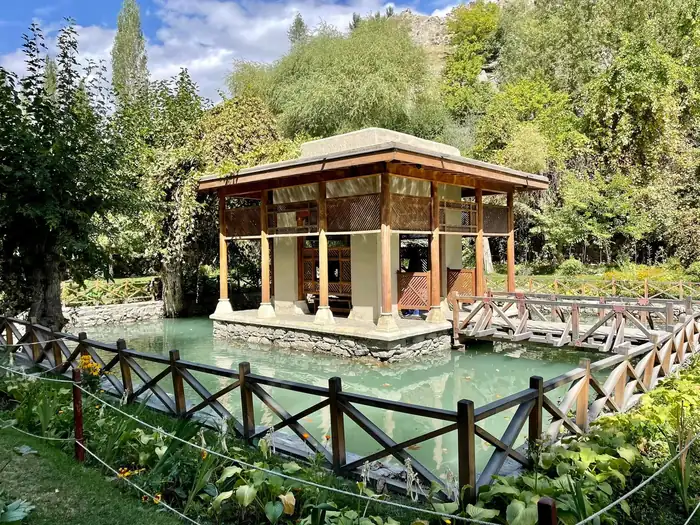
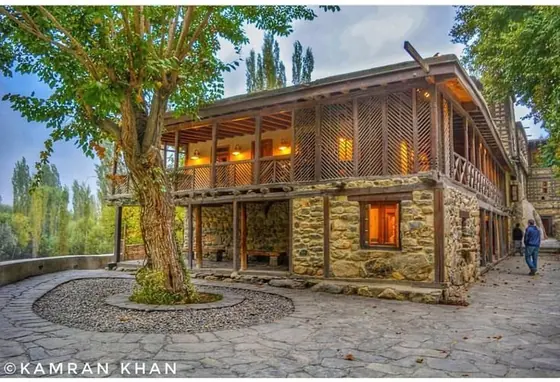
About 32 kilometres east of Skardu, Shigar Fort is a seventeenth century Balti fort palace, restored stone by stone and now run as a heritage hotel. The older name is Fong Khar, the fort on the rock. What makes it worth the drive is not the hotel but the layers: a small museum of Balti life, the old audience hall, the pond and the gardens, and apricot orchards and irrigation channels outside that are still worked exactly as they were. The valley beyond it leads up towards the Baltoro approach.

Khaplu Palace, and the long valley east
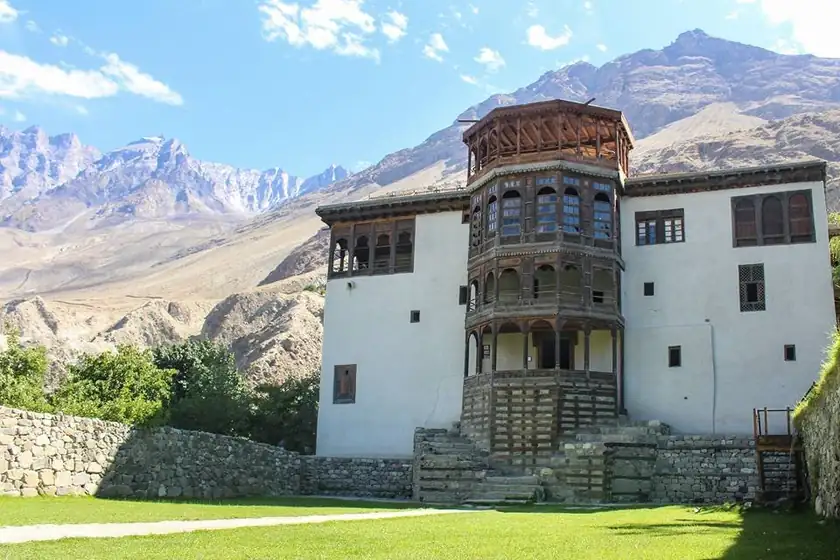
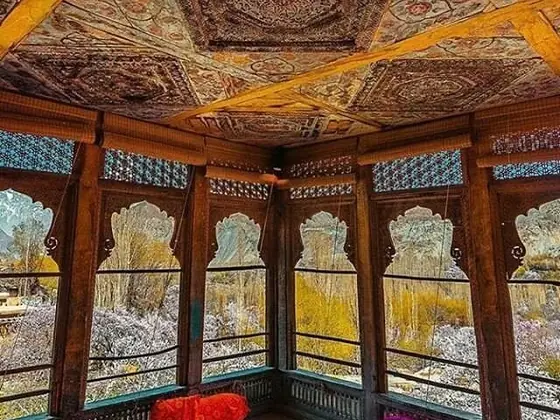
Khaplu is about 100 kilometres further east in Ghanche district, a drive of two and a half to three hours through some of the driest, starkest country in Pakistan. The Yabgo Khar palace is a nineteenth century carved timber building restored as a hotel and museum, and the old town around it is a maze of narrow lanes under the ridge. Fewer than one in twenty visitors to Skardu get this far, and their loss is your gain.

Deosai and Sheosar Lake
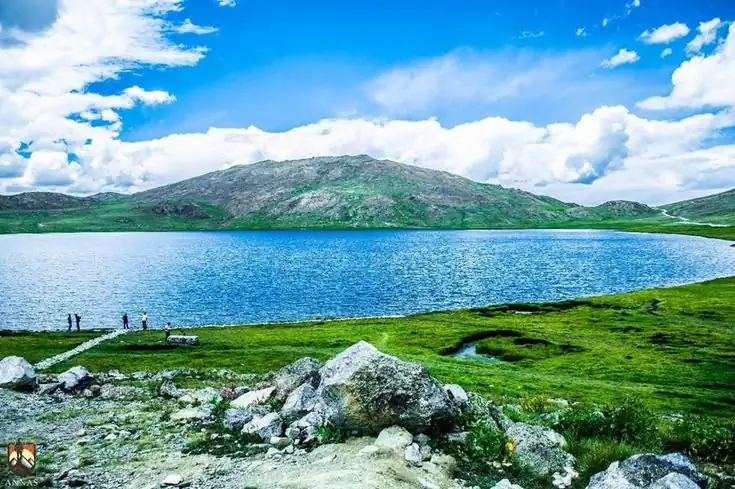
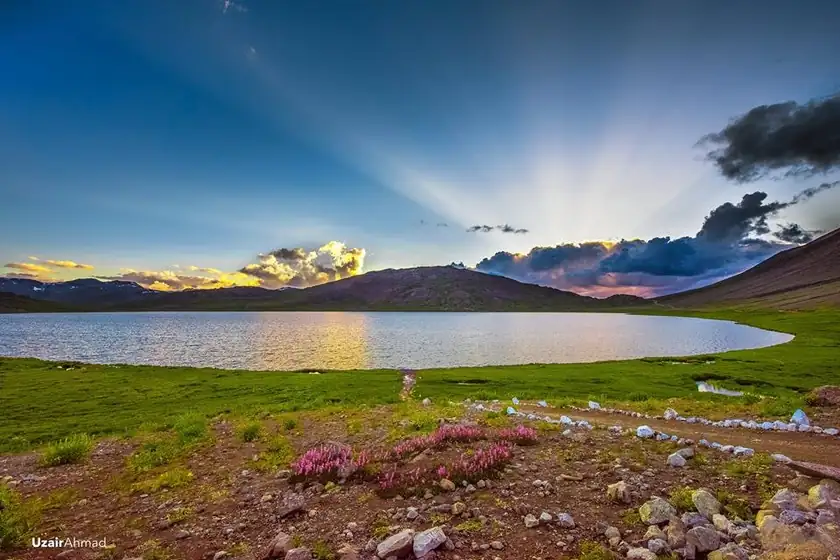
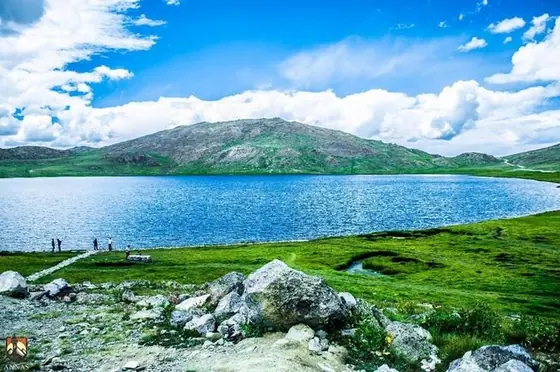
Deosai is a plateau rather than a park in the usual sense: a rolling upland at about 4,100 metres, the second highest in the world by most counts, with no trees, no villages and a road across it that is rough jeep track for most of its length. Sheosar Lake sits near the western edge, wide and cold and utterly still on a good day. This is Himalayan brown bear country, and the park is one of the few places where protection has actually worked. It opens late June and closes late September, and the jeep is not optional.
The cold deserts: Katpana and Sarfaranga
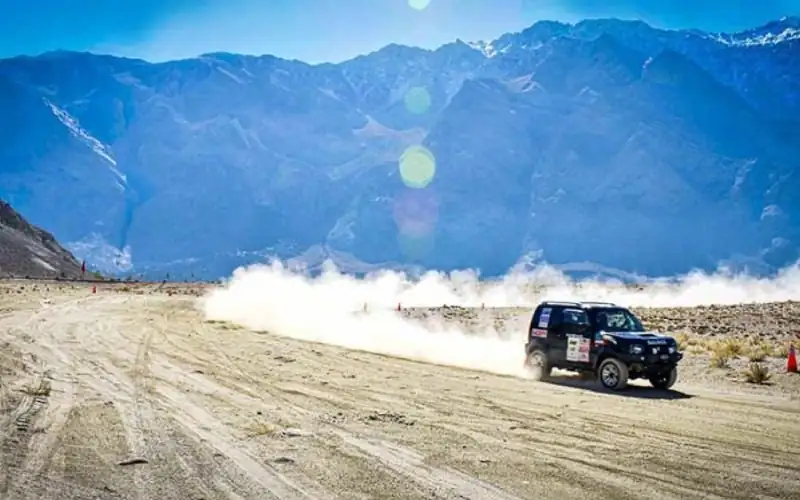
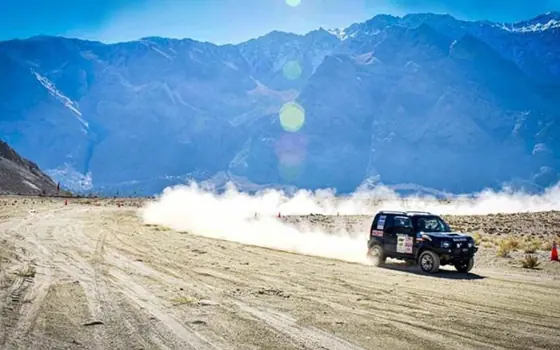
Ten minutes from the airport, on the way into town, the ground turns to sand dunes at 2,200 metres: the Katpana cold desert, also called Sarfaranga. It is the smallest and one of the strangest landscapes in the country, sand and rock with snow peaks behind it, and it photographs better in low light than almost anywhere in the valley. The jeep rally held here every year has made it familiar to Pakistani travellers and it is still almost empty on a weekday morning.
Satpara Lake and the dam
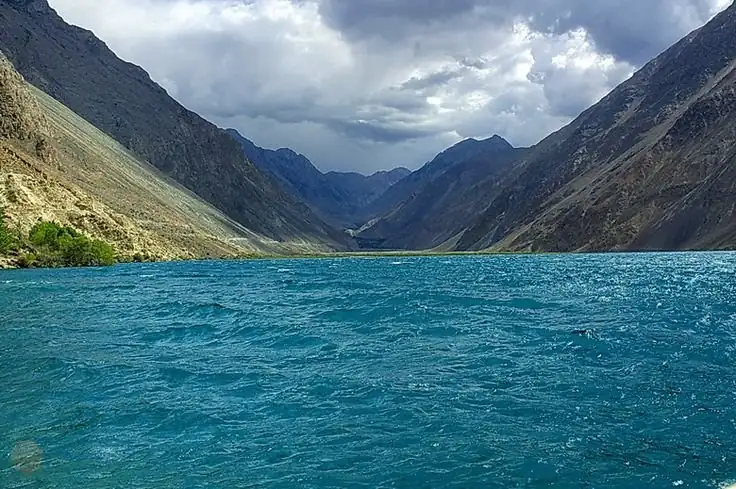
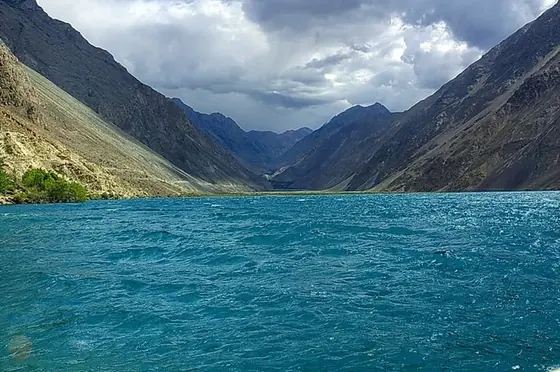
Satpara sits a short drive south of town, a glacial lake at around 2,600 metres that now doubles as the water supply for Skardu through the dam below it. Boats go out on it in summer, the fishing is good and the walk along the shore takes an hour. It is the easiest half day in the valley and the one to keep for the afternoon you arrive, because it needs no planning at all.
Manthoka waterfall, in Kharmang
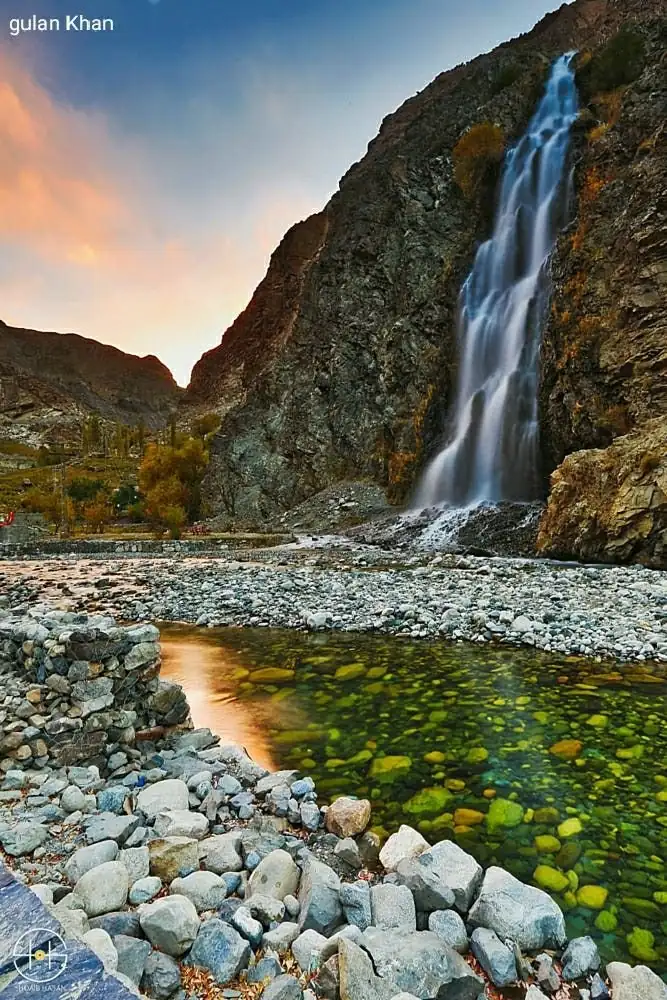
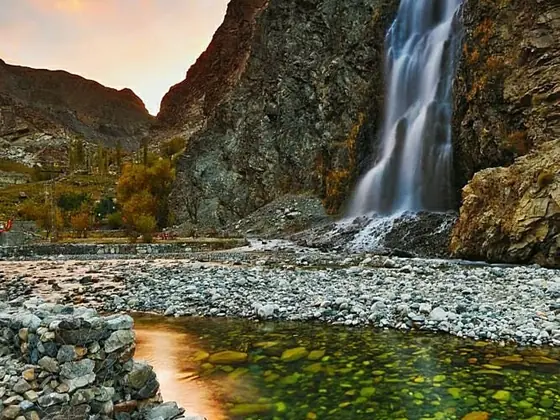
About 80 kilometres south of Skardu towards Kharmang, Manthoka is a wide curtain of water coming off a rock ledge in a green side valley. It is a picnic stop rather than a hike, best in summer when the flow is heaviest, and it makes a natural pairing with the Kargil road and the old villages along it.
Kharpocho Fort, the bazaar and the Buddha rock
Above the town, Kharpocho Fort was built in the sixteenth century under the Maqpon ruler Ali Sher Khan Anchan and looks straight down on the Indus and the bazaar. The climb takes twenty minutes and the view explains the whole valley. In the bazaar below you find dried apricots, walnuts, almonds and gemstones sold out of the ground, and a short drive out is the Manthal Buddha rock, an eighth century carving cut into a boulder when this was a Buddhist country.
Two more places we add when the group has time: Basho valley, a forested side valley used by trout fishermen, and the high meadows and shepherd settlements reached on foot from Shigar. Both need a jeep and most of a day.
How our seven day Skardu tour actually runs
This is the real shape of the package, not a marketing version of it. It leaves from Lahore in the evening so that the long drive north happens while you sleep, and it breaks the Karakoram Highway with a night in Chilas rather than pushing straight through.
- Day 0, evening
Departure
10 pm departure from Lahore by private transport, north up the motorway through the night. Groups joining from Islamabad meet the vehicle in the morning instead.
- Day 1
Islamabad to Chilas
The Karakoram Highway through Besham, with stops at the Indus and at the viewpoint where the Karakoram, the Himalaya and the Hindu Kush meet near Jaglot. Night in Chilas.
- Day 2
Chilas to Skardu, and Shangrila
East along the Indus to Skardu, check in, then Lower Kachura and the Shangrila lakeside in the afternoon light.
- Day 3
Khaplu valley
The long drive east to Ghanche, the Yabgo Khar palace at Khaplu and the old town, back through the dry valleys in the evening.
- Day 4
Deosai jeep safari
A full day up onto the plateau by jeep, Sheosar Lake and the bear country, with a picnic lunch and a slow return. The best day of the trip for most people.
- Day 5
Shigar valley and the cold desert
Shigar Fort and the old settlement in the morning, Sarfaranga and Katpana in the late afternoon when the dunes are worth photographing, then the bazaar.
- Day 6
Return journey
Back down the Indus and onto the highway, night in Chilas or Besham depending on the road and the weather.
- Day 7
Home
Islamabad in the afternoon, Lahore late in the evening.
Two variations are worth knowing about. If you fly up instead of driving, you gain two full days in the valley and we move Deosai and Shigar later in the trip so the days are not back to back. If you are continuing to Hunza, the loop turns at Gilgit instead of coming home, which is the eight day package.
When is the best time to visit Skardu?
Skardu is high, dry and on the far side of the monsoon, so its seasons do not match the rest of Pakistan. What you get depends on whether you are chasing blossom, an open Deosai road or autumn colour.
| Months | What it feels like | Worth it for |
|---|---|---|
| March | Cold, 10 to 18C by day, freezing at night, snow on the side valleys | Cheap rooms and an empty valley. Deosai is closed and so are some side roads |
| April | Blossom on the apricots, warm afternoons, cold nights | The blossom fortnight. The most photographed two weeks in Baltistan |
| May | Clear, dry, 20 to 28C by day | The lakes at their best colour and the road in good order |
| June | Warm, dry, the highest meadows greening up | Deosai opening late in the month, long days |
| July to August | Hot in the basin, 30 to 35C, cloud building most afternoons | Deosai in flower and the only window for the plateau, with monsoon landslide risk on the highway |
| September | Clear, dry, comfortable, sharp light | The best all round month. Deosai still open, peaks clean |
| October | Gold poplars, cold mornings, snow dusting the tops | Autumn colour, before the plateau closes |
| November to February | Cold, minus 5 to minus 10C at night, occasional snow in town | Winter scenery and low prices, with flights unreliable and Deosai shut |
If you are booking one trip, aim for the second half of May or September. Both give you an open Deosai road, clear water and a highway that is not sliding. The month by month picture across the whole country is in our Pakistan season guide, and if blossom is the reason for the trip, the timing notes in the Skardu travel guide go into it week by week.
How to get to Skardu
| Route | Distance and time | Notes |
|---|---|---|
| Fly Islamabad to Skardu | About an hour in the air, half a day door to door | The fastest way in and the least reliable. Weather cancels flights, sometimes for days |
| Karakoram Highway and the Indus road | Roughly 700 km, 16 to 20 hours of driving | Open all year. We break it at Chilas or Besham rather than doing it in one push |
| Babusar Pass through Naran | Shorter, one very long day from Islamabad | Open roughly June to October only. Far prettier than the highway, and closed the rest of the year |
| From Gilgit | About 220 km, 6 to 7 hours | The Indus road east. Spectacular, narrow in places, and the link for anyone doing the northern loop |
| From Hunza | Via Gilgit, a long day of 8 to 9 hours | Two valleys, one road, and the reason the eight day loop exists |
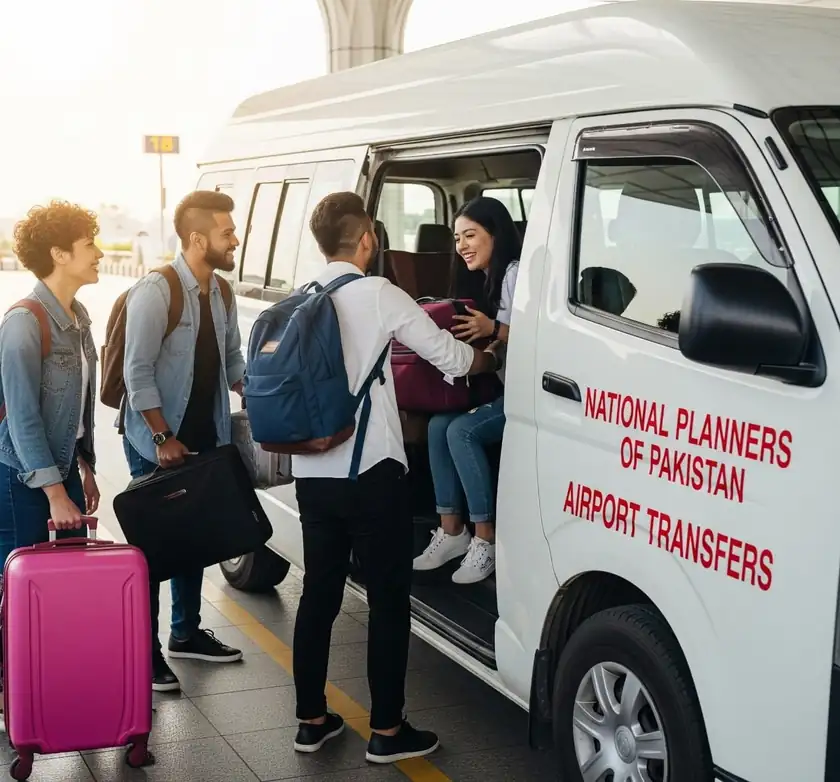
By air. The Islamabad flight takes about an hour and the approach into the valley is worth the ticket on its own. It is also the single most cancelled route in the country, because cloud in a bowl of 7,000 metre peaks closes it. We never build a tight connection around it, and we always hold a road plan behind it.
By road. The highway north is one of the great drives of Asia and it is a long one. The full breakdown of the two routes north, and where to stop, is in our Karakoram Highway guide and the Islamabad to Hunza distance guide, which covers the same first day. Inside the valley you need a vehicle and a driver who knows the side roads; a car that manages the highway will not manage Deosai, and that is where the jeep cost comes from.
Jeeps and the Deosai road. A Prado for the Skardu to Deosai round trip runs about Rs 15,000 to 17,000 for five or six passengers, roughly 55 to 60 US dollars, and the same rate applies to Basho valley. We include it in the package so the number is not a surprise on the day.
Paperwork. Skardu, Shigar, Khaplu and Deosai need no permit. Carry your passport for the checkpoints on the highway, and have your Pakistani visa before you fly: our visa services page covers what each nationality needs and how long it takes.

What a Skardu trip costs, and what moves the number
Four things decide the price, and they are the same four every time. First, how you reach the valley: the flight costs many times the road but saves two days of driving. Second, the vehicle inside the valley, because Deosai and Basho need a 4x4 and a coaster cannot go where a Prado goes. Third, the hotel, where the gap between a guesthouse in town and a heritage room at Shigar or Khaplu is wide. Fourth, the size of the group, since a jeep split six ways is cheap and split two ways is not.
What does not change much is food and entry tickets, which are small, and what people consistently forget to budget for is the jeep day and the extra night on the road. We quote line by line after we know your dates, so you can see what the transport costs, what the rooms cost and where to trim without losing the trip. For daily spending money by category, our Pakistan travel costs guide has real numbers for food, transport and tips.
What is normally included
- Transport from Lahore or Islamabad, with a professional driver
- Hotel or guesthouse on twin sharing, with breakfast
- A jeep for the Deosai day, and for Basho if it is on your route
- A guide who knows the valley, not a driver reading a script
- Fuel, tolls, parking and driver allowance
What is normally extra
- Air fare to Skardu, if you choose to fly
- Lunches, dinners and personal drinks
- Entry tickets to forts, parks and the Deosai park fee
- Boating at Shangrila or Satpara
- Anything a hotel bills to your room
Where to stay in Skardu
There are four areas and each suits a different trip. Skardu town has the widest range, from simple guesthouses to the best hotels in Baltistan, plus the bazaar, the hospital and the airport within twenty minutes. Shangrila and the Kachura lakes are for scenery and quiet, at the cost of a drive into town for everything else. Shigar suits anyone who wants the fort and the orchards on the doorstep. Khaplu is a two and a half hour drive east and worth one night if the palace is the point of the trip.
Ask three questions before you confirm, wherever you book: is there hot water in the morning, is there backup power, and does the room face the mountains. Outside midsummer many places run on solar with a generator behind it, and in April and October the nights are cold enough that heating matters more than the view. Tell us your budget and we hold the rooms, because Shigar and Khaplu have very few good rooms and they go first.
Altitude, weather and what to pack
Skardu town is about 2,228 metres, which most people handle without noticing. The day that catches people out is Deosai: you drive from 2,200 metres to over 4,000 in a few hours, spend the day walking around, and come back down. That is not dangerous for a healthy adult but it produces headaches, breathlessness on stairs and a bad night, so we keep the pace slow, keep water going and turn back if anyone feels unwell.
Pack for the valley
- Layers, not one heavy coat: 25C afternoons and 5C nights in the same week
- A windproof outer layer for Deosai, even in July
- Sun hat, sunglasses and high factor sun cream: the light is thin and strong
- Trainers with grip for the fort climbs and the lake steps
- A power bank, because charging points are few on long driving days
- Cash in rupees: card machines fail and there is no ATM worth relying on above Gilgit
Leave at home or plan around
- Drones, unless you have written permission. Much of Baltistan is restricted airspace
- Alcohol: it is not sold and not welcome, and hotels do not serve it
- Shorts and sleeveless tops outside your own hotel garden
- Any tight schedule built on a flight landing on time
- Heavy trekking kit for a valley tour. It stays in the vehicle and gets in the way
Food, people and a little etiquette
Balti food is mountain food: apricot oil, buckwheat, barley bread, walnuts, dried fruit and river trout in the places that do it properly. The apricots are the local obsession and deservedly so, fresh in July and dried the rest of the year. Chai is served everywhere and refusing it is a small insult in a village, so accept the first cup even if you do not drink it. Ask before photographing people, and particularly women, in the old towns; a smile and a gesture at the camera gets a yes far more often than a lens in someone’s face.
Dress modestly outside the hotels, especially in Khaplu and the villages, where you may be the first foreigner a family has seen this year. A scarf for women and long trousers for men are enough. Nobody will be unpleasant about it, but the welcome warms noticeably when you make the effort, and in Baltistan the welcome is half the reason to come.
One practical point about the bazaar: the gemstones are real and the prices are not fixed. If you are buying, buy from a shop with a licence and ask for a receipt. If you are not buying, say so early and the conversation stays friendly.
Getting married in Skardu
Skardu is one of the settings we run destination weddings in, and it does things no other valley in Pakistan can do: a nikah on the Shangrila lakeside, a mehndi in an apricot orchard near Shigar, a reception in the courtyard of a Balti fort, and photographs on the cold desert at sunset, all within an hour of each other. The hard part is never the venue. It is moving fifty guests to a valley that is a long drive or an unreliable flight from the capital, which is exactly the part we handle.
We plan the venue and its permissions, the guest travel as one movement with a road plan behind the flight, hotel blocks, decor and lighting brought up from Islamabad where the valley cannot supply it, catering that can feed your count, and a coordinator in Skardu from setup day to the last departure. Every wedding we quote is priced on the site survey, not on a brochure. The full picture of how we work is on the Skardu destination wedding page and in our guide to destination weddings in Pakistan.
Skardu in pictures
Skardu questions, answered
How many days do you need in Skardu?
Four days is the minimum that makes sense: one to arrive, two full days for the lakes and the forts, one to get out. Seven days is the comfortable version, which is what our Skardu package runs, and it is the first length at which Deosai, Khaplu and Shigar all fit without a day spent entirely in a vehicle.
Is Skardu worth visiting, or should I just go to Hunza?
They are different trips. Hunza is a valley you look at, with forts, glaciers and a short drive between viewpoints. Skardu is a wide basin on the Indus with colder desert, deeper valleys and the trailheads for K2 and the Baltoro. If you have ten days or more, do both, because the road between them through Gilgit is one of the great drives of the country. If you have four or five days and want the easier trip, Hunza is the better first choice.
How do you get to Skardu?
Two ways. By air from Islamabad, about an hour, on a flight that is cancelled whenever the valley is clouded in. By road up the Karakoram Highway and then east along the Indus, roughly 700 km and 16 to 20 hours of driving from Islamabad, which we always break with a night in Chilas. In summer the shorter Babusar route through Naran is open and saves several hours, but only from about June to October.
Is the flight to Skardu reliable?
No, and nobody honest will tell you otherwise. Skardu sits in a bowl of high mountains, so low cloud and wind cancel flights, sometimes for two or three days in a row in the shoulder months. We plan road travel with the flight as an upgrade rather than building an itinerary that collapses if the plane does not go.
When is the best time to visit Skardu?
Late April to October. April brings blossom to the apricot orchards and cold nights. May and June are the clearest months for the lakes and for Deosai as it opens. July and August are green and warm but the monsoon makes the highway slide. September and early October are the best all-round window: stable weather, autumn colour and an open road.
Can you see K2 from Skardu?
Not from Skardu town. K2 is 8,611 metres and it is hidden behind the Baltoro and the peaks in front of it. Skardu is where the expeditions start: you drive to Askole and walk from there, and the mountain only appears days up the glacier. What you can see from the valley is the Karakoram wall that surrounds it, which is worth the trip on its own.
Do foreigners need a permit for Skardu?
Skardu, Shigar, Khaplu and Deosai are open and need no special permit. You need a valid Pakistani visa and your passport for the checkpoints on the highway. A few restricted valleys close to the Line of Control need a no-objection letter, and we tell you before you book if your route touches one.
Is Deosai open all year?
No. The plateau sits at about 4,100 metres and holds snow into June, so the road across it normally opens late June and closes again by the end of September or early October. In July and August the flowers are out and the brown bears are most often seen. Outside that window the park simply is not part of a trip.
What does a Skardu tour cost?
Four things decide it: how you reach Skardu, the vehicles you use inside the valley, the standard of hotel, and whether Deosai needs a separate jeep. Air travel costs far more than the road but saves two days. A Prado for the Deosai round trip is around Rs 15,000 to 17,000 for five or six passengers, roughly 55 to 60 US dollars, and that is a real number people forget to budget. We quote line by line, in rupees for domestic travellers and US dollars for international ones.
Can I combine Skardu with Hunza and Gilgit?
Yes, and most people should. Skardu to Gilgit is about 220 km and six to seven hours on the Indus road, and Gilgit to Karimabad in Hunza is another 100 km. Our eight day Deosai, Hunza and Skardu package does exactly that loop, and the fourteen day Discover Pakistan tour adds the south as well.
Is there mobile and internet coverage in Skardu?
In town, yes: 4G from the main networks works well enough for calls and messages, and hotels have wifi that is fine for email and unreliable for video. Coverage thins as soon as you leave the basin. Expect nothing on the Deosai plateau, nothing in the side valleys and very little on long stretches of the highway, so download offline maps and tell people at home before you go.
Can you arrange a wedding in Skardu?
Yes. Skardu is one of the settings we run destination weddings in, and the lakes, the Shigar and Khaplu forts and the cold desert are all usable with the right permissions. Guest travel is the hard part, because a party of fifty means either a convoy on the highway or a block of seats on flights that may not operate. We plan around that and hold a road plan for every wedding party.
Other pages worth reading before you book
- Hunza and Gilgit, the other two bases on the northern circuit
- Northern Pakistan, the hub page for every valley we cover
- Fairy Meadows and Nanga Parbat and Naran and Kaghan, for the road north through Babusar
- The most beautiful places in Skardu and the Deosai plateau guide on our blog
- The most beautiful lakes in Pakistan, including the Kachura lakes and Sheosar
- Forts of Pakistan, which covers Shigar and Khaplu
- Trekking in Pakistan, for anyone continuing towards K2 or the Baltoro
- Pakistan bucket list itineraries for 7, 10 and 14 day route ideas
- Is Pakistan safe to travel, the honest answer for 2027
- Group tour 2027 for fixed departures at a shared price
Plan your Skardu tour
Tell us your dates, how many are travelling, and whether you want to fly or drive. We send a day by day plan with a firm quote, in rupees for domestic travellers and US dollars for international ones, and we answer on WhatsApp within the working day.
Get a quote on WhatsAppSend an enquiry