Pakistan has forts in places that make no sense until you are standing in them: on a ridge above a Hunza village, alone in a desert, on the edge of a river gorge on the road to the Khyber. Six of the seven below are open to visitors, most cost little or nothing, and each one asks for a different kind of day. What follows is which fort suits which trip, and how much time to give it.
1. Baltit Fort, Hunza
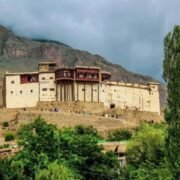
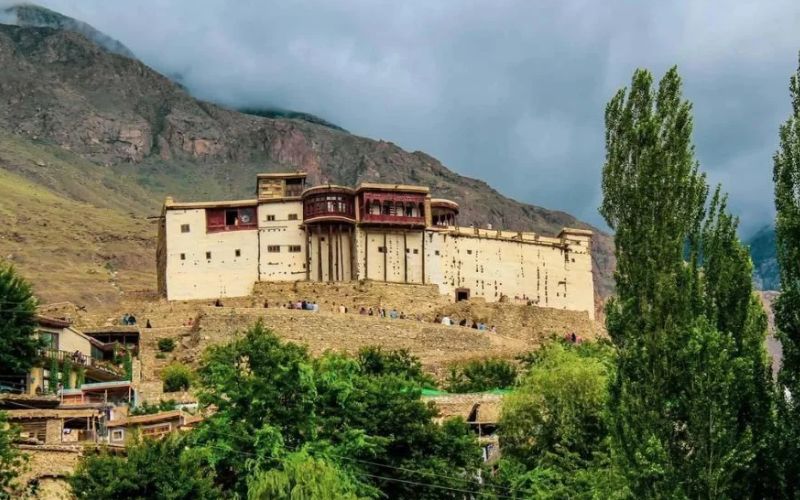
The best preserved and most easily visited fort in the north, sitting on a moraine above Karimabad with the whole Hunza valley laid out below it. Baltit was the seat of the Hunza mirs for centuries, with Tibetan-influenced timber framing layered onto stone, and it has been restored with care rather than rebuilt. Entry is ticketed, opening hours are seasonal, and the walk up through the old village takes about twenty minutes from the main bazaar.
Give it ninety minutes including the roof terrace. Pair it with Altit Fort a short drive down the valley, which is older and quieter. Our Hunza Valley guide covers where to stay and how the two forts fit into a four-day itinerary.
2. Altit Fort, Hunza
Older than Baltit and lower in the valley, Altit sits above the irrigation channel that made the Hunza oases possible. It is smaller, less photographed and, for that reason, often the better visit. The ticket covers the fort and the surrounding heritage village, and the apricot gardens below are worth the walk down.
3. Derawar Fort, Cholistan
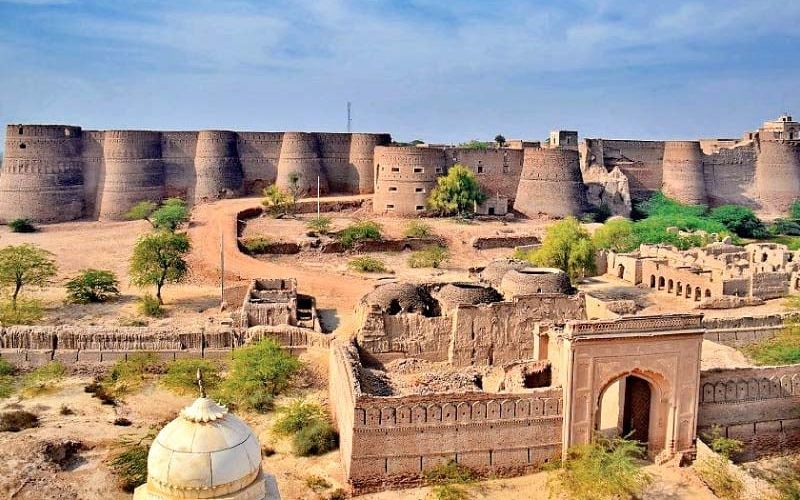
Forty kilometres of desert track from Dera Nawab Sahib, and the most dramatic silhouette in the country: forty bastions on a square plan, rising out of flat sand with nothing around it. Derawar was a Rajput fort taken and rebuilt by the Abbasi nawabs of Bahawalpur, and it is still owned by the family. The interior is not generally open, so the visit is the exterior, the walk around the walls, and the royal tombs nearby.
Getting there is the trip. You need a 4×4, a driver who knows the track, and either a dawn start or a night in the desert. Our Cholistan camping guide covers the logistics, and the itinerary guide shows where Derawar slots into a southern Punjab route.
4. Ranikot Fort, Sindh
Ranikot is the largest fort in the world by circumference, and much about it is still unexplained: nobody is certain who built it, why it was abandoned, or what the Sann gate complex was for. The walls run across the Lakki hills in a shape that reads like a defensive ring around nothing in particular, and the drive from Jamshoro takes about three hours on a rough track.
This is not a fort for a casual stop. Go with a vehicle that can handle the track, take water, and expect to walk. The Makran Coastal Highway guide covers the wider Sindh and Balochistan circuit if you are combining it with the coast.
5. Attock Fort, Punjab
Built by Akbar in the 1580s where the Kabul river meets the Indus, controlling the crossing that every army moving between Kabul and the Punjab had to use. The setting is the point: the fort sits on the riverbank with the water on three sides of the ridge.
One practical caveat: Attock Fort has been a military installation for a long time and public access is restricted. You can see the walls and the river from the outside and from the bridge area, and that is usually what visitors get. Ask locally before planning a visit around it, because access rules change.

6. Takht-i-Bahi, Mardan
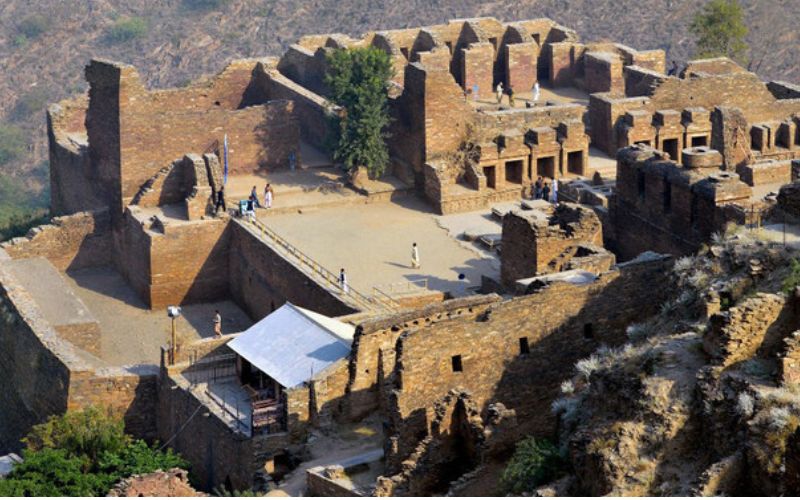
Not a fort, strictly, but the ruins everyone photographs from the road look like one: a Buddhist monastery complex on a ridge above Mardan, founded in the first century and abandoned centuries later, now a UNESCO site. Climbing the stone stairways between the courts at sunrise is one of the best hours in Pakistan, and the site is rarely crowded.
It pairs naturally with Taxila, an hour or so south, which is why Gandhara itineraries run both in one day. The Taxila and Gandhara guide explains the sequence and what you are looking at.
7. Lahore Fort, Lahore
The one fort on this list you can visit without any planning at all. Lahore Fort sits at the end of the Walled City, next to Badshahi Mosque, and holds the Sheesh Mahal, the Naulakha Pavilion and the Moti Masjid inside its walls. Come early, because the fort and the mosque together take half a day and the heat arrives by eleven.
The Lahore travel guide covers the Walled City walk that connects the fort, the mosque and the food streets, and the tour packages page lists the city itineraries that include it.
How to choose between them
If you have one fort day on a northern trip, do Baltit and Altit together in Hunza. If you are going south, Derawar is the one that justifies the desert drive. Ranikot is for travellers who like ruins more than comfort. Attock is a viewpoint, not a visit, and Takht-i-Bahi is the only one on the list where the archaeology is the whole point.
Two general notes. Ticket prices and opening hours change by season and by site, so confirm locally rather than trusting a figure online. And most of these forts are unshaded stone: start early, carry water, and wear shoes with grip, because the staircases were built for people who did not expect visitors.
For the sites around the capital, the Islamabad tour packages cover Faisal Mosque, the Margalla hills and the Taxila day trip. For the northern circuit that holds Baltit and Altit, the Islamabad to Hunza route guide covers the drive and the month-by-month guide covers when each region is at its best.
Last updated: 6 November 2026. Access, tickets and opening hours change; confirm with the site or a local operator before you build a day around one.
Frequently asked questions
Which fort in Pakistan is easiest to visit?
Lahore Fort, because it is in the middle of a major city next to Badshahi Mosque. Baltit in Hunza is the easiest of the mountain forts, reached by a short walk from Karimabad.
Can you go inside Derawar Fort?
The interior is generally closed as it belongs to the Abbasi family. Visitors see the exterior, walk the base of the walls and visit the nearby royal tombs. The desert drive is the main part of the day.
Is Ranikot Fort worth the detour?
For travellers interested in ruins and landscape, yes. It is a three-hour rough drive from Jamshoro, largely unexcavated, and best done with a 4×4, a local driver and a full day.
Do I need a permit for these forts?
Not for Baltit, Altit, Derawar, Ranikot, Takht-i-Bahi or Lahore Fort. Attock Fort is a restricted military site with limited public access, so check the current position before travelling for it.