Ask anyone who has traveled Pakistan’s north which valley stole their heart, and the answer is almost always Hunza. Sitting at about 2,500 meters in Gilgit-Baltistan, along the legendary Karakoram Highway, Hunza pairs snow-crowned peaks with stone villages, terraced orchards and some of the warmest hospitality in the country. This guide covers the best places to visit, when to go, how to get there, and a four-day itinerary you can copy.
Why Hunza Valley Belongs on Every Pakistan Trip
Hunza is compact enough to enjoy in three or four days, yet it packs forts older than most European cities, a turquoise lake created by a landslide, and viewpoints facing several peaks over 7,000 meters, including Rakaposhi and Golden Peak. The food is a souvenir in itself: try chapshuro, the local meat-filled bread, and the dried apricots the valley is famous for. If you are choosing between northern destinations, our Hunza tour packages and Skardu tours pages compare the two most popular valleys.
Best Time to Visit Hunza
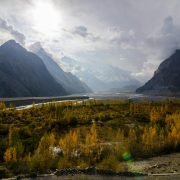
Hunza has two picture-book windows. Spring blossom arrives from late March to mid-April, when apricot and cherry trees drape Karimabad in pink and white. Autumn runs from mid-October into November, setting the valley ablaze in gold and crimson. Between them, May to September brings open passes, green fields and the busiest family travel season. Winter is quiet and starkly beautiful, though cold, and some roads close after heavy snow. For the full country picture, see our month-by-month travel calendar for Pakistan.
Top Places to Visit in Hunza Valley
Karimabad and Baltit Fort
Karimabad is the valley’s main town. Wander the bazaar with its wood-carved shopfronts, then climb to Baltit Fort, a beautifully restored 700-year-old fort museum with balconied views over the whole valley.
Altit Fort and the Royal Garden
The valley’s oldest surviving monument watches over the Hunza river gorge. Its restored royal garden makes a perfect afternoon stop on your way back down to town.
Attabad Lake
Born in 2010 when a landslide dammed the Hunza river, this vivid turquoise lake sits between dramatic cliffs, with boat rides that are hard to resist.
Passu Cones and Hussaini Bridge
The cathedral-like Passu Cones are the most photographed peaks in the valley, and next door sways the famous Hussaini suspension bridge for travelers with steady nerves.
Eagle’s Nest Viewpoint at Duikar
A short drive above Altit, Duikar serves the valley’s definitive sunset over Rakaposhi.

How to Reach Hunza Valley
Most travelers start from Islamabad. By road it is a long but unforgettable two-day run up the Karakoram Highway with an overnight in Naran, Chilas or Gilgit; in summer the scenic Babusar Top route is open and shorter. Flying is faster: the Islamabad to Gilgit flight takes about an hour, weather permitting, and is one of the world’s great mountain flights, followed by a two-hour transfer to Karimabad. Our drivers know these roads intimately, and private transport is included in every package we arrange.
A Perfect 4-Day Hunza Itinerary
- Day 1: Arrive in Gilgit or via Attabad, transfer to Karimabad, evening stroll through the bazaar and dinner at a rooftop restaurant.
- Day 2: Baltit and Altit forts, the Royal Garden, and sunset from Eagle’s Nest at Duikar.
- Day 3: Full-day loop to Attabad Lake, Gulmit, the Passu Cones and the Hussaini Bridge.
- Day 4: Optional day trip toward Khunjerab Pass on the China border, or return to Gilgit for your onward journey.

Tips for Overseas Pakistanis and Foreign Visitors
- Book hotels and transport early for June to August; it is the peak family season in the north.
- Carry cash: ATM coverage in the valley is improving but still unreliable.
- Pack layers even in summer; Karimabad evenings are cool year-round.
- Foreign tourists should carry passport copies. No special permit is needed for central Hunza, and we arrange paperwork for restricted zones.
- Need a Pakistan visa before you fly? See our visa services.
Hunza Valley FAQs
Is Hunza safe for foreign tourists?
Yes. Hunza is among Pakistan’s most visited and most welcoming valleys, with an established local tourism industry and very low crime.
How many days are enough for Hunza?
Three to four comfortable nights cover Karimabad, both forts, Attabad Lake and Passu. Add a fifth day if you want Khunjerab Pass.
What is Hunza famous for?
Apricots, ancient forts, legendary longevity, Rakaposhi views, and two spectacle seasons: spring blossom and autumn gold.
Plan Your Hunza Trip
Whether you want a private family itinerary, a seat on a 2027 group departure, or even a destination wedding in Hunza, we handle hotels, transport and guides end to end. Browse our tours across Pakistan or send us your dates through the contact page for a free itinerary within 24 hours.