Why a Few Urdu Words Change a Trip
You can travel through Pakistan for two weeks speaking nothing but English. Hotel desks run in it, every licensed guide speaks it, and anyone who works with visitors switches to it the moment they see you. So the dozen words below are not about being understood. They are about the moment a shopkeeper in old Lahore stops quoting you the stranger price, or a family at a roadside stall slides a bench over so you can sit.
Urdu is the everyday language of the bazaars, bus stands and tea stalls, and for most of the country it is a second language rather than a mother tongue. That is useful to know: nobody expects perfection, and a badly pronounced word delivered with a smile is treated as a compliment.
How to Read the Pronunciations in This Guide
Urdu has its own script and you do not need a single letter of it. Everything here is written in plain English syllables with the stressed part in capitals. Say it the way it looks to an English speaker and you will be close enough.
Two sounds are worth practising before you land. The kh in shukriya and khana is a soft rasp from the back of the throat, like the Scottish loch, not a hard k. The gh in ghar is its voiced twin. If a word still feels awkward, ask your guide to say it once.
The Five Phrases You Will Use Every Day
If you learn nothing else, learn these. They cover greeting, thanks, refusal, request and apology, which is most of what a visitor needs in a day.
- Assalam o Alaikum (as-sa-LAAM-o a-LAI-kum): the greeting, used from dawn until evening in every setting.
- Shukriya (shuk-RI-ya): thank you.
- Ji (jee): yes, and also a small word of respect that softens almost any reply.
- Nai (rhymes with “rye”): no. Nai shukriya is a polite no thank you.
- Maaf kijiye (maaf ki-JI-ye): excuse me, or sorry.
Much of this is about tone rather than vocabulary. The word for no is short, so people add a small head tilt and a smile to make it warm. Copy that and you will sound far more fluent than your grammar deserves.
Greetings: Assalam o Alaikum and What Comes Next
The reply is Walaikum Assalam (wa-LAI-kum as-sa-LAAM). Say it back. Not answering a greeting is the one thing that reads as unfriendly, and it is the mistake visitors make most often because they are still finding the word in their notes.
The gesture matters as much as the sound: place your right hand lightly on your chest while you say it. Between men a handshake is normal. With women, wait to see whether a hand is offered and otherwise keep the hand on the heart, which is always correct. In a room full of people, greet the oldest first. Our guide to Pakistan travel etiquette goes deeper into the customs that sit around the language.
You will hear khush amdeed (khush am-DEED) as a proper welcome, and kaise hain aap? (KAI-se hain aap) for “how are you?”. Answer theek hoon, shukriya (theek hoon, shuk-RI-ya), “I am fine, thank you”. Nobody wants a real answer.
Buying Things: Asking, Counting and Getting a Fair Price
The most useful sentence in a bazaar is yeh kitne ka hai? (ye KIT-ne ka hai), “how much is this?”. Learn the small numbers so you can hear the reply: ek, do, teen, char, panch, das, bees, pachas, sau (one to a hundred).
Then the part foreigners find hardest: the first number is an opening, not a price. Kuch kam kijiye (kuch kam ki-JI-ye) means “please come down a little”. Say it once, smiling, and see where it lands. Haggling here is a conversation, not a confrontation, and a fair price for both sides is a good outcome. A morning in the stalls is one of the easiest ways to spend a day on our city tours across Pakistan.
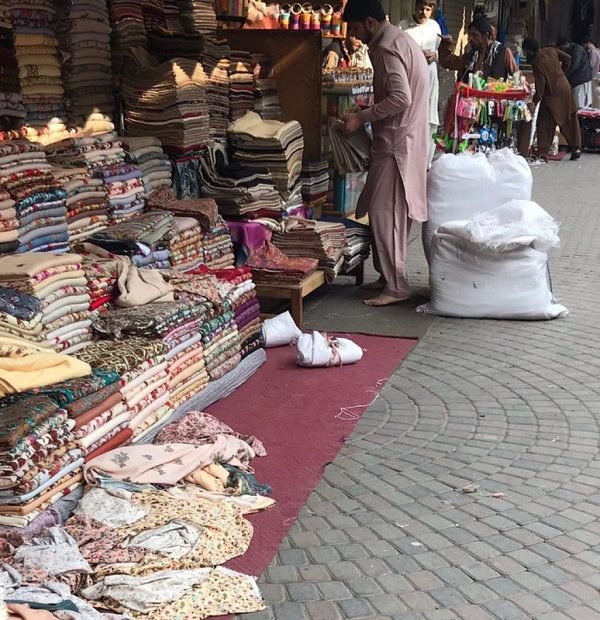
Two more words for any shop: bas (bus), “that is enough”, and thoda (THO-da), “a little”. Thoda aur is “a little more”, which you will say at dinner more often than you expect.
Food, Chai and Ordering Without a Menu
Food is where a visitor’s Urdu pays off fastest. Khana (KHA-na) is food, pani (PA-ni) is water. Chai (rhymes with “pie”) is tea, less a drink than a social obligation: it will be offered, and accepting is the easy path. Say kam cheeni (kam CHEE-ni) for less sugar, and expect it sweet anyway.
If there is no menu, point at the next table and say woh (wo), “that one”. Nobody will be offended. Teekha (TEE-kha) means spicy and teekha nai means not spicy, though in much of the country “not spicy” is relative. Mazedar (ma-ZE-dar) means delicious, and it is the compliment that brings the cook out of the kitchen to meet you.
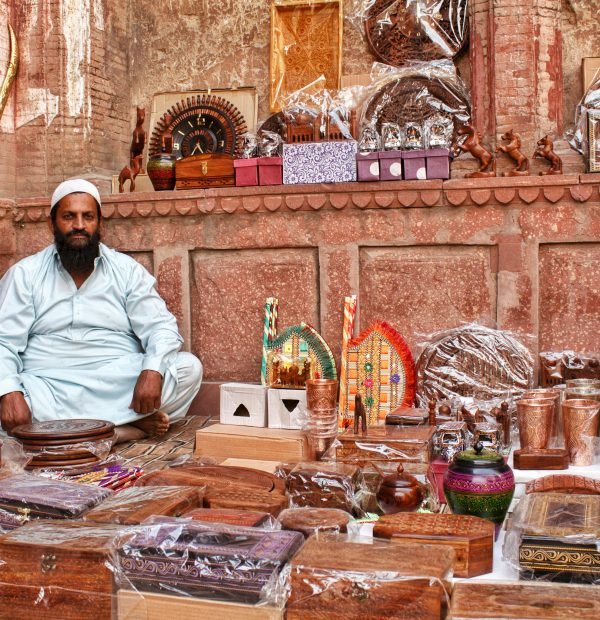
Ordering a plate of something you cannot name is one of the better decisions available to you, and our article on what to try first from a street stall covers the food itself. The cultural and heritage tours we run usually cover the eating etiquette around a table.
Directions, Transport and the Jeep Track
Kahan hai? (ka-HAAN hai) means “where is it?”, and you can put almost any noun in front of it: bathroom kahan hai?, bazaar kahan hai? Add ji and it sounds polite rather than blunt.
Directions come fast and mostly in gestures. Seedha (SEE-dha) is straight ahead, baen (ba-en) left, daen (da-en) right. Distances arrive in time, never kilometres, so “ten minutes” may mean five or forty. North of Islamabad, a jeep track is exactly what it sounds like: an unpaved road only a four-wheel drive takes, and the reason so many of our northern mountain tours hand the last stretch to a local driver.
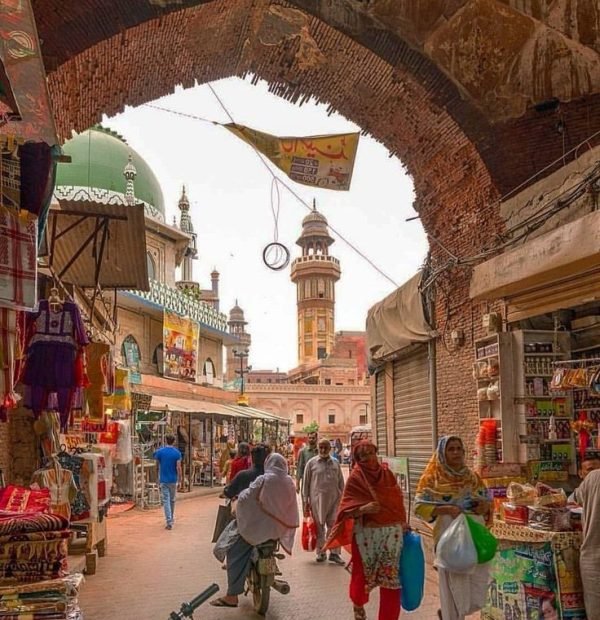
To ask a driver to stop: yahan ruk jaiye (ya-HAAN ruk JAI-ye). For “let’s go”, chalte hain (CHAL-te hain). Both are picked up within a day, usually with a grin.
Thanks, Goodbyes and the Courtesy Words That Land Well
Bohot shukriya (bo-HOT shuk-RI-ya) is thank you very much, worth using on anyone who has gone out of their way. Allah hafiz (al-LAH ha-FIZ) is the standard goodbye, literally “may God be your protector”, used by everyone whatever their own faith. Phir milenge (phir mi-LEN-ge), “we will meet again”, is warmer.
Three courtesy words do more work than their length suggests. Ji adds respect to a name, as in “Ali ji”. Bhai (bhai), brother, is how you address a driver or a stranger you need help from; baji (BA-ji) does the same for a woman, though it is safer to start with ji until you hear how people address her. And inshallah, “if God wills it”, softens any plan for the future, including the one you are making with a driver for tomorrow.
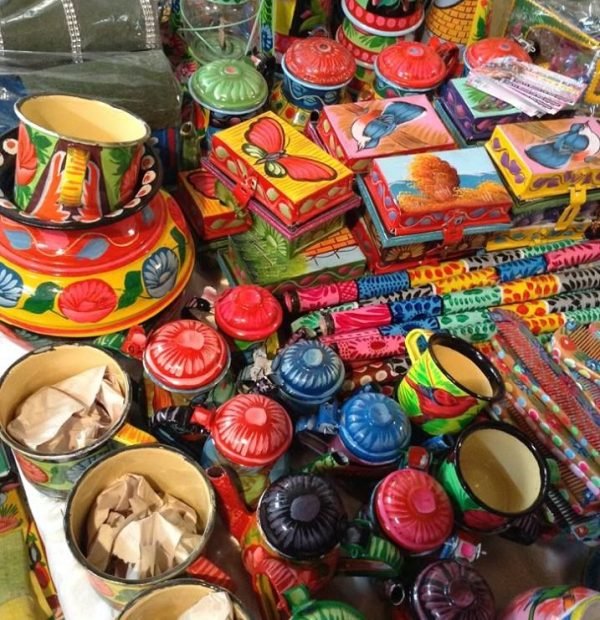
Festivals are where this vocabulary earns its keep, because the talking is the point. The Lok Mela folk festival in Islamabad is the friendliest place to practise, and our photo gallery shows why the faces there are worth the conversation.
Three Things Not to Say, and How to Recover
First, do not call an adult woman a girl, or a man a boy; ji, baji and bhai will never be wrong. Second, avoid a flat nahi as your first answer to an offer of tea or food. It is not rude, but it lands cold. Nai shukriya, with a hand on the heart, is the polite refusal.
Third, do not use tum for someone you have just met. It is the familiar “you”, kept for children and close friends, and using it with a stranger reads as talking down to them. Aap (aap) is the respectful form and is never wrong. If you slip, maaf kijiye fixes almost anything, and laughing at yourself fixes the rest.
Questions Visitors Ask About Urdu
Do I need to speak Urdu to travel in Pakistan?
No. English is widely understood in cities, at hotels and by anyone working in tourism, and every tour guide speaks it. A dozen courtesy words still change how people respond to you, because the effort is what gets noticed rather than the vocabulary.
Is it hard to pronounce Urdu?
The everyday words here are close to English sounds once you ignore the spelling. Urdu script looks intimidating, but you do not need to read it. Say the words the way this guide spells them and people will understand you.
What is the polite way to greet someone in Pakistan?
Assalam o Alaikum, said with the right hand over the heart, works in every setting from a hotel desk to a village shop. The reply is Walaikum Assalam. Between men a handshake is normal; with women, wait to see whether a hand is offered and otherwise keep the hand on the heart.
How do I say thank you and no thank you?
Shukriya means thank you and bohot shukriya means thank you very much. For a polite refusal, nai shukriya is understood everywhere, and a smile with a small shake of the head removes any doubt.
Will people laugh if I get it wrong?
Usually they smile, say the word back correctly and then help you. A foreigner trying Urdu is taken as a compliment rather than a mistake, and a slightly wrong tone is far better received than speaking English the whole way through.
That is the whole toolkit: twelve words, one chest gesture and a willingness to be corrected. Before you fly, it helps to know the best time to visit Pakistan and our honest notes on what a trip actually costs, because a visitor who has done that arrives with much better questions. Everything else is on our tour listings, and if you would rather have a guide teach you these phrases in a Lahore bazaar on your first morning, message us on WhatsApp at +92 344 7181087 or use the form on our contact page. We answer in plain English, and in Urdu if you insist.