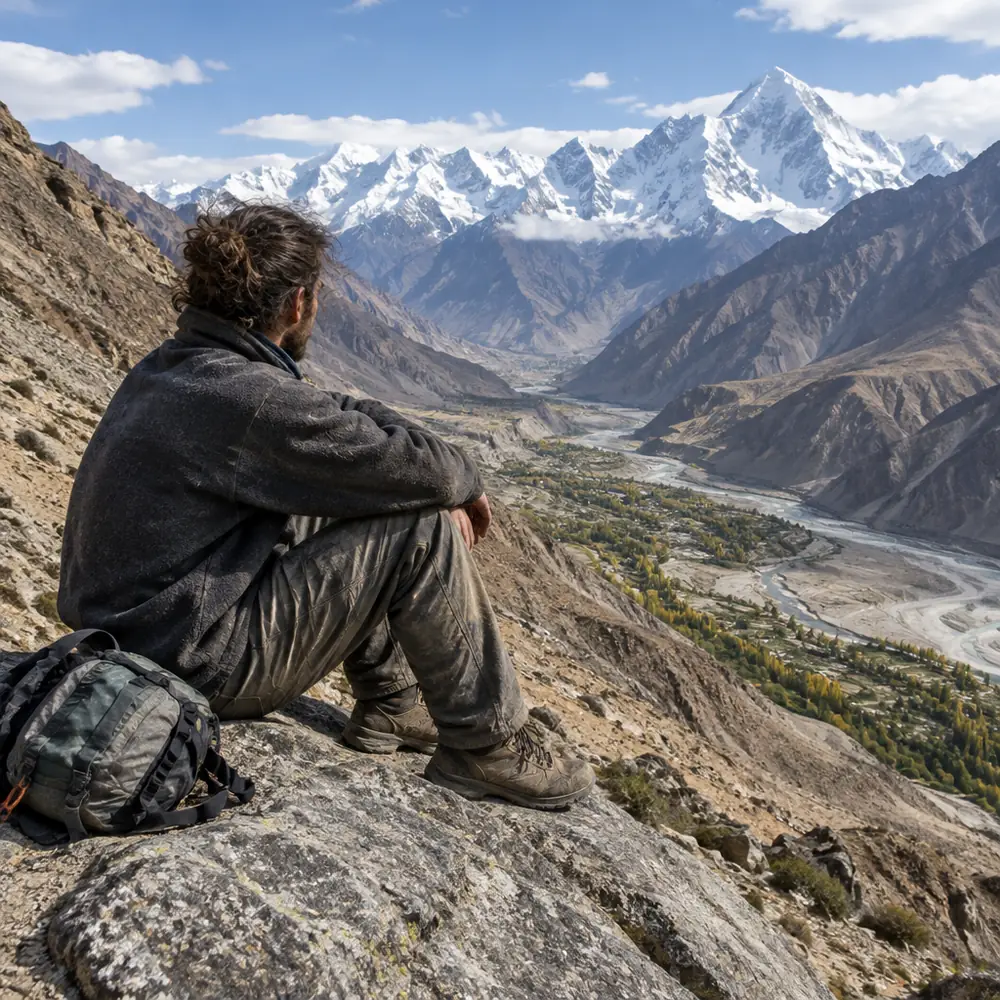
Almost everyone who books a mountain trip in northern Pakistan asks the same question before leaving home: will the altitude make me ill? It is a fair worry, and it usually gets answered badly, either with a cheerful promise or a short list of pills. The truth is more ordinary. Altitude sickness is not a test of fitness, and it does not strike at random. It follows height, and it follows how quickly you gain that height. On a route that climbs over several days the body has time to adjust, and most travellers notice little more than a dull headache and one night of thin sleep. On a route that jumps, it can catch anyone, including people who run marathons at home. This is what the climb actually looks like on our roads, and what the body does with it.
How a northern itinerary actually gains height
Islamabad sits at roughly 500 metres, about 1,600 feet, close to sea level for practical purposes. From there the Karakoram Highway (KKH) runs north beside the Indus, through Besham and Chilas, and the ground rises slowly enough that you feel it in your ears rather than your lungs. Gilgit, the last real town before the mountains close in, is around 1,500 metres, or 4,900 feet. The Hunza valley floor is higher again, near 2,400 metres and 7,900 feet. Skardu sits at about 2,200 metres.
That sequence matters more than any single number. The gain is spread across two long driving days, with tea stops, roadworks and photo breaks in between, and the body uses those hours. It is one reason our longer bucket list itineraries feel gentler than a short dash north. Nothing on a normal itinerary lifts you from Islamabad to 4,000 metres in a single morning. The high passes are day trips: Babusar Pass at roughly 4,100 metres, or Khunjerab at about 4,700 metres and 15,400 feet, where you stand at the top for twenty minutes, take the photograph, and drive back down to sleep far lower.
Flights change the picture slightly. When the Islamabad to Gilgit service runs, it puts you at 1,500 metres within the hour instead of after a long day on the road, and some feel it as a mild pressure headache that evening. It is still a modest height. Nobody flies into the high valleys; the road is the only way up to the places where altitude becomes a real subject.
What altitude does to a body that came from sea level
Air pressure falls as you climb, and thinner air means each breath delivers fewer oxygen molecules than the same breath at home. The body notices within hours. Breathing speeds up, including at rest and during sleep, the heart beats faster to move the thinner blood around, and you may wake in the night for no obvious reason. Given weeks, the body makes more red blood cells to carry oxygen. On a two-week trip that process has barely started, so acclimatisation on a holiday is mostly about breathing rate, hydration and time.
When the adjustment does not keep pace, the result is acute mountain sickness (AMS), the ordinary form of altitude illness. The usual pattern is a headache, often at the front of the head and worse when bending down, together with at least one of these: nausea, dizziness, unusual tiredness, or a night of broken sleep. It tends to arrive six to twelve hours after reaching a new height, which in practice means the first morning. Most cases are mild and settle within a day at the same altitude.
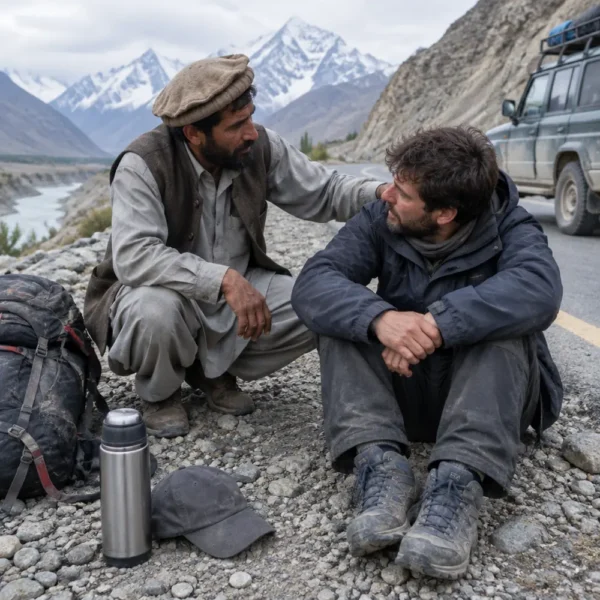
Fitness is not protection. Guides in the Karakoram see strong young trekkers flattened by a headache at 3,000 metres while a slower member of the same group walks on unaffected. Age is not much of a guide either. What does seem to help is arriving gradually, sleeping well before the trip, and not treating the first high day as a challenge to be beaten. Dry mountain air also pulls moisture out of you faster than expected, and a dehydration headache feels much like an altitude one, so the two get blamed on each other.
Why the second night at a new height matters most
Most of the adjustment happens while you sleep, which is why the nights, not the days, decide how a trip goes. On the first night at a new height the body is still running on the setting from the valley below, and many people sleep reasonably. The second night is different. The body has registered the change and works harder to compensate, breathing faster through the small hours, and that is when sleep breaks up, the headache settles in behind the eyes, and appetite drops at breakfast.
Mountain medicine has a rough rule for this: above 3,000 metres, do not sleep more than about 300 to 500 metres higher than you slept the night before, and give yourself an extra night at the same height every few days. Our itineraries follow the spirit of that rule. Two nights in Hunza, or two in Skardu, means the second night happens at a height the body has already met, which is the kindest arrangement. A night in a village on the way up does the same work.
The practical version is unglamorous. Eat an early dinner, keep the evening short, put a bottle of water beside the bed, and skip the sunset walk up the ridge. If the second morning arrives with a headache that will not shift, a rest day at the same altitude costs almost nothing and usually settles things. The days are spaced out route by route on our northern mountain tours, and the guided Karakoram Highway tour is the gentlest of the introductions, since it climbs by road and sleeps low for the first two nights. If you are still choosing where to go, the destinations pages list the height of each valley.
The signs that mean you should speak up
Guides are not doctors, but they can notice a change early. The list worth memorising is short. A headache that paracetamol has not touched after a few hours. Nausea that stops you eating. A wobble when you stand up. Breathlessness while sitting still, when you have not been walking. A dry cough that keeps you awake. Any one of these is a conversation, not an emergency, but two together, or one getting worse instead of easing, is a reason to stop the vehicle.
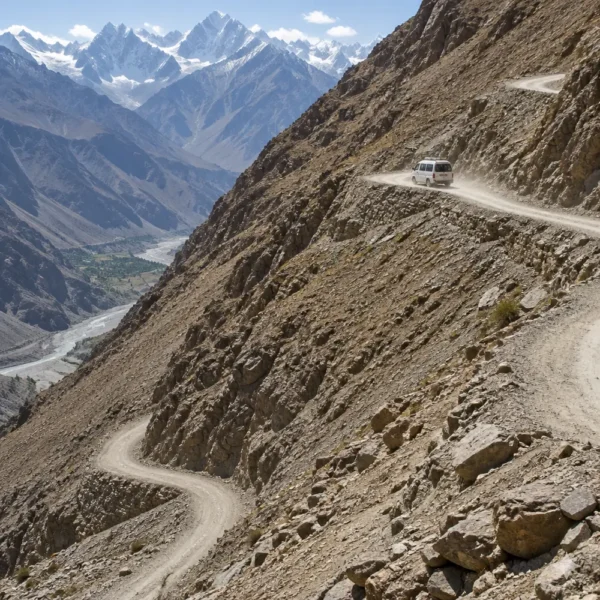
The dangerous forms are rare on a road trip, and they announce themselves. Breathlessness at rest. A cough producing pink or frothy spit. Confusion, or a stagger when asked to walk a straight line. Vomiting that will not stop. Those call for losing height the same day, which is why a driver stays on call at night. Descent is the treatment. Nothing in a first aid kit works as well as 500 metres downhill.
The other half of speaking up is social: nobody wants to be the one who delays the jeep. Say it anyway, and learn the handful of Urdu phrases that make it easy to say. We ask twice a day how heads and stomachs are, so a bad morning gets caught at breakfast. It is the same instinct as the rest of the Pakistani hospitality you will meet on the road, where a guest is not left to manage alone.
What helps on the road: pace, water, food and sleep
Pace is the one thing you control every hour. Walk and climb at a speed that still lets you hold a conversation; if you are gasping between sentences you are going too fast. We set a slow rhythm on the first high day and keep the group together. Short stops each hour do more good than one long rest.
Water is the second lever. Three to four litres a day, more on a pass day, and a bottle in the door pocket gets finished. Food matters even when appetite has gone: dal, rice, soup, potatoes, dried apricots, small portions through the day rather than one heavy dinner. Alcohol is worth skipping for the first two nights at a new height, since it disturbs breathing while you sleep.
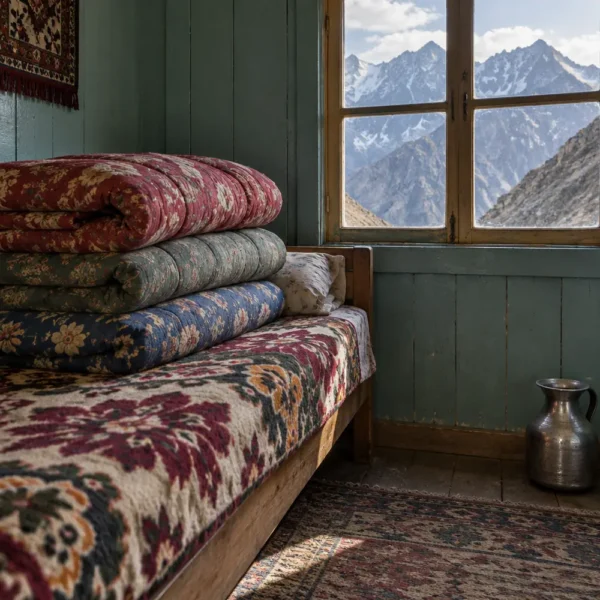
Sleep is the hardest to fix. Rooms up here are cold and often sealed tight against the wind, so crack a window and prop yourself on two pillows if you keep waking breathless. Paracetamol is fine for a headache. Acetazolamide is a doctor’s decision, not a way to skip a slower day, and it does not remove the need for that spacing.
What we change when someone in the group struggles
This is where a plan earns its keep. If one person is having a bad morning, we split: the vehicle takes them down to a lower village with the guide, the rest continue, and everyone meets for dinner. If the whole group is flat, we drop the pass. Khunjerab and Babusar are day trips and nothing collapses if they wait a year.
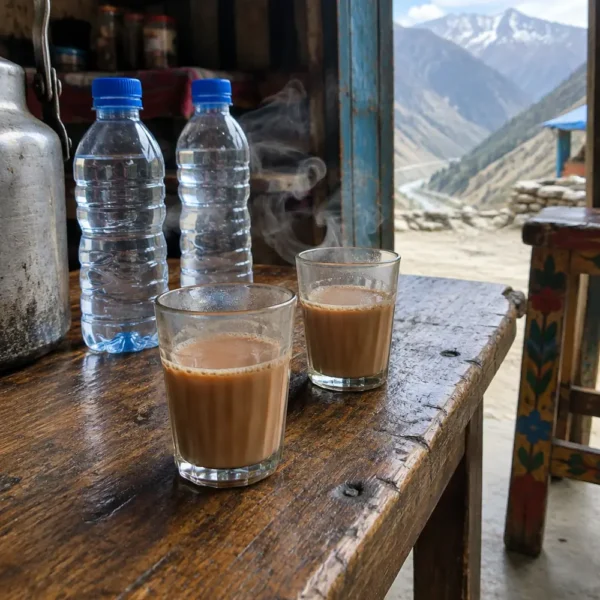
A rest day at the same height costs a hotel night, and settles most mild cases. Our Pakistan travel costs guide puts a figure on that night so it is not a surprise. Moving the next night lower costs a view. Neither is a failure of the trip. Our vehicles carry an oxygen cylinder and a pulse oximeter, and the drivers know which clinic in Gilgit or Skardu is open, so a decision to descend never waits on a phone signal. If you have a heart or lung condition, or you are travelling with a child, tell us when you book and we will build the route around it. The heights of the valleys and lakes we visit are listed on our lakes of Pakistan pages, and you are welcome to talk to us before you book.
Frequently asked questions
Should I take altitude tablets before I fly?
That is a decision for your own doctor, ideally a travel clinic. Tablets do not replace a gradual route, so if your doctor prescribes them, take them as directed and still keep the slow first days.
Does being fit protect me from altitude sickness?
No. Fitness helps with the walking, not with the thin air, and some of the fittest travellers feel it first because they push harder. Age is not a reliable guide either.
How high will I actually sleep on your trips?
Most nights are between 1,500 and 2,400 metres, in Gilgit, Hunza, Skardu or a village on the way up. The highest passes are visited at midday and left before evening, so you sleep far lower than you stood.
What happens if I feel unwell in the middle of a trip?
Tell the guide the same morning. The usual outcome is a slower day, a rest afternoon or one night at a lower village, and most people are walking again within a day. Nobody is left to sort it out alone.
Are children and older travellers more at risk?
Not automatically, though very young children cannot describe a headache clearly, which changes how closely we watch. Older travellers do well on road itineraries with short high excursions. Tell us the ages when you enquire.