Most packing advice for Pakistan is written as a list of warnings. This is not that. What a woman actually needs here is a wardrobe chosen before she leaves home, because the first two days of a trip are the two days nobody wants to spend in a shop, and the mountain towns on the northern routes keep far less on their shelves than Lahore, Islamabad or Karachi. The advice below is simply what women in Pakistan wear, translated for a visitor who wants to walk a bazaar in the morning, stand in a mosque courtyard at noon and sit in a guesthouse at night without thinking about her clothes every hour. Two ideas carry most of the weight. Keep shoulders and knees covered, and keep everything loose. The rest is detail, and the detail is the part worth reading twice.
The Two Rules That Cover Most Situations
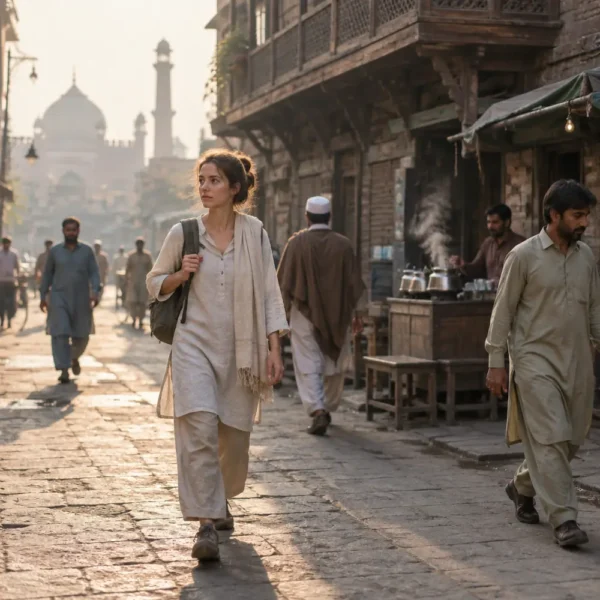
The first rule is coverage. Shoulders to the elbow, and legs to below the knee, will take you into a village house, a shrine, a family restaurant and a government office without anyone adjusting their behaviour around you. Sleeveless tops and shorts read as foreign rather than merely casual, and you will not see local women wearing them outside a private garden. A short-sleeved shirt is fine in most city settings, but a sleeve that reaches the elbow removes the question entirely.
The second rule is looseness, and it does more work than visitors expect. Loose clothing keeps the sun off your arms and the heat off your back, it lets you sit on a floor or a charpoy (a woven rope bed) without rearranging yourself, and it stops the conversation that tight clothing starts in a conservative street. A long tunic over wide trousers satisfies both rules at once.
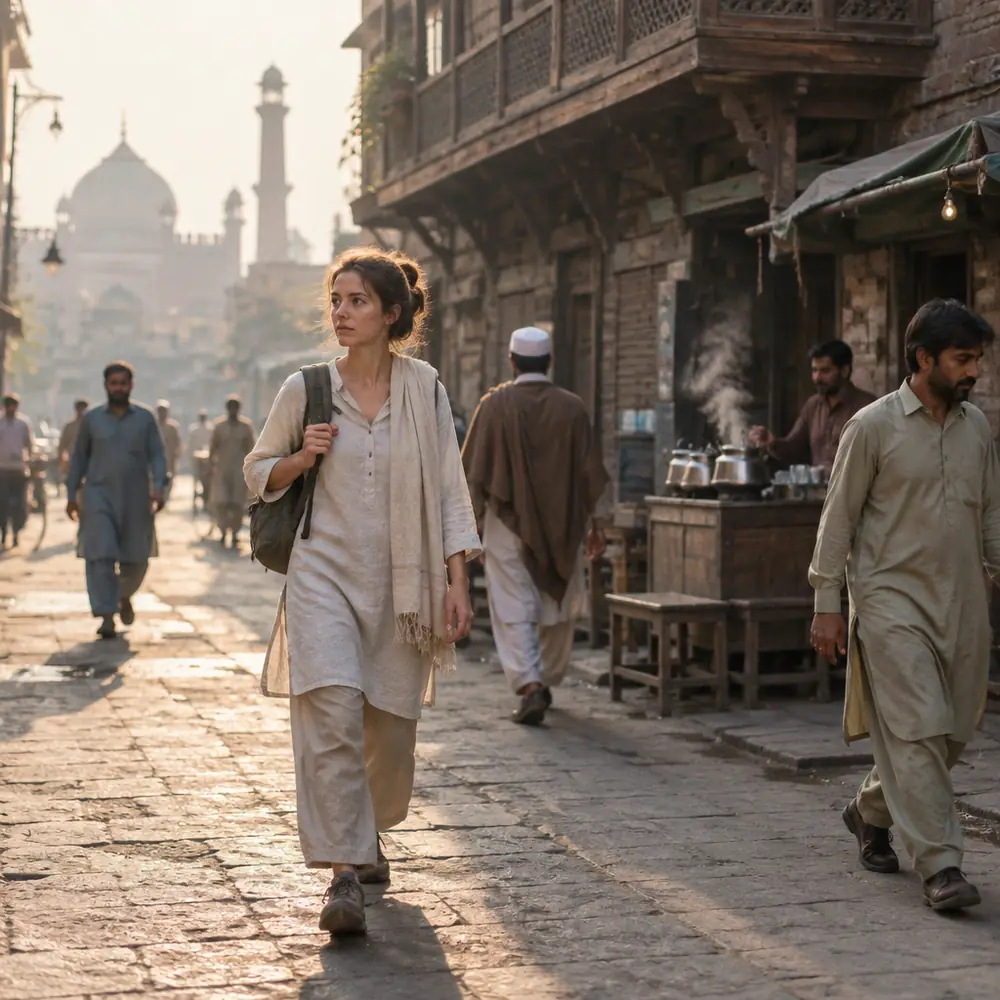
Neither rule requires anything expensive or new. The uniform is a tunic that reaches mid-thigh or lower, trousers with a bit of room in them, and a scarf you can put on or take off. Everything else, from the fabric to the colour, is taste rather than requirement. If you would rather buy than pack, this is the standard local dress and it is sold on every high street.
What Women Actually Wear in Pakistani Cities
Karachi, Lahore and Islamabad are not uniform, and the street is more varied than the guidebooks imply. In the same afternoon you will pass women in jeans and a long shirt, women in a shalwar kameez (a tunic and matching loose trousers, the everyday dress of most of the country), women in a chador (a large sheet-like wrap worn over everything), and women in an abaya (a long robe, often black, worn with a headscarf). A visitor in a long tunic, loose trousers and flat shoes reads as ordinary in every one of those places.
The scarf is the piece that changes fastest. In many city settings women carry one rather than wear it: over the shoulder, in the bag, ready for the moment a shrine or a conservative neighbourhood asks for it. In wealthier commercial areas you will see women with their hair uncovered; in a bazaar at dusk you will see far more headscarves. Following the room is the whole skill. If you look around a restaurant and every woman at the next three tables has her head covered, put yours on. Nobody is checking, and nobody will be offended either way.
Evening wear is the same clothes with a warmer layer, since cities cool down after dark in winter. Heels are not the norm on broken pavements, and a flat shoe with a decent sole is the more useful choice on a day that includes a fort, a bazaar and a mosque. For the social side of these situations, the small courtesies of greeting, eating and photographing people are covered in our guide to travel etiquette in Pakistan, and they matter more than the outfit does.
The Dupatta, the Scarf and Mosques and Shrines
A dupatta is the long scarf that comes with a shalwar kameez, usually two and a half metres of thin cotton, worn draped across the chest and over the shoulders. It is the most useful single item in a Pakistani wardrobe and the one a visitor should copy. Folded it fits in a day bag, opened out it covers hair, shoulders and chest in one motion, and it weighs almost nothing. One plain cotton dupatta in a neutral colour will do more for you than three fashion scarves.
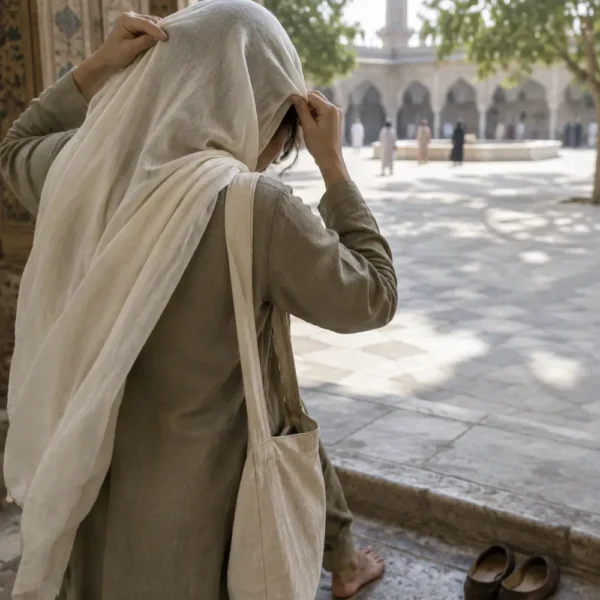
At a mosque or a shrine, women cover their hair and often their arms and legs as well, and shoes come off before the courtyard or the inner floor. Many of the larger sites have a women’s entrance; where there is one, use it. The scarf goes over the head, not around the neck, and it should be big enough to stay there while you walk and look up. A thin cotton square tied at the back of the head is the one thing that reliably slips, which is why the long scarf is the better tool.
Shrines are less formal than mosques in some ways and more particular in others. Some ask women to cover the head and keep to a separate area near the tomb, and a caretaker will usually tell you what is expected. A long tunic covers your arms without a jacket, and a dupatta handles the head with a single fold. If you are planning a trip that includes several of these sites, the routes on our destinations page show which stops are shrines and which are forts and gardens, so you can dress once for the whole day rather than change between them.
Shoes, Feet and Why the Ground Matters
Your feet will spend more of this trip bare than you plan for. Mosques, shrines and many village houses ask for shoes at the step, and a day in Lahore might mean four removals. The shoe that survives is one you can step out of while standing, so flat slip-ons with a firm sole beat anything laced.
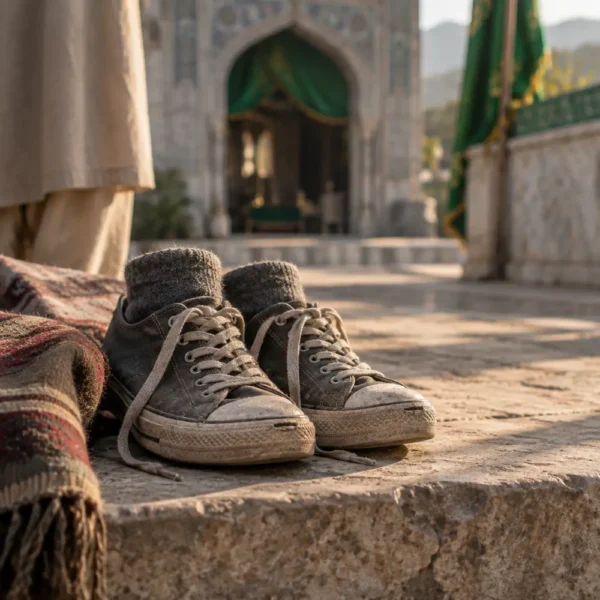
Carry socks even in June. Marble bakes at midday and turns cold as the sun drops, and one visit can include both. Thin cotton socks take up no space and decide whether you walk the courtyard or stand at its edge.
Leave your shoes together at the edge, since caretakers move them aside to keep the entrance clear. Carry a cloth bag where the site is busy. Put any shrine last in the day and you avoid a second removal in the afternoon heat.
Packing for the Mountains and the Cold Nights
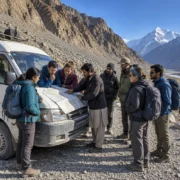
This is where a wardrobe built for Lahore fails. Valleys on the Karakoram Highway sit above 1,500 metres, and nights in Hunza, Skardu or Chitral drop far below daytime temperature even in July. Guesthouses are often unheated, so the layer for the flight becomes the layer you sleep in.
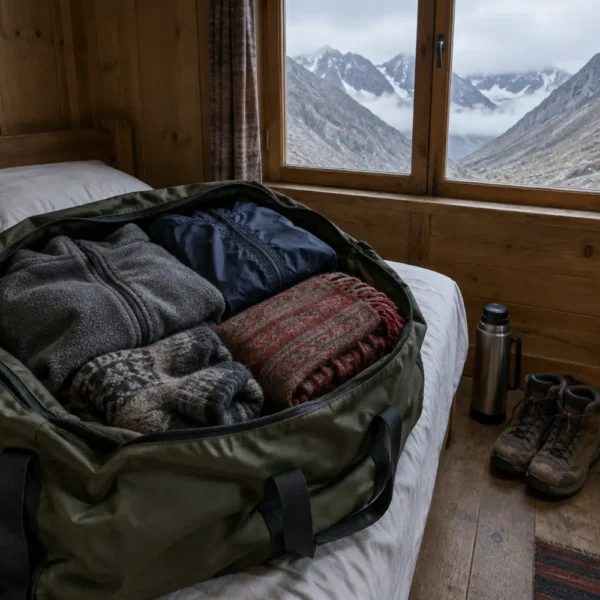
Three items earn their weight. A light fleece, because a cotton hoodie stops being warm once the sun leaves the valley. A thin rain shell, because mountain weather turns fast and a wet traveller in a cold valley is a miserable one. A large wool shawl, which is a head covering at a shrine, a blanket on a jeep and an extra layer at night. Add wool socks and leggings under trousers and most summer itineraries are covered.
Laundry is the constraint nobody plans for. Guesthouse washing is by hand and takes a day or more to dry, so pack for five days and prefer quick-drying fabric. If your route crosses a pass above 3,000 metres, our northern mountain tours page shows what each one reaches, and the guide to travel costs covers what heated rooms, where they exist, charge.
The Practical List: What to Bring and What to Leave
Bring. Two long tunics over loose trousers, plus a lighter top for hot days. Two scarves, one of them large and plain. Flat slip-on shoes. Four pairs of socks, two wool. A light fleece. A thin rain shell. A wide-brim hat. A cloth bag for shoes.
Leave. Shorts and tank tops, which turn a walk into a conversation. Leggings worn as trousers, since they read as underwear. Heels, which lose to cobbles. Heavy jewellery, which invites attention in a bazaar. Anything you would be upset to see ruined, because city dust finds everything.
If your trip includes shrines, read the Sufi darbar tours page first, since those days want the dupatta and the socks at once. City days are easier to plan around the city guides, which mark where shoes come off. A few Urdu phrases do more for a shopkeeper’s patience than any item in the bag.
Get the wardrobe right before you fly and the trip becomes about the country rather than your clothes. If you would rather settle the route and the packing together, our tour packages show what each itinerary covers and the contact page reaches a planner who can tell you how cold your last night will be.
Frequently asked questions
Do foreign women have to cover their hair throughout Pakistan?
No. A head covering is expected at mosques and most shrines, but in hotels, restaurants, shops and on city streets uncovered hair is normal for a visitor.
Can a woman wear jeans and a T-shirt in Pakistan?
Yes, and many Pakistani women in cities do. Loose jeans with a T-shirt covering the shoulders works, with a light shirt over it for shrines and village houses.
How many scarves should I pack for two weeks?
Two. One large plain cotton scarf for hot days and one wool blend for the mountains, where it also becomes a layer at night.
What should I wear on a mountain trek in the north?
Loose trousers, a long-sleeved top, a fleece and a rain shell, with wool socks and worn-in trail shoes. Keep trousers full length rather than shorts.
Is it acceptable for a visitor to wear a shalwar kameez?
Yes, and often the most comfortable choice in summer heat. Ready-made sets are cheap in any bazaar and can be tailored in a day in Lahore or Islamabad.