Money is the quiet worry behind most Pakistan trips, and usually the wrong worry. Cards work in more places than people expect and cash is needed in fewer places than people fear, but the two do not overlap neatly, and the gap is where trips get uncomfortable. The short version: carry a float measured in days rather than rupees, withdraw in the last big town before leaving the highway, keep a second card apart from the first, and treat every bank branch as a chance to top up. Do that and money stops being a subject.
Why Cash Still Matters in Pakistan
Pakistan runs on cash at the scale where visitors actually spend: a dhaba plate of dal, a bag of apricots by the road, a porter, a jeep, a room in a family guesthouse. None of it is exotic. It is the ordinary economy, and it is paper and coin.
A cash float is fuel, not a precaution. The notes’ size matters too, because a roadside stall may genuinely have no change for a large one in the morning.
For what a day costs, our piece on real daily budgets for foreigners does that arithmetic properly, since any figure in a money article goes stale within a season.
Where Cards Actually Work, and Where They Do Not
In Islamabad, Lahore and Karachi, cards are ordinary. Hotels, larger restaurants, bookshops, the bigger shops and the airport take them, and the terminal is at the counter. This is also where most business travel happens, which is why the card habit feels normal for a day or two and then stops working.
Outside those cities it changes fast. A hotel on the Karakoram Highway may take a card, may take it only for the room, or may prefer cash because the machine’s line is down. A ten-table restaurant almost certainly wants cash. So does a mountain fuel pump, and so do the guide, driver and porter you thank at the end.
So do not test the boundary. Assume cards for the cities and the pre-booked parts, cash for everything decided on the day. Our city breaks and northern mountain tours pages show the days each produces.
What an ATM Feels Like in a Small Mountain Town
In Gilgit, Skardu, Chilas and the larger Hunza settlements there are branches with machines, and they generally work. What differs is the queue, the timing, and the fact that a town may have exactly one. It sits in the wall of a branch, sometimes behind a shutter that opens when staff arrive, and when it is empty it stays empty until refilled.
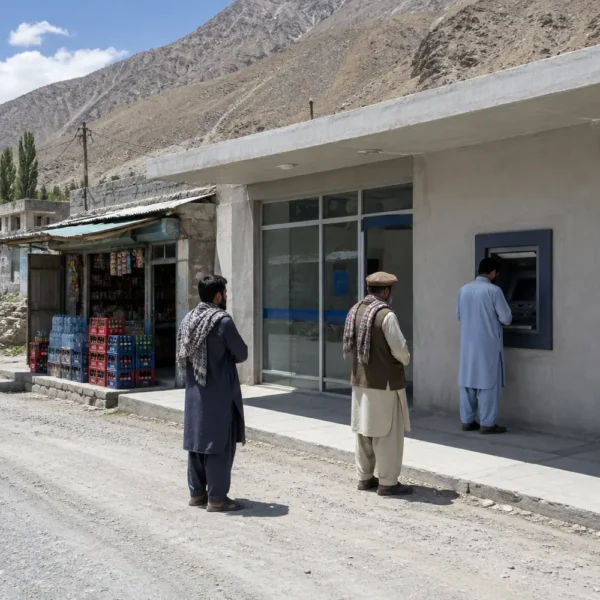
So the habit is sequencing. Withdraw in the last substantial town before you turn off the main road, not when you notice you are low. Up the Karakoram Highway that means Gilgit or Chilas; east toward Baltistan, Skardu. Our Karakoram Highway travel guide is built around that ordering.
Put your card away before stepping back: one left in a slot where the branch opens at ten has no fast answer.
How Much Cash to Carry and How to Split It
Do not think in rupees, think in days. How many days could you fund if every card stopped this afternoon? For most northern routes, three or four days of ordinary spending is comfortable; in a city, two is plenty. The costs post above turns that into figures.
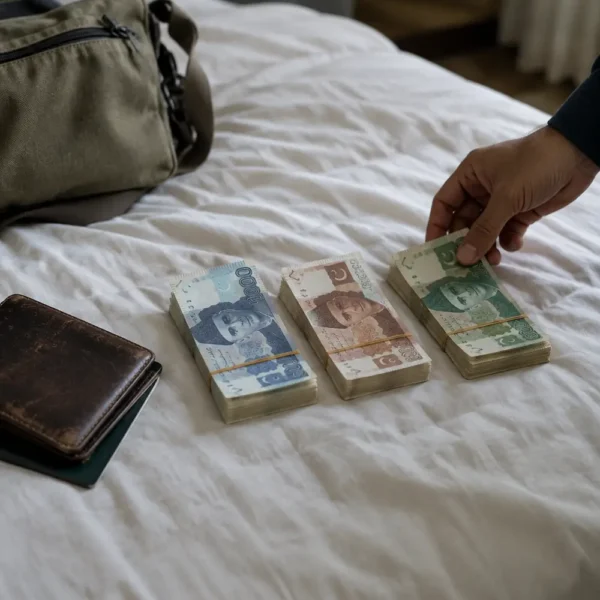
Split whatever you carry. Three bundles in three places survives everything: one under clothing, one in the day bag, one locked in the hotel room. If one goes, you still have a trip, and the backup card should not sit in the same pocket as the first.
Tell your bank you are travelling and write its emergency number on paper: a phone that is lost, flat or out of coverage is exactly when you need it. Our frequently asked questions page covers the rest of the pre-trip admin.
Changing Money: Banks, Exchange Bureaus and the Airport
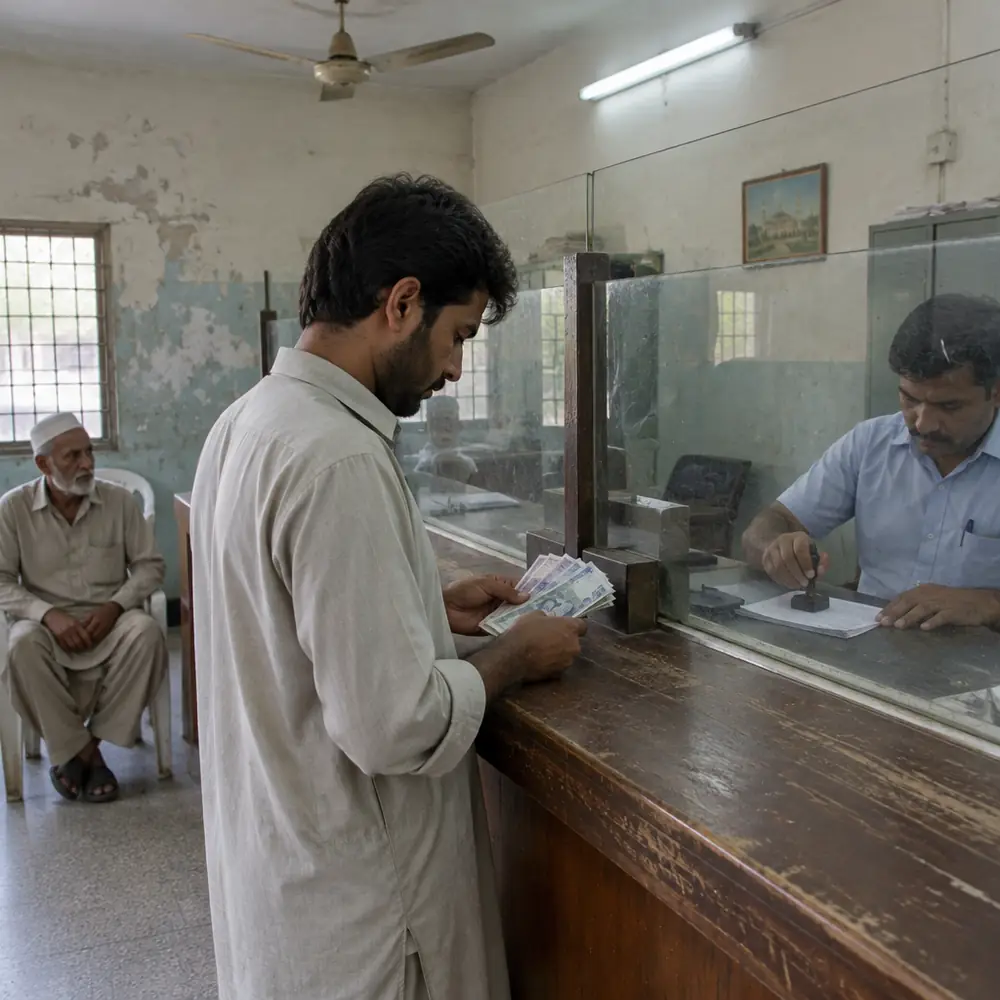
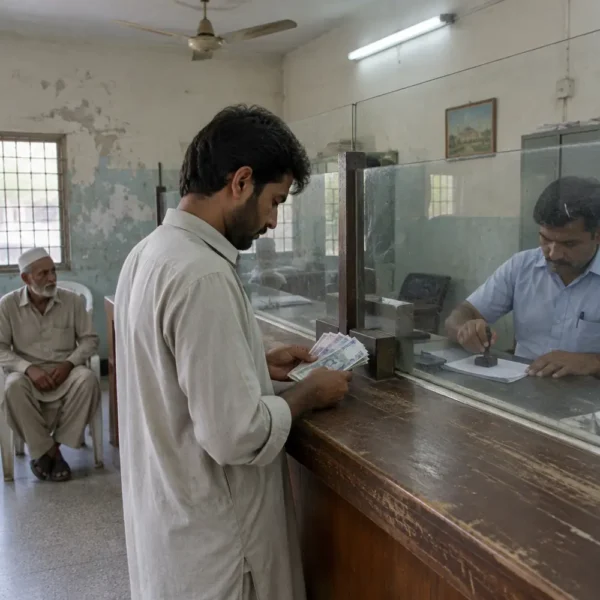
Three places, three jobs. The airport is convenient: you land wanting a SIM, a coffee and a ride, and paying a little over the odds for day one is a fair trade. Banks are the solid city option, with counters and a rate set on the day. Bureaus in the main commercial areas are fastest.
Nobody can tell you in advance what you will be offered, and anyone quoting a rate for next month is guessing. Compare the board on the day, keep the receipt, and change a modest amount at a time. US dollars are the easiest note to change, which makes a small amount of them a backup rather than a plan.
One surprise: it takes a signature, a passport and a few minutes of waiting, so it is a daytime errand. If your route also runs south, see the southern Pakistan pages.
Paying for a Hotel, a Jeep and a Guided Tour
The large transactions behave differently. A hotel booked in advance is usually settled by card or transfer, with extras like tea and laundry often in cash. A jeep is cash to the driver, and on a long rough day it is normal to settle at the end. A tour through an operator is an invoice.
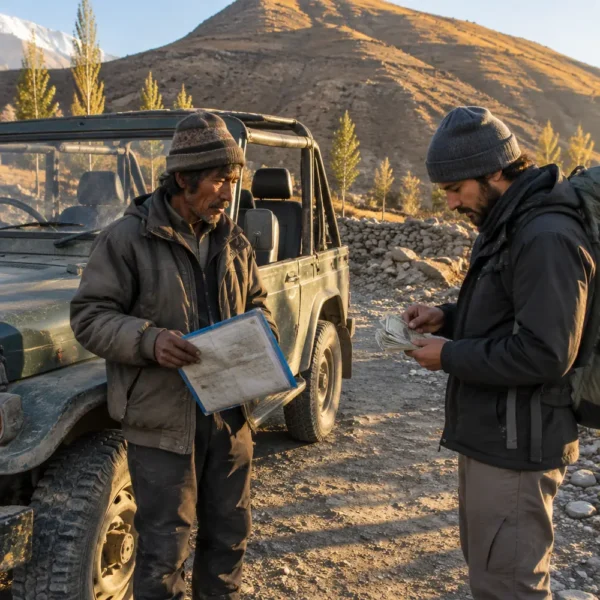
The useful habit is to ask before the day whether cash is needed and have it counted out, which removes the awkwardness of a driver waiting while you hunt for a machine that may not exist. Our travel services page sets out what we arrange, and car and driver hire covers vehicles.
Tipping sits outside all of this: no percentage, no expectation. Drivers, porters, waiters and the men who carry bags up to a hotel no car can reach are who visitors thank.
Mobile Payment Apps and What a Visitor Can Ignore
Pakistan has moved a long way into phone payments, and shopkeepers take money on a phone all day. Almost all of it runs on a local wallet tied to a local account and number, so it is not available on a two-week trip and you do not need it. The person at the counter will take your notes.
A working local SIM is worth having, because it makes card verification, booking confirmations and the call to your bank possible. Beyond that, ignore the apps: the old method works perfectly.
Five Money Mistakes Visitors Make in Their First Week
Changing everything at the airport. Convenient, and the worst rate you will get. Change a day’s worth and do the rest in town.
Withdrawing late. The machine is treated as always available until the evening it is empty. Withdraw in the morning, in a town, before you need it.
Carrying one bundle. One wallet, one place, one loss. Three bundles is barely more effort and changes the consequences entirely.
Assuming the card works because it worked yesterday. A terminal that took your card in Lahore says nothing about a hotel in a valley.
Not telling the bank. A blocked card on day one is the most avoidable expense of all, and the fix usually needs a call you cannot easily make.
A Simple Money Routine That Works for the Whole Trip
Once a day, in the morning, look at what you carry. If the float is down to two days, top it up at the next branch. Break one large note at a busy shop. Keep the three bundles where they belong. That is the system, and it takes a minute.
Before leaving a town with a machine, ask when the next one is and whether three days would be comfortable. Before a jeep day, count the cash out the night before.
If you want a route planned around this kind of detail, our Pakistan tour packages are built that way, including the days that look empty on paper and exist so nothing is rushed. Khaplu and the Shyok valley rewards that pacing. Message us on WhatsApp at +92 344 7181087 through wa.me/923447181087, or send your dates through contact us.
Questions About Money in Pakistan
Can I use a foreign credit card in Pakistan?
In the cities, at hotels, at larger restaurants and at the big shops, yes, often. The card machine has to be working and the business has to accept foreign cards, which is not guaranteed. Treat the card as a convenience in Islamabad, Lahore and Karachi and as a backup everywhere else, and carry enough cash that a refused card is an inconvenience rather than a crisis.
Are there ATMs in northern Pakistan?
In the main towns, yes. Gilgit, Skardu, Chilas and the larger Hunza settlements have bank branches with machines. Once you leave those towns for a valley, a village or a jeep track there is nothing, sometimes for days. The habit that solves this is simple: withdraw in the last big town before you turn off the highway, and treat every town with a machine as your last chance.
Should I arrive with dollars or with Pakistani rupees?
Arriving with some rupees for the first day is convenient, and arriving with a modest amount of US dollars is a sensible backup because they are the easiest note to change in a bank or bureau. Nobody can tell you a rate in advance and anyone who promises one is guessing, so compare what you are offered on the day and keep the receipts.
Is tipping expected in Pakistan?
A tip is a kindness rather than a rule. Drivers, porters, waiters and the men who carry your bags up to a hotel where cars cannot reach are the people visitors usually thank. A guide or a driver who has been with you for several days is normally thanked at the end of the trip rather than daily. There is no fixed percentage and no one will follow you for it.
What do I do if my card is declined or an ATM swallows it?
Tell your bank before you travel and keep its emergency number somewhere other than your phone. If a machine in a small town keeps a card, the branch staff are usually the only route, so note the branch and the time. Carry a second card from a different provider and keep it apart from the first one. This is one area where travelling with a driver earns its keep, because he knows which town has a working machine and which bank opens when.