Lok Mela is Pakistan’s national folk festival, held on the grounds of Lok Virsa in Islamabad, and it is the single easiest place to see craft traditions from every province in one afternoon. Recent editions have run for about ten days in November, opening daily from 10:00 in the morning until 10:00 at night. Entry arrangements and exact dates change with each edition, so confirm them with Lok Virsa (lokvirsa.org.pk, 051‑9249209) before you build a trip around it.
What follows is the practical version: what the festival actually is, when it lands, how to reach it without a car, what is worth your time inside, and how to combine it with the rest of Islamabad so a single day covers both.
What Lok Mela actually is
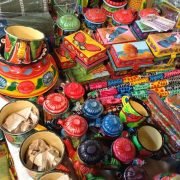
Lok Virsa is the National Institute of Folk and Traditional Heritage, a government institution on Garden Avenue in Shakarparian. Its mandate is documentation and promotion of living culture, and Lok Mela is the annual event where that mandate becomes visible: artisans arrive from Punjab, Sindh, Khyber Pakhtunkhwa, Balochistan, Azad Kashmir and Gilgit‑Baltistan, set up working stalls, and demonstrate crafts in front of visitors rather than behind glass in a museum.
In recent editions more than 400 artisans have taken part, reported by the organisers and covered by The News. That number is the point. You are not walking through a display of finished souvenirs. You are watching a potter, a block printer or a wood carver work at speed, then buying the result from the person who made it.
When it runs, and how to read the dates
The festival is not on a fixed calendar date like a national holiday. Lok Virsa announces each edition a few weeks ahead, usually for a ten‑day window in the first half of November. The 2025 edition ran from 7 to 16 November; the 2024 edition ran from 8 to 17 November.
Two practical consequences. First, do not book flights around a date you saw on a third‑party events website; confirm it on the official site or the Lok Virsa social accounts. Second, if your Pakistan itinerary has any flexibility in November, plan Islamabad in the middle of the month rather than the end, and treat the festival as a bonus rather than the reason for the trip. Our month‑by‑month guide to travelling in Pakistan explains how November compares with the rest of the year.
Getting there without a car
Lok Virsa sits on Garden Avenue in Shakarparian, the same hilltop cluster as the Pakistan Monument and its museum, roughly 15 to 20 minutes by ride‑hailing app from Blue Area or F‑7. Ask for Lok Virsa by name, not the Pakistan Monument, because the two share an access road and drivers sometimes drop visitors at the wrong gate.
Traffic builds on the approach road in the evening, and the on‑site car park fills on weekends. If you are staying in the city centre, going by app and walking the last stretch is usually faster than driving yourself. If you would rather have the day arranged for you, our Islamabad tour packages include the Shakarparian museums and the monument in a single half‑day loop.
What you will actually see inside
The grounds are organised by pavilion, and the provinces are the natural map. Each one brings its own crafts, dress, music and kitchen, which means the food court is as much of an exhibit as the stalls: gilgit‑baltistan apricot and walnut products, Sindhi ajrak and block printing, Punjabi pottery and phulkari work, Balochi embroidery and mirror work, Pashtun woodwork, Kashmiri shawl weaving.
Outside the pavilions there are performance stages. Folk musicians and dancers rotate through the day and the programme tightens towards the evening, so the festival is at its best in the last three hours. Crafts are sold, not just shown, and prices are set by the artisan rather than by a central ticket desk.

How to do it well
Go on a weekday evening. Saturday nights are the busiest and the artisan stalls are three deep. A Tuesday or Wednesday from about 5:00 in the afternoon gives you daylight for the craft stalls and the full evening programme without the crush.
Start with the crafts, end with the music. Artisans are freshest and most talkative early, and many of the best pieces sell in the first few days. Watch a demonstration before you buy; the conversation is usually what makes the object worth carrying home.
Ask before photographing people. Demonstrations are public and photographs of stalls are fine, but a close portrait of a craftsperson is a favour, not a right. A question and a smile is normally answered with a yes.
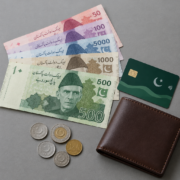
Carry cash, and carry small notes. Card machines are not something to rely on at open‑air craft stalls. Bargaining is normal, but ask what the artisan considers fair rather than opening at half the asking price; these are working craftspeople, not a bazaar designed for tourists.
Dress for a cool evening. Islamabad in November is mild in the afternoon and genuinely cold after sunset on the exposed Shakarparian hill. A jacket makes the difference between staying for the evening performances and leaving at seven.
Give it three to four hours. Two is enough to walk the pavilions, but not enough to watch a demonstration, eat, and see a performance. If you are travelling with children, the grounds are flat and easy to navigate, but there is a lot of walking.
Pair it with the rest of Shakarparian
Lok Virsa is not a standalone attraction, and the surrounding cluster turns the festival into a full day. The National Heritage Museum on the same campus holds the ethnology collection, with galleries on regional dress, jewellery, music and household craft. The Pakistan Monument Museum sits a short walk away, and the monument itself has the best city view in Islamabad.
Our guide to the city tours we run across Pakistan covers Islamabad’s other stops, from Faisal Mosque to the Margalla trails. If culture is the reason for the trip rather than a single afternoon, the cultural and heritage tours page puts Taxila, Lahore and the Indus sites in one plan, and the festival trips page covers Shandur, Kalash and the other seasonal events.

If you have only one day in Islamabad
A workable order: Faisal Mosque in the morning, the Pakistan Monument and Heritage Museum in the early afternoon, Lok Mela from about 4:00 in the afternoon, dinner from the provincial kitchens on the festival grounds, then the evening performance before the gates close at 10:00.
Foreign visitors should keep the visa and letter of invitation guide open while planning, and read our honest answer on whether Pakistan is safe to travel in right now rather than relying on forum threads. If you are building a longer circuit, the 7, 10 and 14 day itineraries show how Islamabad fits with Hunza and Skardu, and the costs guide gives realistic daily budgets in rupees and dollars.

Practical details worth writing down
Venue: Lok Virsa, Garden Avenue, Shakarparian, Islamabad. Recent editions opened 10:00 to 22:00 daily. On‑site museums and the craft bazaar typically run 10:00 to 20:00, with the Pakistan Monument Museum closed on Mondays. Entry arrangements vary by edition, so call 051‑9249209 or check the official site on the day.
If you want the day arranged, including transport, a guide who can translate at the craft stalls, and a schedule that puts the festival between the museum and dinner, message our team on WhatsApp or send the details through the enquiry form. We run Islamabad days year‑round.
Last updated: 5 November 2026. Dates and timings for past editions are taken from Lok Virsa and press coverage of those editions; confirm the current edition before travelling.
Frequently asked questions
Is Lok Mela free to enter?
Entry arrangements are set by Lok Virsa for each edition and have changed between years, so there is no reliable blanket answer. Confirm by calling 051‑9249209 or checking lokvirsa.org.pk in the week before you go. Budget for craft purchases and food regardless.
When exactly is Lok Mela in 2027?
Lok Virsa has not published dates for the next edition at the time of writing. The pattern from recent years is a ten‑day run in the first half of November, but treat that as a planning assumption, not a booking reference.
Is it worth visiting for a foreign traveller?
Yes, if you want to see living craft traditions rather than museum displays. It is also unusually easy: one venue, English‑friendly signage at official stalls, no permit required, and it sits next to the Pakistan Monument. For a first trip to Pakistan it is one of the lowest‑effort cultural afternoons available.
How long should I allow?
Three to four hours. Two hours covers the pavilions at a walk; the extra time is for demonstrations, food and the evening performance.
Can I combine it with a Hunza or Skardu trip?
Easily. Islamabad is the departure point for the northern routes, and the drive north from the city is covered in our Islamabad to Hunza guide and the Islamabad to Swat route guide.
More Pakistan guides worth reading
- Basant in Lahore: the spring kite festival explained
- Shandur Polo Festival: the world’s highest polo ground
- Chilam Joshi in the Kalash valleys
- Broghil Festival in the Hindu Kush
- Lahore travel guide: forts, food and Mughal streets
- Taxila and Gandhara archaeology
- Katas Raj temples
- Kartarpur Corridor for Sikh pilgrims
- Hunza Valley travel guide
- Skardu in five days
- The most beautiful lakes in Pakistan
- Deosai National Park