

Harappa Tour Packages
Harappa is one of the two great cities of the Indus Valley Civilisation, in Sahiwal District in the Punjab, occupied from about 3300 BC and at its height between 2600 and 1900 BC. It gave the whole civilisation its name: Harappan. It had a citadel, a lower town, granaries, brick working platforms, a cemetery, and a script nobody has ever read.
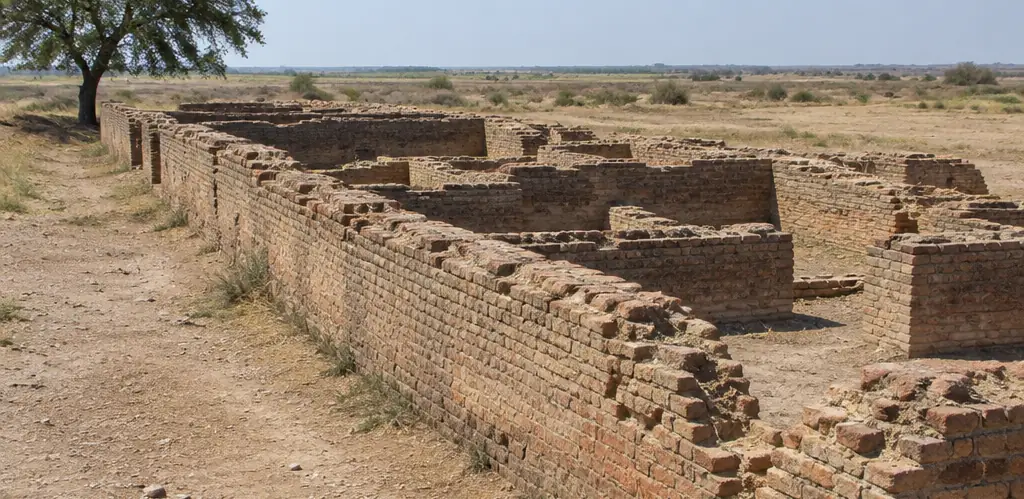
It is also the most damaged major site in Pakistan, and there is no point pretending otherwise. In the 1850s contractors quarried the fired brick of the ruins as ballast for the Lahore to Multan railway, and a great part of the city went into the trackbed. What is left is low walls, platforms and stumps across two mounds, which is why Harappa needs a guide and a museum more than Mohenjo-daro does. This guide covers what survives, what it means, how to get there from Lahore or Multan, and whether it is worth your day.
Harappa tour packages
Three shapes. A day trip from Lahore, which is the usual way. A day from Multan on the other side. Or a heritage route that puts Harappa between Lahore and Multan with the shrines and the Mughal buildings, which is the version worth doing.
From Lahore
Out on the motorway after breakfast, two hours at the site and the museum, lunch in Sahiwal, back by evening. The simplest way to see it.
Ask for a quoteLahore and Harappa
A full day in Lahore and a full day out to Harappa, with the Mughal city on one side and the Indus Valley on the other. The contrast is the point.
Send your datesIndus Valley in full
Harappa, then south to Multan and on to Mohenjo-daro in Sindh. Two cities of the same civilisation, a thousand kilometres apart.
See heritage toursOn prices. Nothing on this page quotes a figure. A day trip from Lahore and a four day heritage route are different products, and the car is the cost. Send dates and party size for a real quote the same day.
What Harappa actually was
Harappa sits near the old bed of the Ravi, on the trade route between the Indus and the Ganges plains, and at its height it covered something like 150 hectares, which made it one of the largest cities in the world in 2500 BC. It had a raised citadel mound on the west and a lower town to the east, laid out with streets and drains in the same system as Mohenjo-daro, and it was a manufacturing city as much as an administrative one: beads, shell, copper, chert and textiles went out of it.
The importance of Harappa in archaeology is out of proportion to what you can see. Because it was excavated early and published well, it defined the sequence and the pottery typology for the entire civilisation, and it is where the phases of the Indus Valley were first worked out. Most of what the world knows about these cities was established on this mound.
What survives, and what it tells you
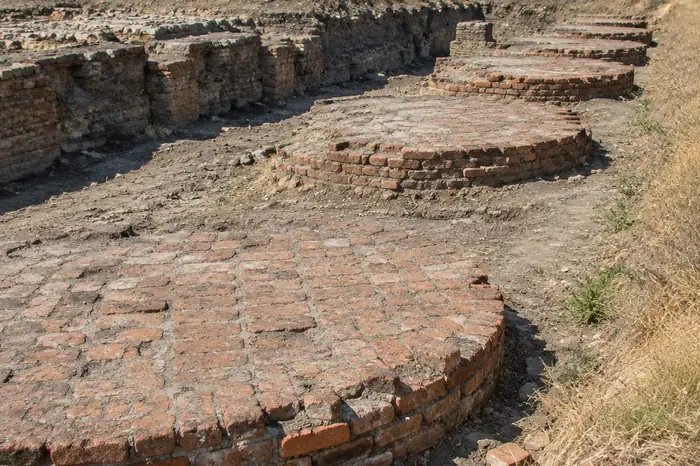
The citadel mound is the northern one, with a perimeter wall and the remains of large structures, including what the excavators called a granary. South of it, the lower town has houses and streets and the brick working platforms: circular floors with mortars, where grain was processed and where the archaeological team found wheat and barley. There is a cemetery at R-37 with burials and grave goods, and there are the stump walls of what were probably workshops and workmens quarters.
None of it is dramatic. There is no Great Bath here, nothing standing above a metre, and the brick is eroded by salt and a century of cultivation. What you are looking at is the skeleton of a city: the plan, the drains, the proportions of the brick. With a guide, that is enough. Without one, it is a field.
The museum
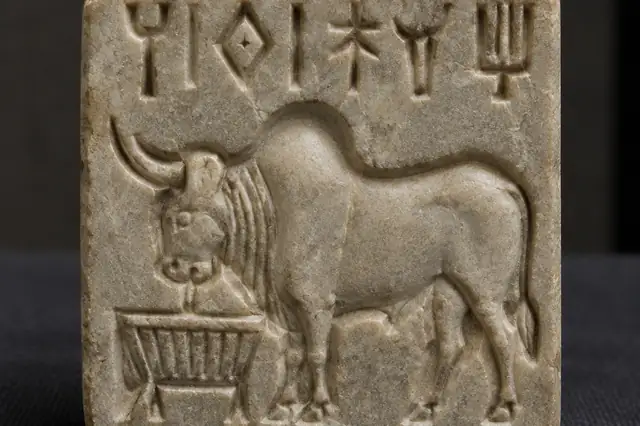
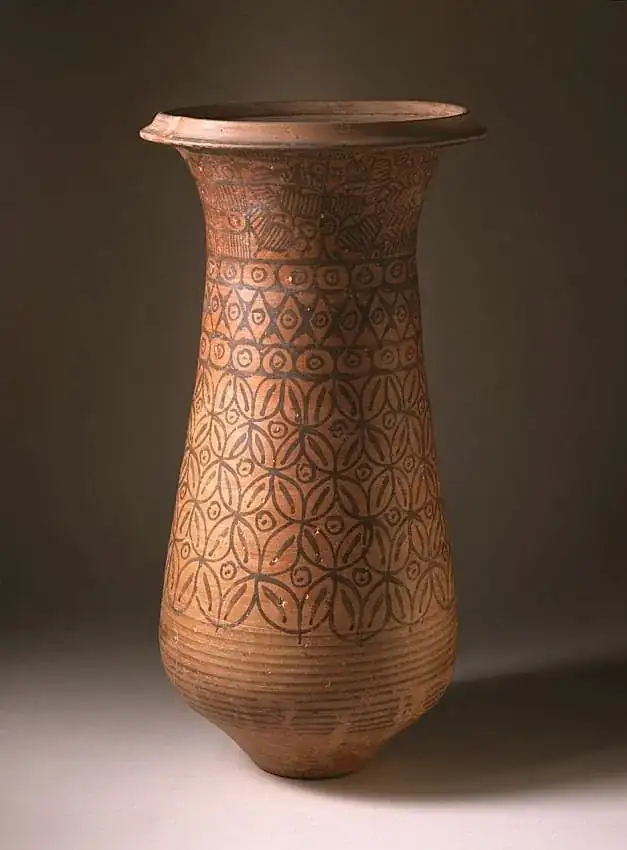
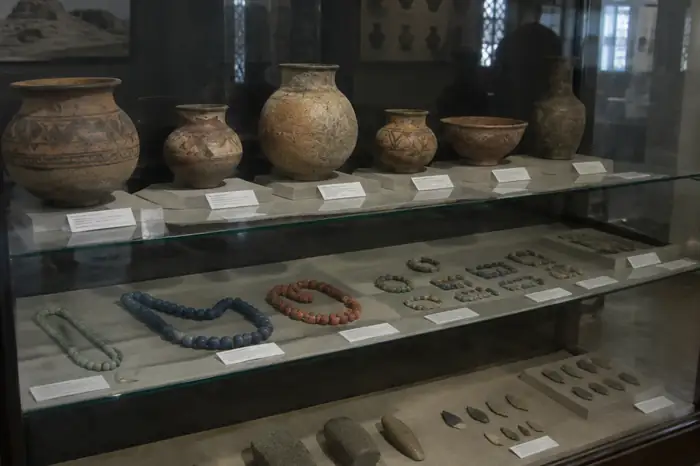
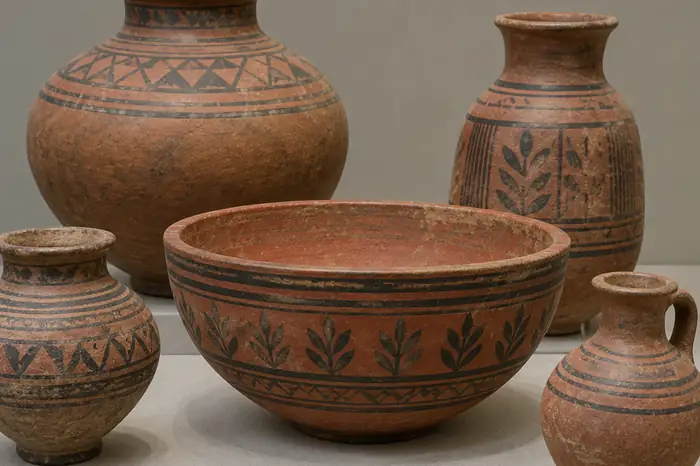
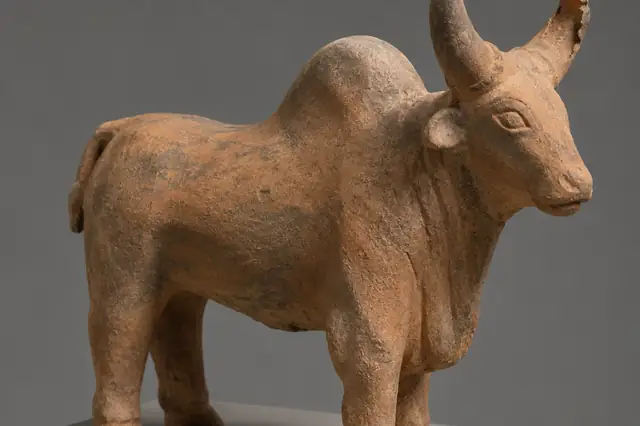
The site museum holds the finds: seals, painted pottery, terracotta figurines and model carts, beads, shell inlay, copper tools and chert blades, with a model of the city and the excavation photographs. It is small and old fashioned, and it is essential, because half of what you will remember from Harappa is in the cases rather than on the mound.
How the site was lost, and found
The first written notice of Harappa is from British travellers in the 1820s, who saw a brick mound and a ruined fort and assumed it was a lost city of some later period. Then came the railway. In the 1850s, contractors building the line between Lahore and Multan needed ballast and found a ready supply of hard fired brick in the mounds, and they took it by the trainload. A hundred years of archaeology has recovered a fraction of what went into the trackbed.
Excavation began properly in 1921 under Daya Ram Sahni, after the discovery of Mohenjo-daro made the Indus civilisation a known thing, and continued under Madho Sarup Vats and Mortimer Wheeler. Pakistani teams have worked the site since, and the modern research is as much about conservation and about what is still underground as it is about digging.
Harappa then and the Punjab now
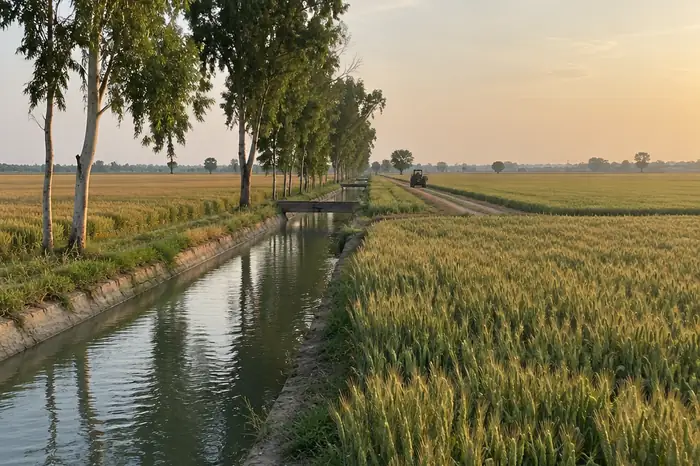
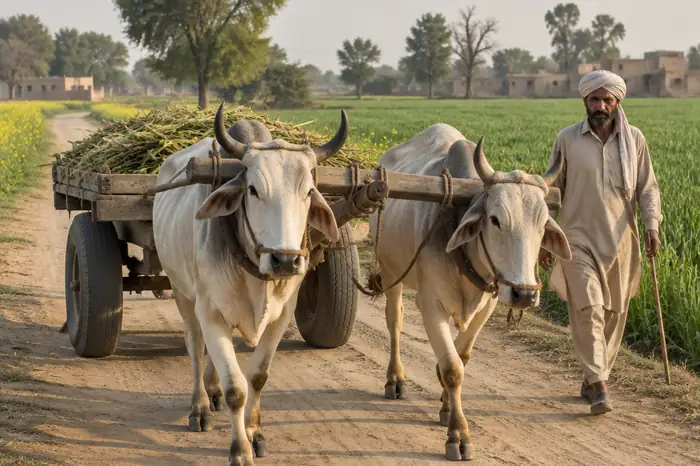
The site sits in one of the most intensively farmed districts in Pakistan, and the contrast is the interesting part. Wheat, cotton, sugarcane and orchards in every direction, a canal system doing what the Indus did four thousand years ago, and bullock carts on the village roads that are not so different from the model carts in the museum. Harappa was a farming city: the grain came in from this plain, and it still does.
The cemetery, and the people themselves
The burial ground known as R-37 is one of the most important at any Indus site, because it is where the people rather than the buildings were studied. The burials are extended, north to south, with a pot or two and sometimes beads or a shell ornament, and there is strikingly little in the way of weapons or display. Analysis of the skeletons has given us diet, disease, and the measured fact that the people were of ordinary stature, which is a modest finding that says more than any gold object.
What the burials do not show is kings. There is no royal grave at Harappa, no hoard, no object that reads as a throne, and this absence is one of the central puzzles of the civilisation: a city of thirty thousand people with standardised bricks, drains and weights, and apparently no dynasty to put on a wall.
Should you see Harappa or Mohenjo-daro?
If you are asking the question, you are probably in Lahore, which means the practical answer is Harappa. It is two and a half hours away on a motorway and fits in a day. Mohenjo-daro is nine hundred kilometres south and needs at least three days and a flight, and it is the better site.
Our advice, plainly: if the Indus Valley is the reason for your trip, go to Mohenjo-daro and treat it as the main event. If it is one interest among several and you are based in Lahore, take the day trip to Harappa, bring a guide, and be satisfied with what survives. The version to avoid is expecting Harappa to look like a city and being disappointed by a field of brick.
When to go
| Months | What it is like | Verdict |
|---|---|---|
| November to March | Cool mornings, clear dry days | The season. December and January best |
| April | Hot by mid morning | Possible with a dawn start |
| May to July | 45C and above, no shade | Avoid |
| August to September | Monsoon humidity, green fields | Hot, and photogenic if you can bear it |
| October | Cooling and dry | Good from mid month |
The countrywide picture is in our month by month Pakistan guide.
Getting there
| From | How | Time | Notes |
|---|---|---|---|
| Lahore | Motorway | About 2.5 hours | 180 km. The usual approach |
| Sahiwal | Road | About 40 minutes | 24 km. Nearest hotels and food |
| Multan | Motorway | About 2.5 hours | 200 km. The other direction |
| Faisalabad | Road | About 2 hours | 100 km |
There is a railway station at Harappa on the main line, which is a curiosity rather than a plan: the trains are slow and the station is not at the gate. Come by car. The site is a short way off the Sahiwal road, signposted, with a car park and a caretaker.
Where to stay, and what it costs
Lahore, as a base
- Every kind of hotel, 2.5 hours away
- A day trip without changing hotels
- What most of our guests do
Sahiwal
- Small hotels and guesthouses, 24 km away
- Useful if you are driving Lahore to Multan
- Book ahead; choice is limited
The site costs very little: a ticket, a guide, a tip. The cost of the trip is the car and the day, which is why Harappa works best as a day out from Lahore or as a stop on the Lahore to Multan road. Daily spending figures are in the travel costs guide.
How to see it properly
- Stop 1
The museum
Twenty minutes with the seals and the pottery and the site model, so that the mounds outside have a shape you recognise.
- Stop 2
The citadel mound
The perimeter wall and the granary area, then the working platforms. This is where the grain economy becomes visible.
- Stop 3
The lower town
One street, the house plans and the drains, with a guide who can point out the brick proportions. Then stop; there is not much more to see.
Honest expectation setting. If you have seen Mohenjo-daro first, Harappa will feel like a footnote. If you see Harappa first, Mohenjo-daro will astonish you. Given a choice and limited time, go to Mohenjo-daro and treat Harappa as the convenient one, because it is two hours from Lahore rather than nine from Karachi.
Harappa for foreign visitors
The site is quiet, and the visitors are mostly Pakistani families and students. There are no facilities beyond the ticket office and the museum, so take water and a hat, and wear shoes you can walk on rough brick in. Dress modestly. Photography of the ruins is fine; drones need a permit.
The visa route is in the tourist visa guide, with invitation letters through visa services, and the etiquette of a Punjab village road is in the etiquette guide. If you are going on to Sindh, the other city is Mohenjo-daro.
Harappa questions, answered
What is Harappa?
One of the largest cities of the Indus Valley Civilisation, in Sahiwal District in the Punjab, occupied between about 2600 and 1900 BC. It has a citadel mound, a lower town, brick working platforms, a cemetery and a museum, and it is the site that gave the whole civilisation its name: Harappan.
How old is Harappa?
About 4,600 years at its height. There was an earlier village on the mound from about 3300 BC, the planned city belongs to the mature phase from 2600 to 1900 BC, and there was a late occupation after that. The site was abandoned long before anything was written about it.
Is Harappa a UNESCO World Heritage Site?
No. It is on Pakistan's tentative list but it is not inscribed, unlike Mohenjo-daro, and that matters in practice: there is less money for conservation and the site is in worse condition. It is still one of the most important archaeological sites in the world.
How far is Harappa from Lahore and Multan?
About 180 kilometres from Lahore, two and a half hours on the motorway, and about 200 kilometres from Multan. It is 24 kilometres from Sahiwal, which has the nearest hotels, and there is a railway station at Harappa on the main line.
Is Harappa worth visiting?
For anyone interested in the deep past, yes, with an honest caveat: Harappa is far more damaged than Mohenjo-daro. The brick was looted in the nineteenth century to build the railway, the site was cultivated for decades, and the ruins are low and hard to read. A guide and the museum make it work, and it pairs naturally with a Lahore or Multan trip.
How long do you need at Harappa?
Two hours, including the museum. The site is small and much of it is a series of low platforms and wall stumps across two mounds. It is not a place to spend a day unless you are an archaeologist or you have brought one.
When is the best time to visit Harappa?
November to March. The Punjab plain is over 45 degrees from May to July and the site has no shade. December and January are the best months, with cool mornings and clear light on the brick.
Why is Harappa so damaged?
Because of the railway. In the 1850s the brick from the ruins was quarried by contractors as ballast for the Lahore to Multan line, and a large part of the city went into the trackbed. Later the mounds were farmed. Archaeologists arrived in 1921 to find a fraction of what had been there, and that is why the site now looks like low walls rather than a city.
Who excavated Harappa?
Daya Ram Sahni began the systematic excavation in 1921 for the Archaeological Survey of India, Madho Sarup Vats continued in the 1920s and 1930s, Mortimer Wheeler worked there in 1946, and Pakistani teams have excavated since independence. The site had been noticed by British travellers in the 1820s, a century before anyone understood what it was.
What was found at Harappa?
Seals with a humped bull and an undeciphered script, painted pottery, terracotta figurines and model carts, carnelian beads, shell inlay, copper tools, chert blades, and the brick platforms and granaries that show how grain was processed. The cemetery known as R-37 produced some of the best evidence for how the people of the city buried their dead.
Can I visit Harappa independently?
Yes. It is a fenced site with a ticket office, a caretaker and a museum, on a side road off the Sahiwal road. There is no public transport to the gate worth relying on, so you need a car. A guide is not compulsory and is the difference between seeing walls and understanding a city.
How do I book a Harappa tour?
Tell us your dates and where you are starting from, Lahore or Multan usually. We run it as a day trip or as part of a heritage route with Lahore, Multan and the shrines, and foreign travellers are quoted in dollars through Explore Pakistan.
Other pages worth reading
- Mohenjo-daro, the other great Indus city
- Lahore and Multan, the two ends of the drive
- Bahawalpur and Chitral for the other heritage routes
- Cultural and heritage tours and northern Pakistan
- All our tour packages and the 2027 group tour
Plan a Harappa trip
Tell us your dates and where you are starting from, Lahore or Multan usually. We will send an itinerary and a real quote, and an honest view of what the site is like now.
Ask for a quotePakistan packages for foreigners