Pakistan’s festival calendar is not a fixed list of dates, and any website that prints one is guessing. What is stable is the season: Shandur lands in July, the Kalash spring festival in May, Sibi Mela at the end of winter, Lok Mela in November. This calendar gives the month each event normally falls in, what the event actually is, and how much travel time it costs you, so you can build an itinerary around a real window instead of a date that moves.
Below, month by month, from the spring cluster in Punjab and Balochistan to the Kalash winter rites in December, with a note on which events suit which kind of traveller.
Why the dates move every year
Three different systems are running at once. Religious festivals follow the lunar calendar and shift about eleven days earlier each year. Cultural festivals set by a community, like the three Kalash events in Chitral, are declared by the valleys themselves, often a few weeks ahead. Government-run events such as Lok Mela or the Cholistan rally are announced by the organising authority, and they can be rescheduled for weather, security or logistics.
The practical rule: pick the month from this calendar, then confirm the dates with the organiser or a local operator a few weeks before you book anything non-refundable. Treat every specific date you read online, including past editions quoted in our own guides, as evidence of a pattern rather than a promise.
February to March: the end-of-winter cluster
Basant, Lahore. The kite festival that turns the old city’s rooftops into a competition. Basant sits on the cusp of spring and has had on-and-off restrictions over the years, so the month is reliable and the official status is not. Our foreigner’s guide to Basant in Lahore covers where to watch from and what the rules currently look like.
Sibi Mela, Balochistan. A livestock and horse fair that has run for generations in the Sibi basin, now wrapped in a cultural programme with tent pegging, cattle judging and folk music. It starts in February and often runs into early March. Foreign visitors are unusual here, which is exactly why it feels different from the Lahore and Islamabad events.
Cholistan Desert Rally, Bahawalpur. Pakistan’s biggest motorsport event, staged near Derawar Fort with a cultural festival attached. It usually runs over about five days in February, organised by the Tourism Development Corporation of Punjab, and the exact window has shifted between editions. If you want the fort and the desert camping without the crowds, our Cholistan camping guide covers the same terrain in the quiet season.

April to May: Chitral and the Kalash valleys
Qaqlasht, Upper Chitral. A three to four day spring festival on the Qaqlasht meadows above Buni, built around polo, local food, music and horse racing, with Chitrali teams travelling up from the valley floor. It is far smaller than Shandur and far less photographed, which makes it the better choice if you want the festival rather than the crowd watching it. Recent editions have landed in mid to late April.
Chilam Joshi, Kalash valleys. The spring festival of the Kalash, held across Bumburet, Rumbur and Birir in mid-May, with dancing, new-milk rituals and the valleys at their greenest. Our guide to Chilam Joshi in the Kalash valleys explains the etiquette, and the Bumburet valley guide covers where to stay once you are there.

June to August: the high summer season
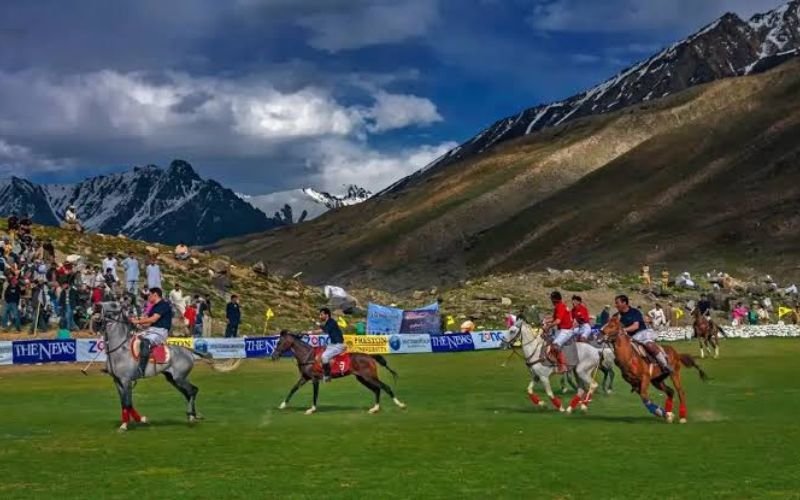
Shandur Polo Festival, July. The Chitral versus Gilgit match on the world’s highest polo ground, at roughly 3,700 metres, played without the usual rules and with a camp that appears on the plateau for the week. It is the single most atmospheric event on the calendar and it is also the hardest to reach: the road in from either side is long, and the high pass means the event depends on the pass being open. The Shandur Polo Festival guide covers the routes and the practical side.
Broghil Festival, July. A smaller festival in the Broghil valley on the far side of Chitral, near the Wakhan corridor, with yak polo and a setting that makes Shandur look accessible. Editions run in July and attendance is limited by the valley’s capacity. Details in the Broghil Festival guide.
Kalash Uchal, August. The harvest festival of the Kalash, less visited than Chilam Joshi and, for that reason, often the one travellers remember. Same valleys, same hospitality, fewer vehicles on the track.
September to October: no festival, better travel
These are the two months with no festival anchoring the calendar, and that is their advantage: the northern valleys are still open, the summer traffic has gone, and hotel rates soften before winter. Autumn colour in Hunza and Skardu peaks somewhere in these weeks. Outside the festival circuit, our month-by-month guide to travelling in Pakistan explains how the seasons compare.
November: Lok Mela and the folk season
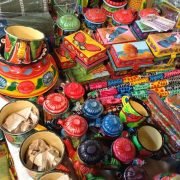
Lok Mela, Islamabad. Lok Virsa’s national folk festival brings artisans and performers from every province onto one campus in Shakarparian for about ten days in November, with working craft stalls rather than museum cases. The 2025 edition ran 7 to 16 November and the 2024 edition 8 to 17 November. Our Lok Mela visitor guide has the practical detail: timings, how to get there without a car, and how to pair it with the Pakistan Monument.
December: Choimus, the Kalash winter festival
Choimus, also written Chawmos, is the most sacred event in the Kalash year, held around mid-December and lasting up to two weeks. The opening phase is traditionally closed to outsiders and is spent on purification and rites inside the valleys, with the public celebrations following. This is not an event to turn up to unannounced: ask a local operator what is open to visitors in the current year before you plan around it.

How to plan a trip around a festival
Anchor the month, not the date. Book flights for the season and keep the two or three days around the event free. Anyone who books a non-refundable ticket for an exact festival date is one rescheduling announcement away from missing it.
Give the event buffer on both sides. Travel days in the north routinely stretch: a road that takes six hours can take nine. Arriving the day before a festival and leaving the day after is the difference between attending it and hearing about it from the hotel.
Do not build a ten-day trip around a three-day event. The strongest itineraries use a festival as one anchor and put trekking, forts or a city on either side. Our 7, 10 and 14 day itineraries show how that stitching works, and the costs guide gives realistic budgets.
Match the festival to the traveller. Photographers do better at Qaqlasht and Sibi than at Shandur. Families do better at Lok Mela, which is flat, urban and easy. Motorsport fans should plan February around Cholistan. Travellers coming for religious rather than cultural reasons should look at the Kartarpur Corridor guide and our Sikh Yatra tours overview instead.
Where we can help
We build itineraries around fixed festival months rather than fixed dates, and we hold the internal travel flexible until the organiser confirms. The festival trips page lists what we run, the cultural and heritage tours page covers the site-based version of the same idea, and Islamabad tour packages cover the capital days before or after. Message us on WhatsApp with your month and we will tell you honestly what is realistic.
Last updated: 5 November 2026. Festival months are drawn from past editions and organiser announcements; confirm the current dates before booking.
Frequently asked questions
Which is the biggest festival in Pakistan?
By attendance and national reach, Eid al-Fitr and Eid al-Adha dwarf everything else, but they are religious holidays rather than cultural events you travel for. Among cultural festivals, Lok Mela in Islamabad and Shandur in the north are the two with a national profile, and the Cholistan Desert Rally is the largest in the south.
Can foreigners attend all of these?
Most, yes: Lok Mela, Shandur, Qaqlasht, the Cholistan rally, Sibi Mela and the Kalash spring and harvest festivals are open to visitors. Parts of Choimus are traditionally closed, and Basant depends on the year’s permissions. Always confirm the current position rather than assuming last year’s rules apply.
How early are festival dates announced?
Usually a few weeks to a couple of months ahead. Religious dates are known years in advance, community festivals in Chitral are often confirmed closer to the event, and government events can be moved at short notice. Plan the month and keep the booking flexible.
What is the best month overall for a culture-focused trip?
May for the Kalash spring festival and the northern valleys, July for Shandur if you can handle the altitude and the drive, or November for Lok Mela with Islamabad and Lahore on the same trip. None of the three requires a fixed date to plan around.
More guides worth reading
- Lok Mela Islamabad: the full visitor guide
- Basant in Lahore for foreign visitors
- Shandur Polo Festival: the highest polo ground
- Chilam Joshi in the Kalash valleys
- Broghil Festival in the Hindu Kush
- Camping in the Cholistan desert
- Lahore travel guide
- Katas Raj temples
- Hunza Valley travel guide
- Skardu in five days
- Islamabad to Hunza: routes and timing
- All of our Pakistan tours and festival trips
- A Hunza destination wedding