

Gilgit Tour Packages
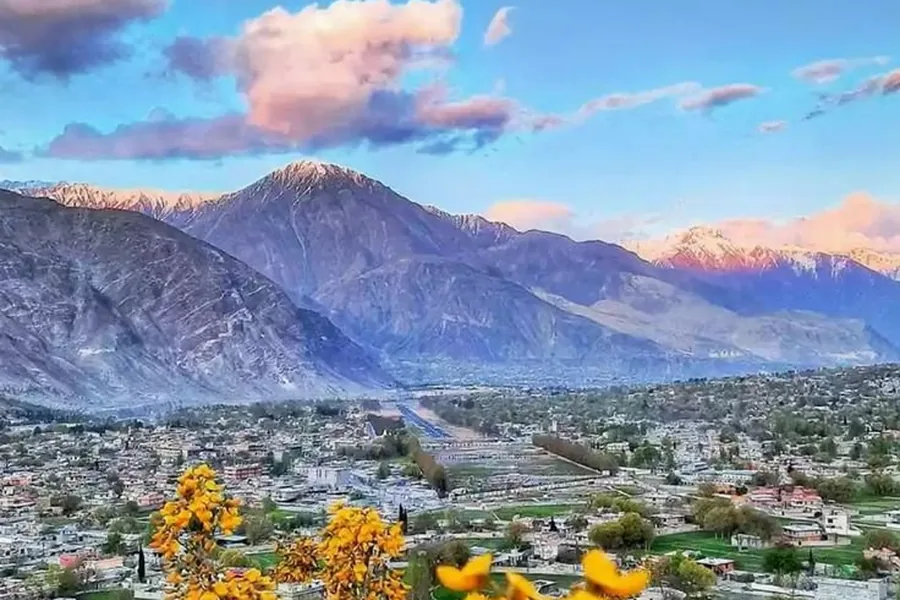
Gilgit is the town where northern Pakistan sorts itself out. The Karakoram Highway comes up from Islamabad, the road to Skardu branches east, the road to Ghizer and Chitral goes west, and the mountains do the rest: Rakaposhi above the bazaar, Nanga Parbat a few hours south, and the place where the Karakoram, the Himalaya and the Hindu Kush run into each other about an hour down the highway.
Most travellers treat Gilgit as a fuel stop on the way to Hunza. That is a mistake. It is the capital of Gilgit-Baltistan, it has the region’s only real airport, and within an hour of the main road you have a seventh-century Buddha carved into a cliff, a valley of three lakes reached by jeep track, a bazaar that sells gemstones out of the ground and the best apricots in the country. This guide covers what a Gilgit tour costs, how many days you actually need, how the roads behave, and the practical things nobody mentions before you arrive.
Gilgit tour packages and prices
Gilgit runs three ways with us: a seat on one of our public group departures, a private group on dates and stops of your own, or an international package quoted in US dollars. All three use the same road, the same hotels and the same guide network, so what changes is who you travel with and who sets the date. The day by day plan for the northern circuit is in our Northern Mountain Tours collection.
Join a weekly departure
Our own departures, one a week, so you travel with other booked guests at the per person rate. Join in Lahore or Islamabad at the time we confirm before the trip, or meet us at Gilgit airport if you fly up.
Your own dates and route
A departure for your own family or friends, on the dates, pickup city and route you choose. Gilgit, Naltar, Hunza and Skardu can be reordered to suit you, and the price is built from the number of passengers, the vehicle and the hotels.
Packages in US dollars
Every region we operate is packaged and priced in dollars on our Explore Pakistan page, Gilgit-Baltistan included, and we build custom routes around your locations, dates and group size from two travellers upwards.
The published package ladder, per person: short trips from PKR 16,800, the three day Gilgit Express at PKR 18,500 with Naltar, the Rakaposhi viewpoint and a night in a stone guesthouse, and the five day Gilgit and Hunza Explorer at PKR 32,800 with two nights in Gilgit, three in Hunza and the jeep road to Khunjerab. Rates move with season, vehicle and hotel category, so your written quote confirms the current figure for your dates before any payment, and a 25% advance holds the booking.
What is included, and what is not
Gilgit is three products rather than one, so the answer is different for each. The lists are split by the way you travel, and the one that applies to you is repeated on your own quote.
Public group tour, at the PKR prices above
Included
- Air-conditioned transport from Lahore or Islamabad, or airport pickup in Gilgit if you fly in
- Hotel and guesthouse accommodation in Gilgit and on the road, on a sharing basis
- Breakfast and dinner every day, with the guide eating with the group
- A local Gilgit-Baltistan guide, jeep transfers on the Naltar track, and driver expenses
- Tolls, parking and the entry fees listed in the itinerary
- An experienced mountain driver on the Karakoram Highway
Not included
- Domestic flights, including the Islamabad to Gilgit sector unless your package names it
- Lunches, tea and mineral water during travel
- Entry tickets where a site charges separately, and boating or pony hire
- Travel insurance, medication and emergency evacuation
- Laundry, phone calls, gemstones and shopping, and tips
- Extra costs caused by a road closure, a landslide or weather
A 25% advance confirms the booking, and cancellation is free up to 72 hours before departure. If something in the quote is unclear, ask before you pay rather than after.
Tour packages for international travellers
Included
- A guide, not just a driver: English speaking, with a local fixer in the mountain districts
- Transport sized to the group and the road, including 4x4s for the Naltar track
- No-objection letters where a valley needs one, and the paperwork the checkpoints ask for
- Visa support before you fly, with the invitation and itinerary your application needs
- Hotels and guesthouses we use season after season, in the category your package names
Not included
- International airfare and the Pakistani visa fee itself
- Travel and medical insurance, and emergency evacuation cover
- Meals outside the ones your package lists, which are itemised per package
- Personal spending, drinks, shopping and tips for guides and drivers
- Anything caused by a road closure or a change of plan you ask for on the road
Packages are quoted in US dollars on our Explore Pakistan page, and a custom route is quoted line by line the same way.
Private customised tours
A private tour is built from your own plan, so there is no fixed list of what it includes and we will not pretend otherwise. What you get depends on the route you choose, the vehicle that route needs and the hotel category you pick, and a couple in a car is a different package from twelve people in a coaster.
What we do promise is that everything is itemised in writing before you pay: what we arrange and pay for, what we hand over to you, and what you settle directly on the road. If you want airport transfers covered, an extra night in Naltar, a jeep into Bagrot or a guide for the Kargah carvings, say so at quote stage and it is written into the price. The list on your quote is the list you travel on.
A sample three day Gilgit itinerary
This is the shape of our Gilgit Express, the short trip for people who fly in rather than give up three days to the highway each way. It is also the part every longer northern tour does on the way through, so nothing here is wasted if you later add Hunza.
Arrive, Kargah, the bazaar and Rakaposhi
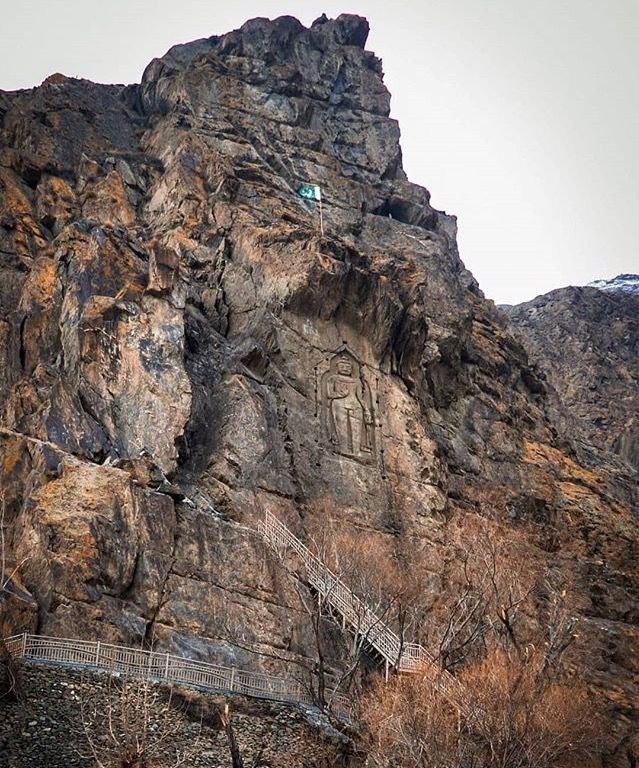
Land at Gilgit in the morning, or come in off the highway. Kargah Buddha first, a seventh-century carving in the cliff about ten kilometres out of town, then the old bazaar and the Danyore bridge over the Gilgit river. Late afternoon on the highway towards Nagar for the Rakaposhi viewpoint, where the 7,788 metre wall fills the sky. Night in Gilgit.
Naltar valley and the three lakes
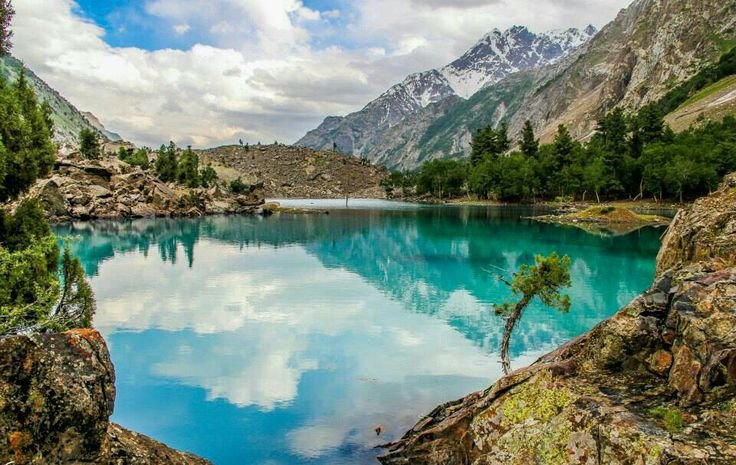
A jeep up the Naltar track, two to two and a half hours of switchbacks through pine forest to Bashkiri, Shani and Naltar lakes at around 2,900 metres. Trout, juniper, and in winter a small ski slope used by the local ski school. Sleep in a stone guesthouse in the valley or come back down to the city.
Jaglot and out
Down the highway to Jaglot, where the Indus and the Gilgit river meet and the Karakoram, Himalaya and Hindu Kush ranges converge, then the flight back to Islamabad or the first leg of the drive south. Guests adding Hunza leave north instead, and are in Karimabad in time for lunch.
Mountain roads are weather dependent. The guide may reorder the days to put Naltar on the clearest morning, and nothing is charged for that change. Four to six days is what most guests end up booking once they see how much sits within two hours of the town.
Gilgit and the valleys around it, in photographs
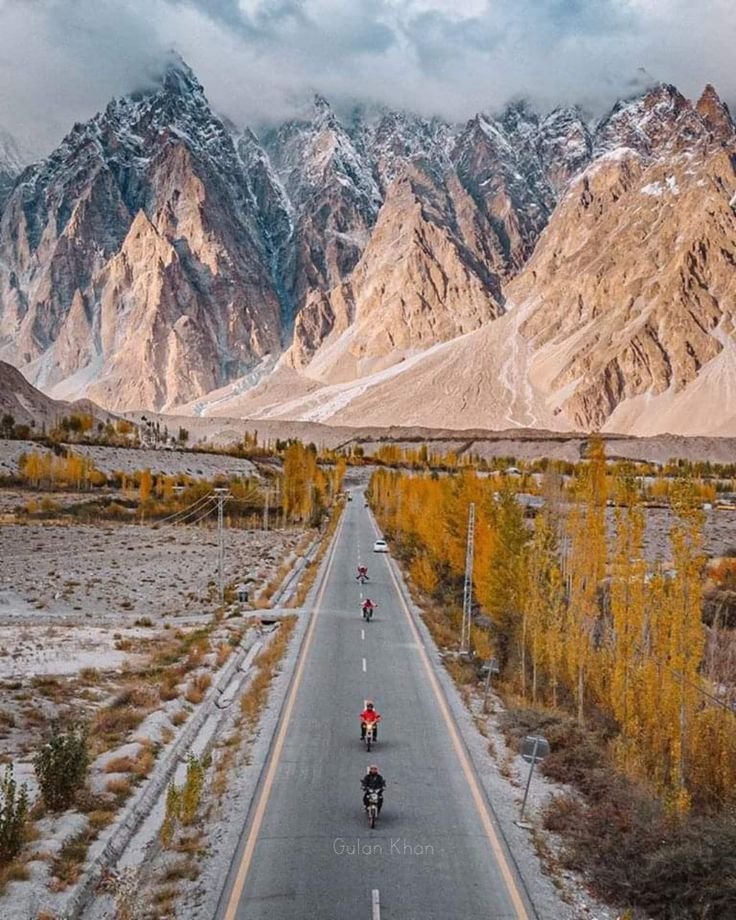
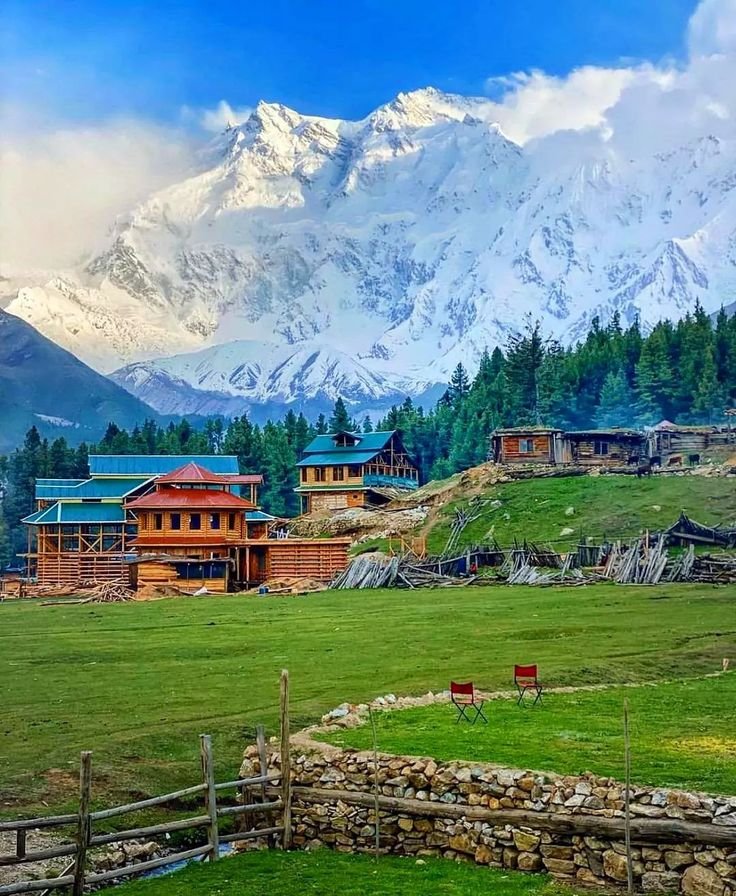
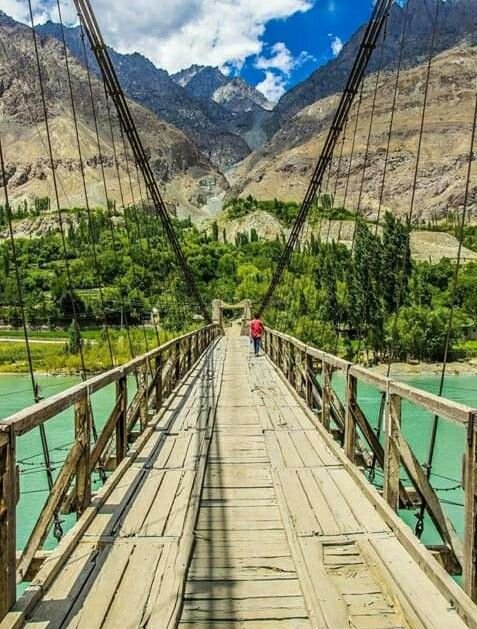
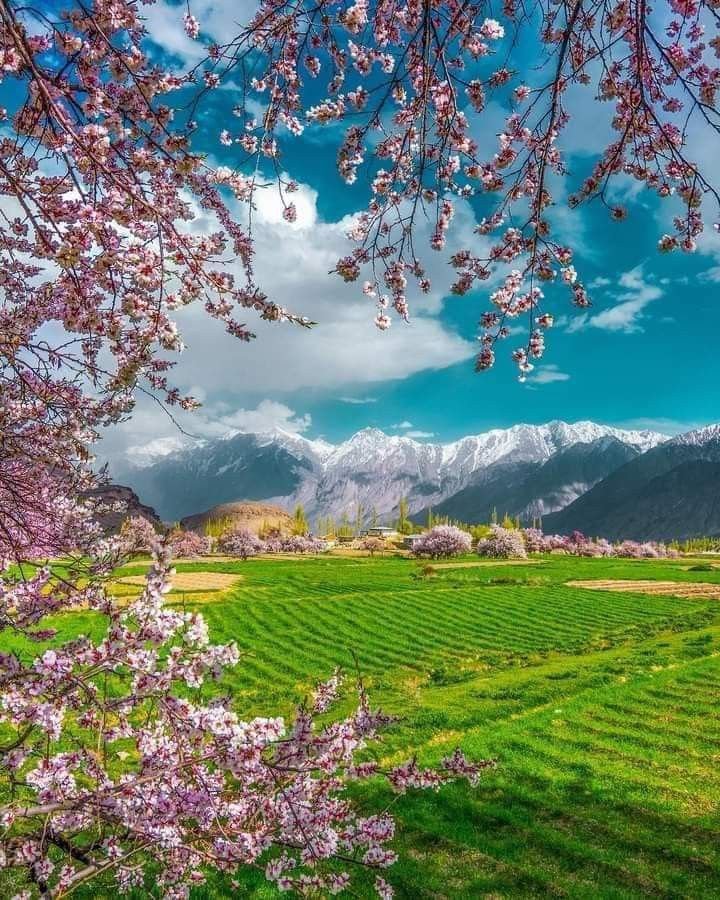
Pictures from our own departures out of Gilgit, up the Naltar track and along the highway. The full gallery is updated through the season.


What to see in Gilgit, and how long each one takes
Gilgit is not one sight. It is a town with a handful of good things in it and a ring of valleys within two hours that are better than the town. These are the eight worth planning around, with a realistic time for each.
Kargah Buddha
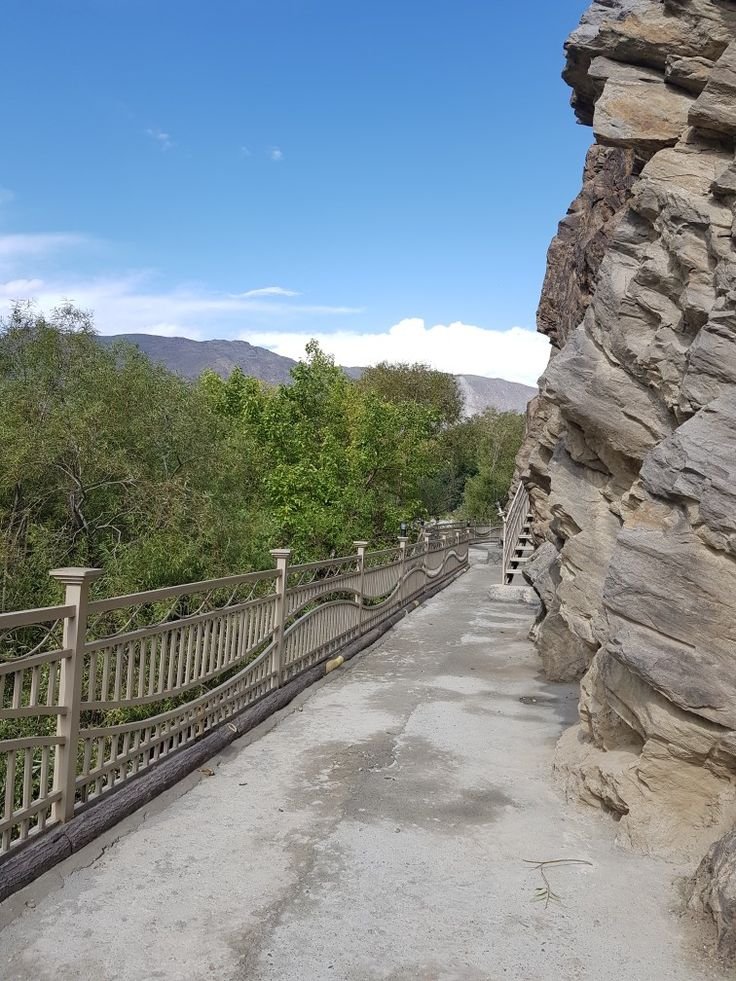
One to two hours. A seventh-century Buddha carved into a rock face at the mouth of the Kargah valley, about ten kilometres from the city. It is several metres high, cut into the cliff above the stream, and the walk in from the road takes fifteen minutes. This is the clearest piece of evidence that the valley sat on a Buddhist trade route long before Islam arrived, and it is the single best short stop in Gilgit.
Naltar valley and its lakes
A full day, or an overnight. About 35 km from town but two to two and a half hours of jeep track, climbing through pine and juniper to three lakes at around 2,900 metres: Bashkiri, Shani and Naltar. There is a small ski slope used by the local ski school, trout in the water, and a handful of stone guesthouses. Ordinary cars do not go up; we use 4x4s.
The Rakaposhi viewpoint
One hour on the way north. Rakaposhi is 7,788 metres and it stands directly over the highway between Gilgit and Nagar, close enough that the scale stops making sense. The marked viewpoint is a short stop, and the best light is early morning when the whole face is still in shade and the summit is lit.
Jaglot and the meeting of three ranges
Forty-five minutes. About 45 km south of Gilgit the Indus arrives from the east and the Gilgit river comes down from the north, and the Karakoram, Himalaya and Hindu Kush run together here. There is a marked viewpoint on the highway. It looks like a roadside stop and it is one of the great geological junctions of Asia.
Danyore bridge and the Chinese cemetery
One hour. The suspension bridge across the Gilgit river at Danyore is the way the villages on the far bank get to the bazaar. Near it is the walled cemetery where the Chinese engineers and workers who died building the Karakoram Highway are buried. It is a quiet, unexpected place and worth the detour.
The old bazaar and the town
One to two hours. Gilgit’s bazaar is not a tourist construction. Dry fruit, apricot kernels, walnuts, cloth, hardware, and a row of jewellers selling gemstones from the valleys around: peridot, aquamarine, tourmaline and ruby. Buy from a shop with a fixed sign and a scale, ask where a stone is from, and treat a bargain that seems impossible as exactly that.
Fairy Meadows and Nanga Parbat
Two days, or one long one. The view of Nanga Parbat that everyone has seen is from Fairy Meadows, reached from the Raikot bridge on the highway about two hours south of Gilgit, then an hour of jeep track and a two to three hour walk. The meadows sit around 3,300 metres. It is the best add-on to a Gilgit trip and it needs its own night.
Ghizer, Gupis and Phander
A long day, better as two. West of Gilgit the road follows the Gilgit river to Gupis and on to Phander, where a wide blue lake sits under bare peaks and a trout farm supplies half the hotels in the region. Beyond that the road climbs towards Yasin and the Shandur pass. It is the emptiest, least-visited corner of Gilgit-Baltistan and a full day’s drive.
Hidden gems around Gilgit, for travellers with a spare day
These are the places that do not appear in the five day itineraries, mostly because they need a 4×4, a walk or a night in a village. They are also the reason people come back.
Bagrot valley and the Hinarche glacier
About 40 minutes from town, then a two to three hour walk. The valley directly behind Gilgit, reached through Jutial, where apricot orchards and stone houses sit under the Hinarche glacier. Local guides take you to the snout on foot or by jeep as far as the track allows. It is the cheapest half day of mountain scenery in the region and almost no foreign visitors do it.
Haramosh valley
Two hours, on the Skardu road. Across the Indus from the highway, the Haramosh valley faces the 7,409 metre peak of the same name. You reach it from Sassi on the Skardu road. Quiet villages, terraced fields and a view of a mountain that kills people, which is the sort of sentence this range invites.
The rock art at Chilas and along the Diamer road
A stop, or a half day. The stretch of the Karakoram Highway south of Gilgit carries thousands of carvings cut into the boulders over two thousand years: ibex, stupas, horsemen, inscriptions in Kharosthi and Brahmi. Some are signposted, most are not, and a guide who knows them changes a roadside stop into an hour of history.
Astore and the Rama valley
A full day, or two with Deosai. East from Jaglot, the Astore road climbs into a green valley under Nanga Parbat with the Rama meadows and lake at the top. In summer the road continues towards Deosai, the 4,100 metre plateau of brown bears and wild flowers that most people only see from the Skardu side.
Yasin and the Shandur road
A long day from Gilgit, better with a night. The road west from Gupis climbs to Yasin and then to the Shandur pass at about 3,700 metres, the highest polo ground in the world, where Gilgit and Chitral play in July. Outside festival week it is empty, and the drive there is the point.
Phander lake and the trout
Overnight, four to six hours from Gilgit. A wide, still lake with a village on the shore and a government trout hatchery that stocks the rivers. Hotels here are simple and the kitchen will grill what was swimming in the morning. This is where people who have already done Hunza go next.
Minapin and the Hopar glacier, in Nagar
Half a day on the way north. Across the Hunza river from Karimabad, Nagar is the valley people skip. Minapin village has orchards and a guesthouse, and the walk towards the Hopar glacier takes you under the Rakaposhi face. Ask before you walk on the glacier itself, and never alone.
The old Silk Road bridges
An hour, anywhere along the highway. Wooden suspension bridges still cross the Hunza, Gilgit and Indus rivers, some of them carrying traffic, some carrying a single water pipe. They are the most photogenic things on the highway and they are disappearing as concrete replacements go in. Cross one on foot with the guide, not alone and not with a heavy pack.
Four of these need a 4×4 and most of a day, which means they suit a private tour rather than a group departure. Tell us which ones interest you and we build them into the route instead of bolting them on.
When is the best time to visit Gilgit?
Gilgit sits lower than Hunza, at about 1,500 metres, so the town is hotter in summer and gets less snow in winter than the valleys above it. What you get depends on whether you are chasing blossom, clear peaks or a quiet road.
| Months | What it feels like | Worth it for |
|---|---|---|
| March | Cool, changeable, snow still on the side valleys | The town waking up, with almost no visitors |
| April | Blossom in the villages, 15-25C by day, cold nights | Apricot and cherry blossom; the photographer’s month |
| May | Warm and clear, high valleys opening | The first month Naltar and the passes are properly reachable |
| June to August | Hot in town, 30-35C, monsoon rain on the highway | Long days and green valleys, with landslide risk on the road |
| September | Clear, dry, comfortable | The best all-round month: sharp peaks and an easy road |
| October | Gold poplars, cold mornings | Autumn colour and clean light, before the hotels close |
| November to February | Cold, 0 to -5C at night, snow above town | Quiet bazaars and low prices, with some roads and hotels shut |
If you have one trip in you, book the second half of April for blossom or September for the clearest light. Mid-summer is the safest for a first visit because nothing depends on luck with a pass, but it is also when the highway slides. The month by month picture across the whole country is in our Pakistan season guide.
How to get to Gilgit
| Route | Distance | Time | Notes |
|---|---|---|---|
| Karakoram Highway via Besham and Chilas | About 600 km from Islamabad | 12 to 14 hours of driving | Open all year and the reliable choice; we break it at Besham or Chilas |
| Naran and Babusar Pass | Shorter than the highway | One long day | Open roughly June to October only, and prettier |
| Fly Islamabad to Gilgit | About an hour in the air | Half a day door to door | Weather dependent, cancellations common |
| On to Hunza or Skardu | 100 km north, 220 km east | About 2 hours, about 6 hours | The two roads that leave Gilgit and the reason it is a base |
By road. The highway from Islamabad runs through Besham and Chilas to Gilgit, a long day and a half that almost every guest prefers to break. The full breakdown of the two routes north is in our Islamabad to Hunza distance guide, and the road itself has its own Karakoram Highway guide.
By air. The Islamabad flight takes about an hour and lands in a valley where cloud decides the schedule. Cancellations are common enough that we never build a tight connection around the flight, and we meet you at the airport if it lands. Flying up and driving back is the best of both.
Paperwork. Gilgit needs no special permit. Carry your passport, since the police and army posts on the highway check it, and a Pakistani visa is required before arrival. Our visa services page covers current requirements by nationality.
Where to stay in Gilgit
Gilgit has the widest range of rooms in Gilgit-Baltistan: simple guesthouses near the bazaar, mid-range hotels on the airport road, and the best hotel in the region if you want hot water and a generator without thinking about it. Naltar has stone guesthouses with wood stoves, which is the point of going up there.
Ask about three things before you confirm, wherever you book: hot water, back-up power, and whether the room faces the mountains. Outside June to September many places run on solar with a generator behind it. Tell us your budget when you book and we hold the rooms, because the good ones fill in blossom season and again in October.
Food, people and a little etiquette
Gilgit is a Shina town in a region of many languages: Burushaski in Hunza, Wakhi in Gojal, Khowar in Chitral, and Balti in Skardu. Urdu and English work in offices and hotels, and an attempt at a Shina greeting buys you a smile in the bazaar. The region is religiously mixed: a Shia majority in Gilgit city, Ismaili communities in parts of Hunza and Ghizer, Sunni elsewhere, and the mosques and imambargahs sit within sight of each other.
What you eat here is closer to Central Asia than to the plains. Apricots fresh, dried and pressed into oil, walnuts, mulberries, buckwheat bread, and chapshuro, a meat-filled bread baked on a griddle. Noon chai, the pink salt tea, is drunk with breakfast. River trout is on every hotel menu and it is worth ordering, and mutton is usually fresh and local. Food is halal, alcohol is not sold, and vegetarian guests are looked after if we know in advance, so tell us when you book rather than on the road.
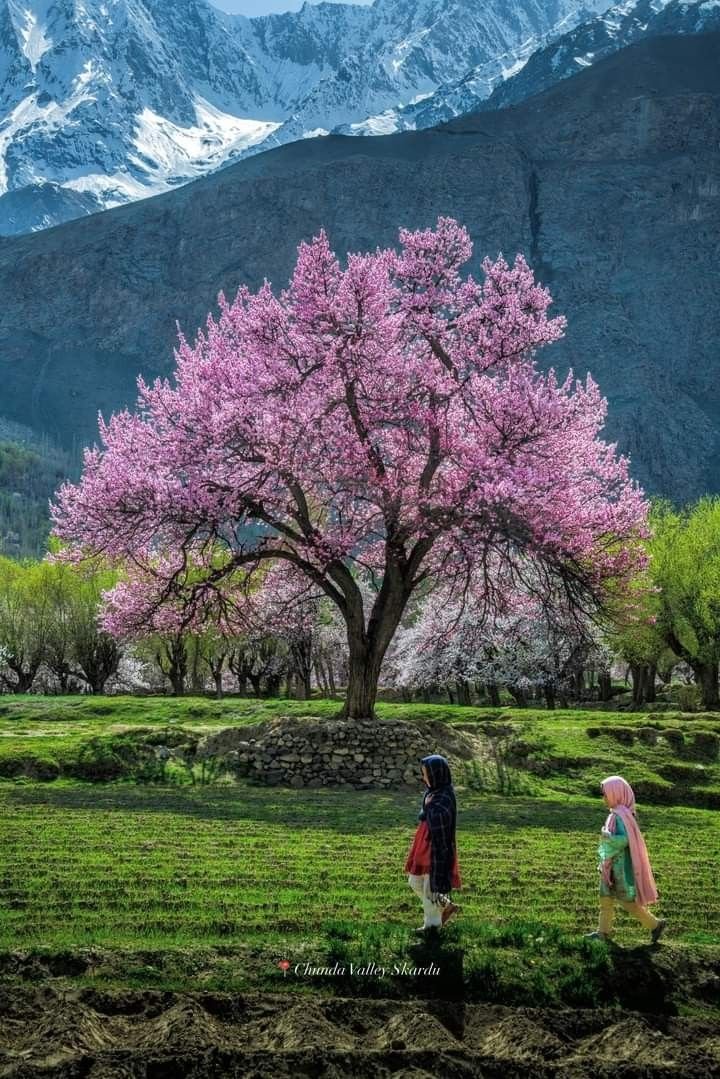
Photography is welcome, but ask before pointing a lens at people, and do not photograph women in the villages without permission. Dress modestly away from the hotels, shoulders and knees covered, and carry a light scarf if you plan to visit a fort, a mosque or a shrine. Do not walk onto a glacier or cross a river bridge alone, and do not photograph military posts on the highway, which is the one rule that gets people stopped.
What else you will spend money on
The package gets you there, feeds you and beds you. These are the extras travellers budget for separately, and they are paid in cash along the way.
- Domestic flights for the Islamabad sector if your package does not name it
- Lunches and tea stops on the highway, cheap individually but they add up over a week
- Jeep hire for Naltar, Bagrot or the Fairy Meadows track, where a car cannot go
- Entry tickets and site fees, and pony or porter hire on the meadow walks
- Gemstones and dry fruit, which is where a Gilgit trip quietly gets expensive
- Tips for the driver and guide, discretionary and never expected in advance
- Insurance and any medication you want to carry, which we do not provide
For a broader picture of daily costs across Pakistan, our travel cost guide breaks down meals, hotels and transport by budget level.
Practical things to know before you go
Money and ATMs
- Gilgit has the banks, and the last working ATMs before Hunza and Skardu
- They run out, especially at weekends and in winter, so draw before you need it
- Cards are accepted in the better hotels and almost nowhere else
- Bring clean rupee notes for the road
Signal and power
- SCOM, Jazz and Zong all work in the town and along the highway
- Covership thins in the side valleys and stops on the high passes
- A local SIM needs your passport and twenty minutes in a shop
- Power cuts happen; a power bank is worth the weight
Altitude and health
- The town is about 1,500 m: no acclimatisation needed
- Naltar is around 2,900 m and Fairy Meadows around 3,300 m, so take the walks slowly
- Bring any prescription medicine in its original packaging
- Bottled or filtered water everywhere; do not drink from the streams
Weather and roads
- Landslides can close the highway for hours, most often in July and August
- Do not book an international flight for the same day you drive back
- Babusar is shut outside summer, so the highway is the winter route
- Bring layers: Naltar is cold while Gilgit is warm
Frequently asked questions
How many days do you need in Gilgit?
Three days is enough to see the city, Kargah and Naltar, which is what the Gilgit Express package covers. Four to six days is the comfortable version once you add Hunza, the Fairy Meadows side trip or a night in Ghizer.
Is Gilgit worth visiting, or is it just a stop on the way to Hunza?
Both, and the second answer is what most travellers get wrong. Gilgit is the junction town where the road to Skardu, the road to Ghizer and the Karakoram Highway meet, and it has things Hunza does not: the Kargah Buddha, Naltar and its three lakes, the old bazaar, and the confluence at Jaglot where three mountain ranges meet. Two nights here is a better trip than two nights spent rushing past.
Do foreigners need a permit for Gilgit?
No. Gilgit city, Naltar, Hunza and Skardu are open and need no permit. You need a valid Pakistani visa and your passport for the checkpoints, and a few valleys close to the border, including parts of the Khunjerab and Shimshal roads, need a no-objection letter, which we arrange before you fly.
Is Gilgit safe for tourists?
Yes. Gilgit-Baltistan is a separate administrative region from Khyber Pakhtunkhwa and is travelled routinely by foreign groups. The realistic risks are road related: long driving days, landslides in the monsoon and altitude if you go high. We travel in daylight, with local drivers who know the highway, and we check conditions before every departure.
How do you get to Gilgit?
By road the Karakoram Highway from Islamabad is about 600 km and 12 to 14 hours of driving, normally split with a night in Besham or Chilas, or you take the shorter Babusar road through Naran when it is open in summer. By air the Islamabad flight takes about an hour and lands in a valley where the weather decides the schedule, so we always keep a road plan behind it.
When is the best time to visit Gilgit?
April to October. Blossom comes to the villages in early April, the high valleys open from late May, and the poplars turn gold from the last week of September through October. June to August is the busiest and the hottest in the city itself, which sits lower than Hunza. December to February is cold and quiet, with snow above the town and many hotels shut.
What does a Gilgit tour cost?
Our published packages run from PKR 16,800 for the shortest trips, PKR 18,500 for the three day Gilgit Express and PKR 32,800 for the five day Gilgit and Hunza Explorer, per person. Rates move with the season, the vehicle and the hotel category, so your written quote confirms the current figure for your dates before you pay anything. International travellers are quoted in US dollars.
When do your Gilgit group tours depart?
Our public departures leave weekly, and the date is ours to set, so there is always one coming up. You join in Lahore or Islamabad at the time we confirm before the trip, or we meet you at Gilgit airport if you fly in, and you travel with other booked guests at the per person rate.
How many people do you need for a private Gilgit tour?
Twelve travellers for a private group, or two when the party is a couple. A private tour runs on your dates, from the city you choose, with the route and stops you want, and it is quoted on the number of passengers, the vehicle and the hotels rather than at a fixed per person rate.
Can I combine Gilgit with Hunza and Skardu?
Yes, and most of our guests do. Hunza is about 100 km north, around two hours, and Skardu is about 220 km east, roughly six hours in good conditions. The eight day Gilgit, Hunza and Skardu road tour links all three, and the seven day Skardu itinerary works the same way from the other direction.
Is Naltar Valley worth a full day?
Yes, if you accept the road. Naltar is about 35 km from the city but two to two and a half hours of jeep track, and the reward is pine forest, three lakes and a small ski slope at around 2,900 metres. It is the best single day trip out of Gilgit and it is included in the Gilgit Express package.
Can I fly into Gilgit and drive back to Islamabad?
That is the sensible way to do it. Fly up to save a day and a half of driving, then come back down the Karakoram Highway or the Babusar road so you see the highway you came for. Weather cancels the flight often enough that we never put it on the same day as an international departure.
Is there mobile signal and internet in Gilgit?
Yes, in the city and along the highway. SCOM, Jazz and Zong all work in Gilgit and the main towns, hotel wifi is normal, and coverage thins quickly in the side valleys and disappears on the high passes. A local SIM needs your passport and takes about twenty minutes at a shop in town.
What should I pack for Gilgit?
Layers rather than one heavy coat, since the city is warm in summer and Naltar is cold at the same time of year. Comfortable walking shoes, sunglasses, sun cream, a power bank, cash because the ATMs run out, and a light scarf for villages and religious buildings.
Can I travel to Gilgit as a solo woman?
Yes. Women travelling alone are common on our northern trips, Gilgit and Hunza are among the easier parts of Pakistan to travel in, and a female guide can be arranged with notice. A solo traveller can join a group departure and pay a single supplement, or take a private tour quoted on the number of passengers.
Related tours and reading
- 5 Days Hunza Valley Tour, the northern trip most guests add to Gilgit
- 7 Days Skardu and the Himalaya, over the Skardu road from Gilgit
- 8 Days Deosai, Hunza and Skardu Road Tour, the long circuit that starts here
- Gilgit tour packages from Islamabad and Lahore, the other routes we run out of the city
- Northern mountain tours, the full Gilgit-Baltistan collection
- Hunza, Skardu and Naran and Kaghan, the other bases on the northern circuit
- Fairy Meadows and Nanga Parbat, the meadow under the killer mountain
- Northern Pakistan, the hub page for every valley we cover
- Group tour 2027 for fixed departures at a shared price
- Explore Pakistan, all twelve regions we run, for travellers coming from outside Pakistan
- Hunza to Gilgit guide and the Karakoram Highway guide on our blog
- Is Pakistan safe to travel, the honest answer for 2027
Plan your Gilgit tour
Tell us whether you want a seat on a weekly public departure or a private group, your dates and how many are travelling, and we will send a day by day plan with a firm price. Domestic travellers are quoted in rupees, international travellers in US dollars. We answer on WhatsApp within the working day.