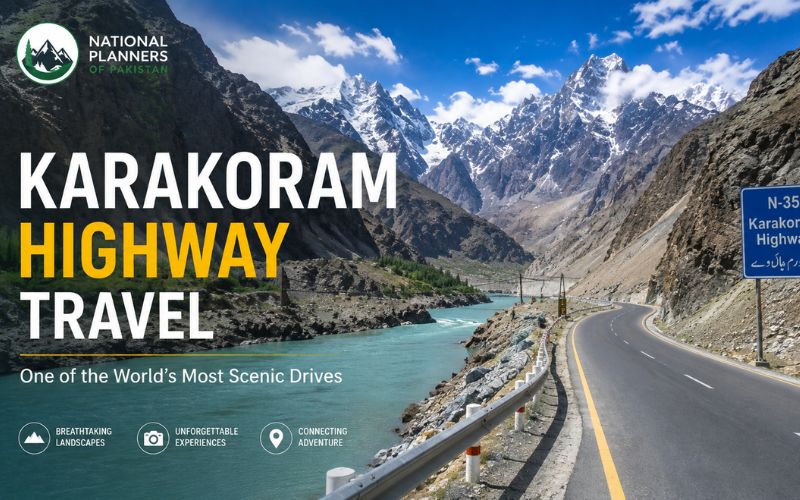
With its route cut through the hardest alpine landscapes in the world, the Karakoram Highway (KKH) has become famous for the title of the “Eighth Wonder of the World.” The route of the highway, which spans more than 1,300 kilometers and goes from Hasan Abdal in proximity to Islamabad to the highest point of the highway at the Chinese border, called Khunjerab Pass (at 4,693 meters above sea level), has the route of the historical Silk Road.
Nowadays, visiting the Karakoram Highway is enjoying unprecedented popularity among luxury travelers, photographers, and adventurers due to the development of the road infrastructure, opening of modern tunnels, and the appearance of luxurious boutique accommodations in the alpine valleys.
So, if you have already decided to travel along one of the most amazing mountain roads in the world, here is your ultimate guide to the Karakoram Highway.
Why the Karakoram Highway is a Bucket-List Journey?
Unlike other air routes where you land right at one mountain airport, the experience of traveling on KKH is a journey in itself where the surroundings change dramatically every hour. KKH passes through the exact geological intersection point of the three tallest mountain ranges in the world: the Himalayas, the Karakoram, and the Hindu Kush.
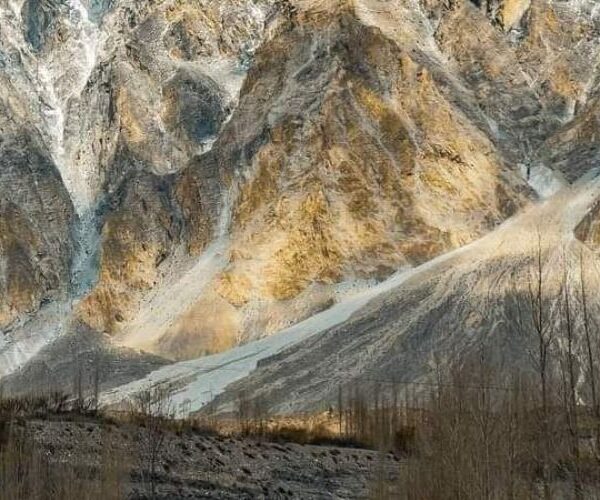
Traversing this magnificent route means navigating through narrow canyons formed by the fierce rushing of the rivers like Indus River and Hunza River, glacial valleys, and green terraced villages encircled by snow-capped 7,000-meter-high peaks. International travelers as well as the locals get an unprecedented chance to explore and experience regional culture, stone fortresses from ancient times, and renowned local hospitality. To provide for an absolutely smooth experience of your mountaineering trip, National Planners, considered a best travel company in Pakistan, arranges your ground transportation.
Major Destinations & Iconic Highlights Along the KKH
-
The Gateway & Lower Valley: From Islamabad to Besham and Chilas
The journey starts from the green city of Islamabad, traveling through the foothills of Margalla before entering into the Hazara region of Pakistan via the Hazara Expressway. Within no time, you will feel a sudden change in landscape into deep river valleys and mountains covered with pines.
While passing through some of the ancient cities such as Abbottabad and Mansehra, the road eventually meets up with the great Indus River around Besham. The latter part of the journey will provide you with the real experience of the road engineering feat where you will pass through massive suspension bridges and rock-cut ledges to reach Chilas, the ancient meeting point with thousands of rock petroglyphs left by the Silk Road merchants many years ago.
-
The Junction of Three Mountain Ranges (Jaghlot)
As the road approaches Gilgit, one reaches one of the most important geographical points on earth called Junction Point of the World’s Three Great Mountain Ranges. From here, one can actually visualize the point where the Himalayas, Karakoram and Hindu Kush mountain ranges meet with the confluence of the Indus River and Gilgit River. On a sunny day, looking up to the horizon will provide you with your first sight of the mighty Nanga Parbat, which is the ninth highest peak in the world at 8,126 meters.
-
Hunza Valley: The Crown Jewel of the North
Further travel up north through the highway takes you to the famous Hunza Valley. While entering into the valley, a majestic, snow-capped wall of Rakaposhi (7,788m) stands next to the highway making it one of the most photogenic mountains of Asia.
The heart of Central Hunza is Karimabad, a town rich in history and culture. Some major attractions of Central Hunza are:
- Baltit Fort: This is an old, 700-year-old fort which has been influenced by Tibet and situated on top of a cliff with a view of the entire valley.
- Altit Fort: Older than Baltit Fort, this 1,000-year-old wonder is also situated on the edge of a 1,000-feet cliff, overlooking the Hunza River. It has royal gardens as well.
- Duikar (Eagle’s Nest): The highest point of the valley and famous for the golden sunrises and sunsets with a view of six 7,000-meter peaks at once.
-
Attabad Lake & Upper Hunza (Gojal)
Further north of the KKH, there is Attabad Lake, an impressive 21-kilometer long stretch of crystal blue water created in 2010 due to a massive landslide which blocked the Hunza River.
The KKH crosses through this lake via five state-of-the-art tunnels (Pak-China Friendship Tunnels). The tunnel then opens out into stunning views of the crystal blue water surrounded by steep vertical walls made of dark granite rocks. Tourists can enjoy speedboat rides, jet skiing or luxurious stays at glass resort accommodations overlooking the waters.
Traveling beyond Attabad takes one into the upper Hunza area (Gojal), which is inhabited by the Wakhi people. This region offers some impressive sights such as the Passu Cones (Passu Cathedral), which is a set of impressive saw-toothed mountain spires that look as if they pierce the sky right above the KKH like the pipes of a cathedral.
-
Khunjerab Pass: The Highest Paved Border Crossing on Earth
The northernmost point of the Pakistani portion of the KKH highway is Khunjerab Pass. With an elevation of 4,693 meters (15,397 feet), it is located within the boundaries of Khunjerab National Park and holds the distinction of being the highest paved international border crossing in the world.
At Khunjerab Pass, you have the chance of walking up to the impressive stone border arch separating Pakistan and China. Amidst the high-altitude tundra region inhabited by ibex and snow leopards, reaching this frozen frontier is the greatest achievement on your road trip.
Traveling through the high altitudes requires logistical skills; you may get in touch with National Planners at info@nptravels.pk or reach us at +92 320 4522222 for your high-altitude KKH journey.
Complete 7-Day Luxury KKH Itinerary
In order to assist you in visualizing your journey through this famous road, here is a luxury 7-day itinerary that is specially tailored for those people who want to get the most out of the Karakoram Highway journey:
Day 1: Arrival in Islamabad & Fly/Drive to Gilgit
- Morning: Get ready for a 45-minute flight to Gilgit (weather permitting) from Islamabad or meet your personal chauffeur from your hotel.
- Afternoon: Reach Gilgit and settle down in your luxury boutique hotel, and go sightseeing at the Kargah Buddha, an ancient rock carving on a cliff dating back to the 7th century.
- Evening: Have a personalized dining experience of the local cuisine of Gilgiti region.
Day 2: Gilgit to Central Hunza (Karimabad)
- Morning: Travel from Gilgit to the KKH, the well-paved road. Make a stop at the Junction of Three Mountain Ranges and the Rakaposhi Viewpoint in Ghulmet to have tea with a mountainous flavor.
- Afternoon: Reach Karimabad to get checked into your luxury view hotel. Go on a walking tour to explore the old Karimabad Bazaar.
- Evening: Personal guided tour of the 700-year-old Baltit Fort followed by an evening drive to Duikar (Eagle’s Nest) for drinks with a view of the shining mountains.
Day 3: Exploring Cultural Heritage & Local Flavors
- Early morning: Tour the thousand year old Altit Fort along with its beautiful royal gardens run by initiatives for women empowerment in the local areas.
- Morning/afternoon: Have an authentic lunch that includes Hunzah’s famous stuffed mountain bread and apricot juice in a heritage café.
- Evening: Enjoy shopping for unique gemstones, shawls, and other handicrafts in the bazaar. Dine in a luxury valley restaurant.
Day 4: Central Hunza to Upper Hunza (Attabad Lake & Passu)
- Morning: Drive through the Pak-China Friendship Tunnel to Attabad Lake. Board a private motorboat for a luxurious cruise on the deep blue waters of Attabad Lake.
- Afternoon: Proceed on the KKH drive towards Gulmit and Passu. Take photos under the giant Passu Cones.
- Evening: Cross the well-known Hussaini Hanging Bridge that crosses the Hunza River. Stay at a luxurious boutique yurt or eco-dome resort in Gulmit/Passu and enjoy the night sky.
Day 5: Excursion to Khunjerab Pass (The China Border)
- Morning: Morning departure towards north bound towards Chinese border via the rugged canyons of Sost and into Khunjerab National Park.
- Afternoon: Cross the 4,693-meter Khunjerab Pass, capture images of the tallest border post in the world, spot wildlife including yaks and ibex, have hot drinks in high altitude.
- Evening: Return to Upper Hunza for some fun around bonfire and performance of Wakhi traditional music.
Day 6: Passu to Gilgit via Hopper Glacier
- Morning: Start your journey back home on the southbound KKH road and make a slight diversion towards Nagar Valley for viewing the spectacular combination of black and white ice structures of Hopper Glacier.
- Afternoon: Lunch time spent watching the glacier and then rejoin the main road to Gilgit.
- Evening: Stay at your Gilgit hotel and relax after reviewing the pictures taken from the high altitude pass.
Day 7: Return Journey to Islamabad
- Morning: Drive back to Gilgit Airport for your flight to Islamabad or return via the highway in a private vehicle.
- Afternoon: Return to Islamabad where you will check into your hotel or at the international airport.
Essential Travel & Packing Tips for the KKH
A flawless experience on a high altitude road necessitates careful planning. Below are the best professional tips for travelers:
- Layering System for Dynamic Weather: Temperature can vary from +25°C in the sunny valleys to below zero on the Khunjerab Pass on the very same day! Carry quality thermal base wear, a fleece middle layer, a down jacket for wind/water proofing and thick gloves!
- Hydration & Altitude Care: The Khunjerab Pass is located at an elevation of close to 4,700 meters above sea level. Drink lots of water during the journey and refrain from any sudden physical activity at the Khunjerab Pass. Carry basic medicines for altitude sickness or oxygen tanks.
- Footwear Matters: Although the path is paved, the trek to viewpoints, forts, and glaciers involves walking on uneven cobblestone, gravel, and dirt paths. Get yourself some good, water-resistant hiking shoes or trail runners with deep tread patterns.
- Sun Protection: The ultraviolet radiation at high altitudes is extremely strong. Apply sunscreen (50 SPF) which is broad spectrum and wear a broad brimmed hat along with a pair of UV filtering polarized sunglasses. For a smooth performance, tailor-made group tours along with ground transport services with safety oriented drivers, contact us at National Planners through our website nationalplannersofpakistan.com.
Book Your Karakoram Highway Expedition with National Planners
Feeling adventurous to explore the best road trip through the Karakoram mountains? Collaborate with National Planners, one of the leading tour operators in Pakistan, to plan your overland adventure that is tailor-made and utterly safe.
- Company Name: National Planners of Pakistan
- Email:
- Contact Number / WhatsApp:
- Website: nationalplannersofpakistan.com
- Location: Lahore, Pakistan